

Fen Drayton Lakes: From Gravel Pits to a Maturing Wetland
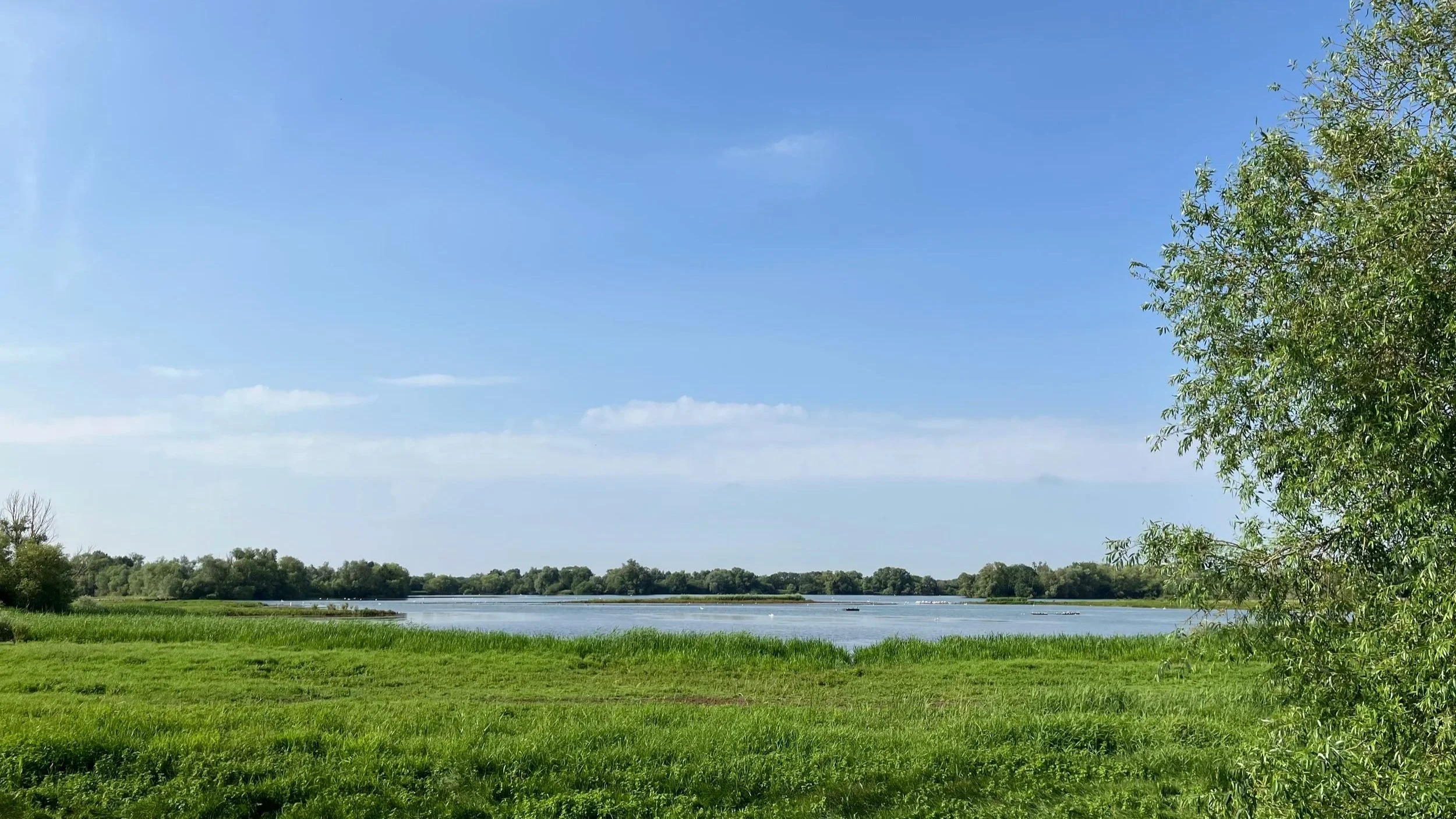
RSPB Fen Drayton, Cambridgeshire
RSPB Fen Drayton Lakes is a large, loosely connected constructed wetland beside the River Great Ouse, west of Cambridge. Its flooded gravel pits now sit among reedbed, wet grassland, scrub and young woodland. The reserve is best approached as a landscape to explore. It is also unusually easy to reach the reserve without a car: Guided Busway services run from Cambridge railway station, and the reserve has its own request stop.
I first visited more than 25 years ago, when the place still felt like quarry workings: open, raw and defined by excavation. Returning in June 2026, the most striking change was not simply that the pits had filled with water. The vegetation around them had matured. Trees enclosed parts of the route, reeds softened lake edges, scrub held singing warblers, and grazed grassland added another distinct habitat.
That mixture produced 54 species during a three-and-a-half-hour morning visit. The list included Hobby, Cuckoo, Yellow Wagtail, Snipe, Redshank and eight warbler species, alongside 65 Greylag Geese and substantial numbers of Mute Swan, Mallard, Tufted Duck and Coot. It was a useful snapshot of what Fen Drayton has become: not one restored lake, but a wetland mosaic at several different stages of development.
Gravel extraction created the framework
Sand and gravel extraction reshaped this part of the Great Ouse floodplain from the 1950s onwards. The pits left behind were not all restored in the same way. A study of the reserve describes older compartments where deep basins were largely left to flood, and vegetation colonised naturally. Later workings received more deliberate nature-led restoration, including shallower profiles intended to support reedbed and wetland species.
This history remains readable on the ground. Some lakes are broad and deep, with wooded or densely vegetated margins. Elsewhere there are shallower scrapes, low islands, wet grassland and more open edges. The variety matters more than the industrial origin: different depths, margins and stages of plant succession create feeding and breeding opportunities for different birds.
The RSPB took on Fen Drayton Lakes in 2007. Current work includes shaping sheltered bays and shallow pools around lake margins, while cattle and sheep grazing help prevent all the grassland from becoming scrub. Management is therefore not an attempt to make the whole reserve look equally mature. It keeps a range of conditions present at the same time.
What has changed in 25 years
Natural succession has done much of the visible work. Pioneer plants colonise bare mineral ground; rough grassland and scrub follow; trees establish where grazing, cutting or high water do not hold them back. At the water's edge, reed and other emergent vegetation can turn an abrupt quarry bank into a sheltered margin.
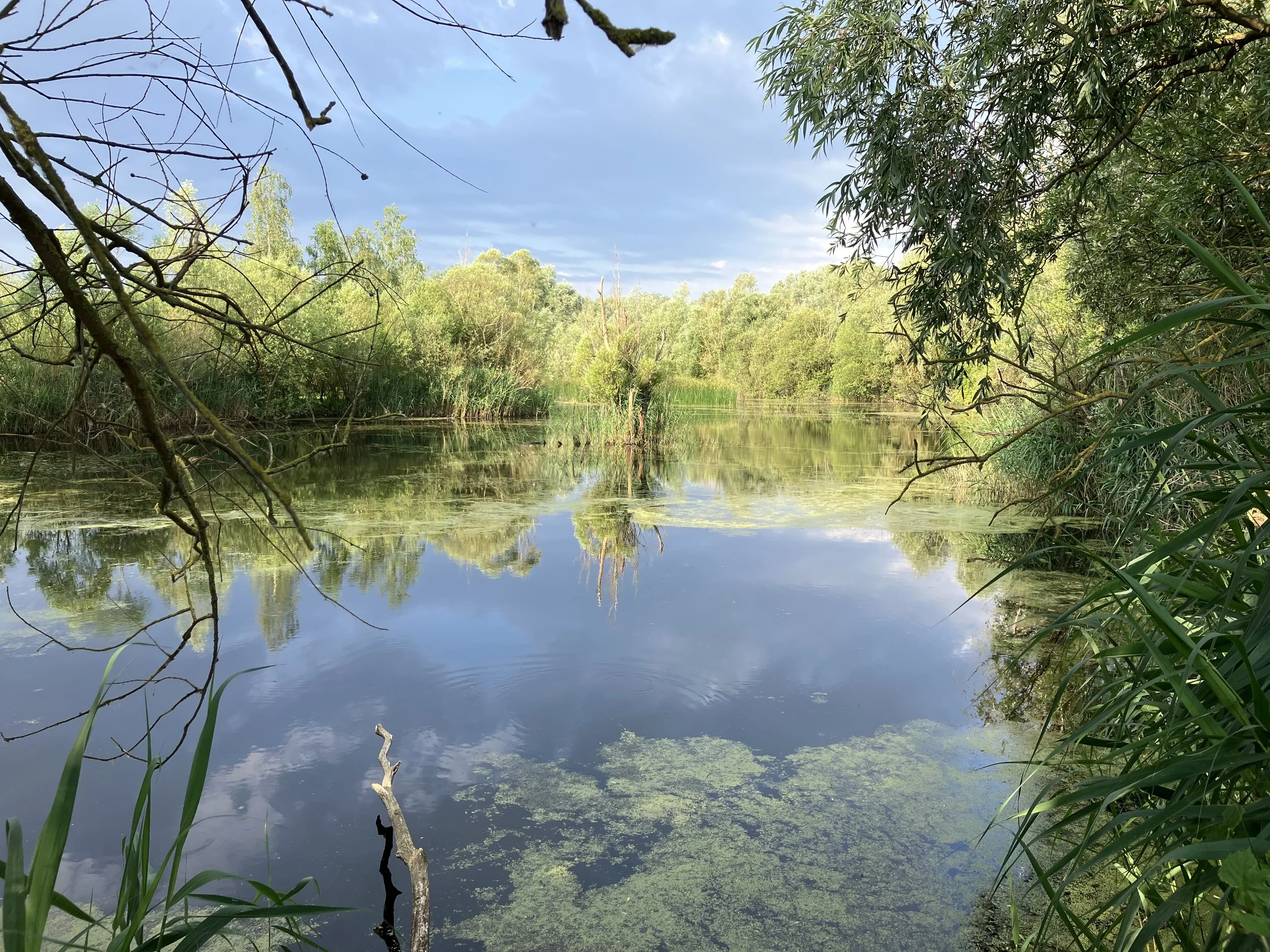
Natural colonisation has created wooded edges and secluded bays around some of the older pits.
This creates habitat, but succession does not automatically produce the most diverse reserve. If every shore becomes steep, shaded and wooded, open muddy margins and low wet grassland disappear. If all scrub is removed, the reserve loses nesting cover and feeding habitat for warblers and other passerines. Fen Drayton's developing character comes from the tension between letting parts mature and repeatedly opening others up.
The difference was audible in June. Reed and Sedge Warblers occupied the wetter margins, while Blackcaps, Garden Warblers, Chiffchaffs and Whitethroats used scrub and woodland edges. Cetti's Warbler was a more fundamental change. It was not a bird I associated with Fen Drayton when I knew the workings more than 25 years ago. Its explosive song now comes from dense waterside vegetation, reflecting both the maturation of the reserve and the species' remarkable expansion through Britain. The species first bred in Britain in the early 1970s and is now well established along river systems including the Great Ouse.
The open habitats still mattered. A Yellow Wagtail, Snipe, Redshank and Oystercatcher were recorded around the grassland and wet margins, while Common Terns worked over the lakes. Hobby provided the clearest link between the reserve's habitats: a summer falcon drawn to the abundance of dragonflies and small birds generated by the wetland as a whole.
How to bird Fen Drayton Lakes
The reserve is too extensive to treat every lake equally on a half-day visit. It is better to choose a route according to season and water conditions, then spend time where one habitat meets another.
For a first visit of around three hours, the Elney side gives a useful cross-section of the reserve. The official Elney Loop is about 3 miles (4.5km), using gravel and grassy paths around Moore, Elney and neighbouring lakes. Moore Lake has a hide; the wooded sections around Elney provide views into quieter bays; and the open islands and rafts can hold breeding waterbirds in spring and summer.
Ferry Lagoon is the larger open-water option. Its 2.5-mile (4km) circuit passes viewing shelters and gives access to Ferry Mere and its scrapes. This side becomes particularly interesting when falling water exposes mud or creates shallow feeding edges. The seasonal viewpoint should be treated as a conditional addition rather than part of a guaranteed circuit.
On any route, the productive places are often transitions rather than named viewpoints:
reed beside open water for grebes, terns and hunting Hobby;
wet grassland grading into shallow pools for wagtails and waders;
scrub adjoining reedbed for Cetti's Warbler, Whitethroat and other warblers;
secluded wooded bays for feeding herons, grebes and ducks;
open sky above the lakes for raptors and hirundines.
The Cambridgeshire Guided Busway and cycle track cross the reserve on the former railway alignment. It is a conspicuous straight line through the lakes, but bus traffic did not materially disturb the birding during my visit.
For visitors without a car, the Busway is a major advantage rather than simply a feature to cross. Services run from Cambridge railway station towards St Ives, with a request stop inside the reserve and the main Swavesey stop farther east. A birder arriving in Cambridge by train can therefore continue to Fen Drayton directly, without needing a taxi or a journey across the city to collect a car. Services and temporary diversions can change, so check the current Busway journey planner before travelling.
Reading the reserve through the year
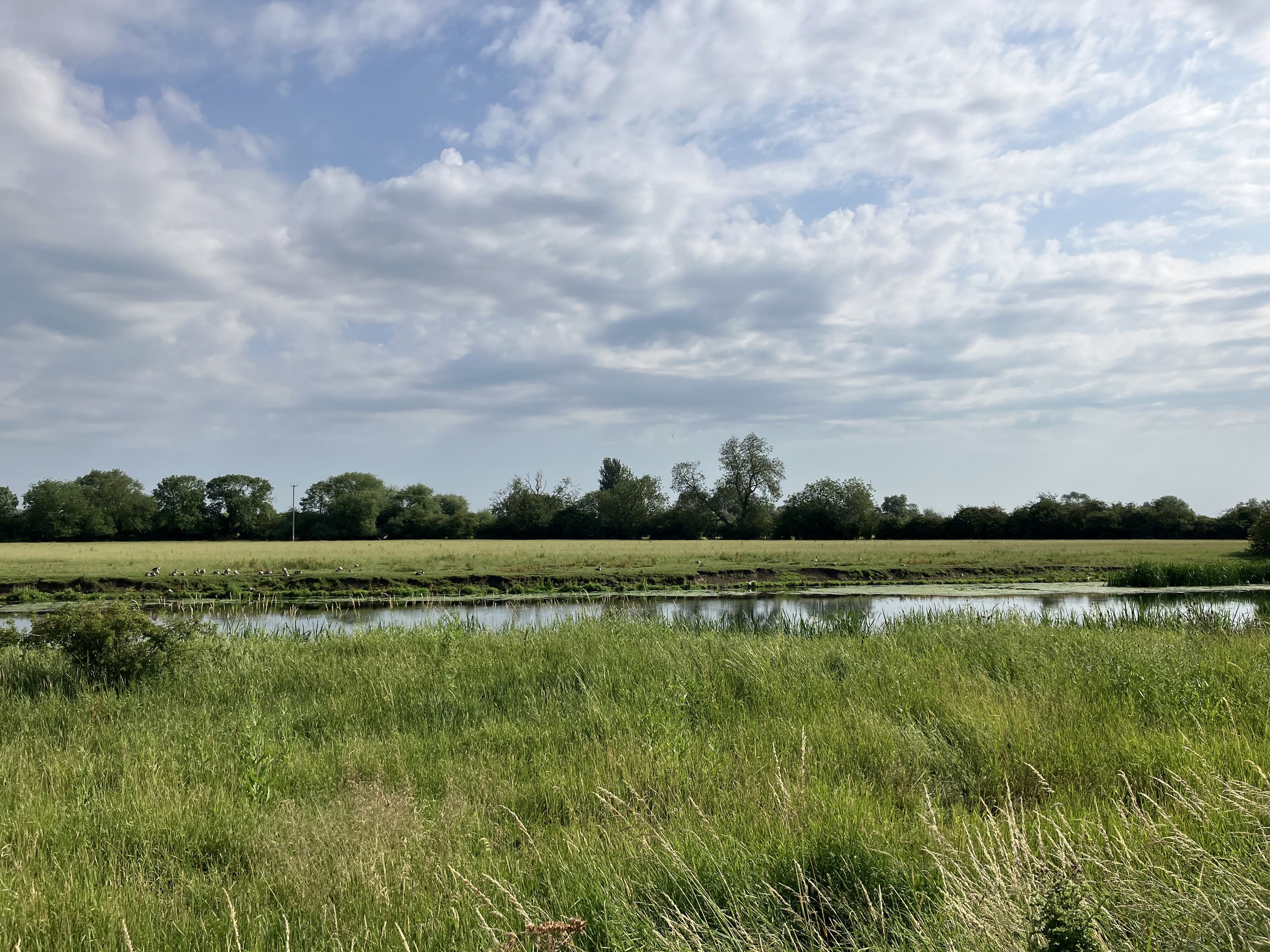
Open water and grazed margins retain a different set of conditions from the wooded lakes.
In spring, scrub, woodland edge and reedbed become the main focus as warblers return and Cuckoos range across the reserve. Common Terns use the lakes and nesting rafts, while Oystercatcher, Redshank and Lapwing may use islands, scrapes and short grass. By late spring and summer, Hobbies hunting above the wetland are one of Fen Drayton's characteristic sights, particularly when dragonflies are abundant.
Autumn interest depends heavily on water levels. Exposed margins at Ferry Mere and other shallow areas can attract passage waders, but a deep, full lake offers little feeding ground. This is a reserve where checking recent sightings and looking at the actual state of the scrapes can be more useful than following a fixed seasonal list.
Winter shifts attention towards open water and the floodplain. Teal, Wigeon and other wintering ducks can gather on the larger lagoons, with Lapwings and Black-tailed Godwits using suitable shallows and wet grassland. Flooding can redistribute birds across the site and close or submerge paths, so the best viewpoint in one week may be much less useful in another.
A reserve that is still being made
Fen Drayton is no longer a raw post-industrial site, but its development is not finished. Reedbeds expand, scrub thickens, trees shade old margins, and floods rearrange the balance between land and water. Grazing, cutting, scrape creation and lake-edge work interrupt that succession where open habitat needs to be retained.
Its wider position is also becoming more important. Fen Drayton lies within a 25-mile chain of wetlands along the Great Ouse floodplain. To the north-east, the continuing restoration of Ouse Fen is helping to form a much larger connected wetland landscape. Fen Drayton's mature lakes, grassland, scrub and woodland add habitats that complement Ouse Fen's extensive new reedbeds.
That long view makes the reserve more interesting than a simple example of quarry restoration. Some compartments show what happens when flooded workings are allowed to colonise; others show the effect of deliberate profiling and continuing management. More than 25 years after my first visit, the old extraction pattern is still visible—but it now sits beneath a functioning, varied wetland that continues to change.
Planning a visit
Fen Drayton Lakes is open throughout the year and has no visitor centre. Paths range from rolled gravel and hard surfaces to grass, and floodplain sections can become muddy or inaccessible after prolonged rain or high river levels. Check the official RSPB reserve page for current parking, access and facility information, download the RSPB trail guide before choosing a circuit, and use the Busway service information for current public-transport times and disruption.