

Sheringham Seawatching
When to Visit and What to Look For
Sheringham is not a nature reserve, but it deserves a place in a Norfolk birding directory. The shelters on The Leas have become one of the county’s best-known seawatching points, giving a raised view over the North Sea with some protection from the weather.
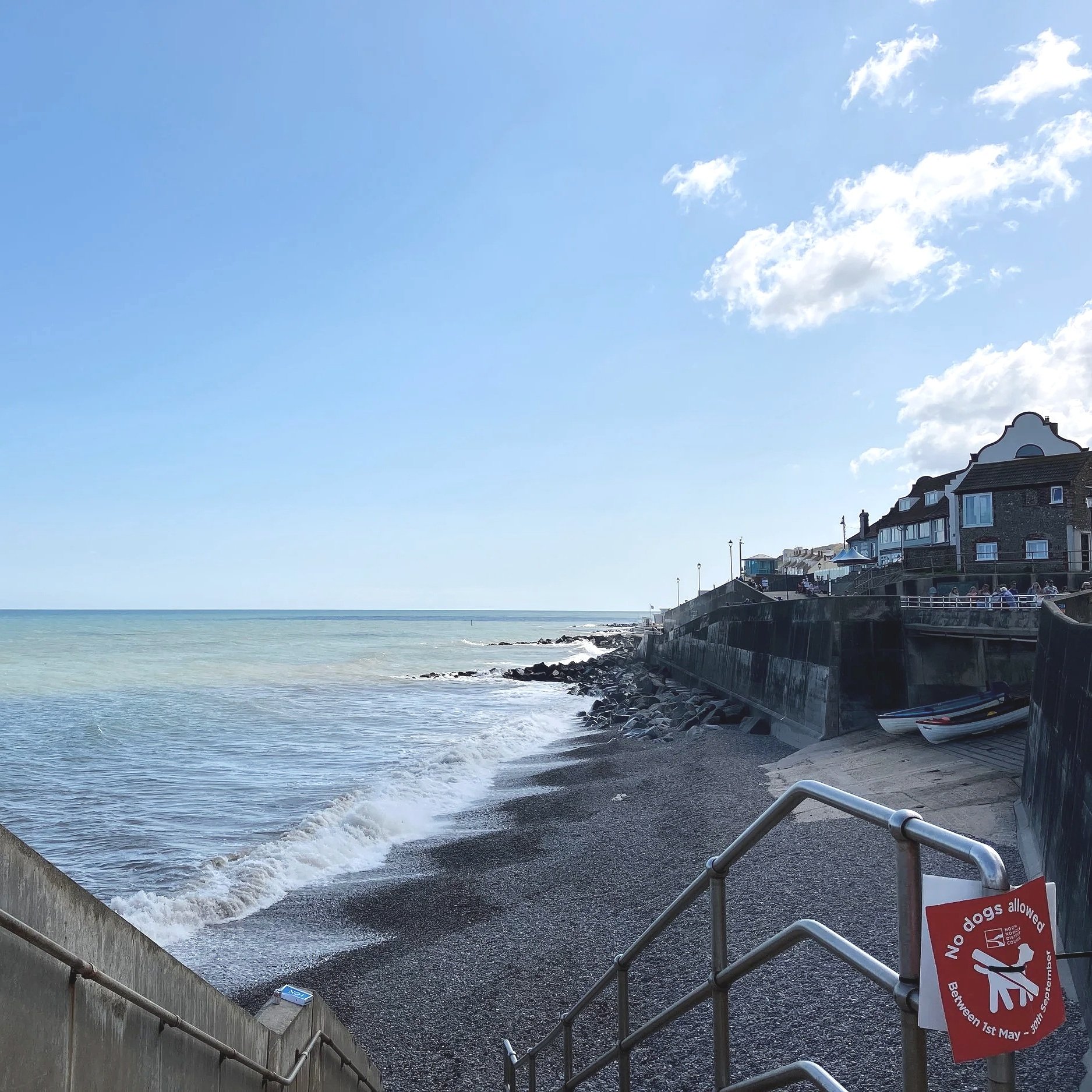
Sheringham Sea front.
On an ordinary day, the sea may hold little more than a few Gannets, Common Scoters, auks or terns. In the right autumn weather, however, the character of the place changes completely. Strong winds with a northerly component can bring skuas, shearwaters, divers, seaduck and migrating waders within telescope range. The shelter may then be full before sunrise.
At a glance
Best for
Seabird passage, especially during autumn northerlies
Main season
Late August to early November
Strongest all-round period
September and October, when suitable weather arrives
Best conditions
Strong north or north-westerly winds, preferably sustained rather than a brief change
Best time of day
Start at first light; productive passage can continue for hours
Tide
Usually less important than wind direction, visibility and sea conditions
Equipment
Telescope and a stable tripod; binoculars remain useful for closer birds
Typical visit
One to three hours, or much longer when passage is strong
Location
The Leas, lower promenade, Sheringham; approximately TG155435
Where to watch
The established watchpoint is the group of concrete shelters on The Leas, on the lower promenade below The Esplanade. From the upper promenade, the commonly described route passes under the archway near the public toilets and down the steps to the lower level.
Space and seating are limited. During a forecast autumn northerly, arrive before dawn if you hope to sit inside the shelter. The open seating above provides an alternative, but offers much less protection when conditions are good for birds and fairly unpleasant for people.
The shelters are useful for more than comfort. Sitting down helps keep a telescope steady, while experienced local sea watchers often use shared reference points to put others onto distant birds. Listen carefully to the direction, distance and flight line being called before searching.
When is best?
There is no reliable set of “best dates”. At Sheringham, the weather chart matters more than the calendar. A strong northerly in September can produce an excellent movement; the same date in light south-westerlies may be very quiet.
The broad seawatching season runs from late August to early November. Strong north and north-westerly winds are the classic conditions. An onshore wind can bring birds closer to the coast, but the history of the weather system also matters: a sustained airflow that has moved birds through the North Sea is generally more promising than a northerly that began an hour before dawn.
Tide can affect the appearance of the sea and where some birds feed, but published Sheringham site guides consistently place much greater emphasis on wind. If choosing between a favourable tide and a strong autumn northerly, choose the wind.
What you may see through the year
Spring: March to May
Spring is quieter than autumn, but still worth checking. Red-throated Divers, Common Scoters, Gannets, Fulmars and auks may pass, with Sandwich Terns returning from early spring and other terns following later. Black Redstarts sometimes appear around seafront buildings, while Wheatears and other migrants use the nearby cliff-top ground.
Summer: June to mid-August
Calm summer days often produce fairly gentle seawatching: Gannets, Fulmars, Common Scoters and Sandwich or Common Terns are the more realistic possibilities. Passage begins to gather interest as July moves into August, when the first skuas and shearwaters may appear, particularly if unsettled weather reaches the North Sea.
Late August and September
This is the beginning of the main season. Manx and Sooty Shearwaters, Arctic and Great Skuas, Gannets, Common Scoters, terns, Little Gulls and migrating waders may all feature. Long-tailed Skua is scarce, but late August and September offer a reasonable seasonal window during exceptional movements.
Good days can be fast and demanding. Many birds pass at long range, and some are visible for only a short time between waves. Even when numbers are modest, watching an Arctic Skua chase a tern or a Sooty Shearwater rise above the horizon can make the session worthwhile.
October and early November
October gives the broadest mixture. Skuas and shearwaters may continue, while divers, grebes, seaduck, auks, Kittiwakes and migrating geese become more prominent. Pomarine Skua, Little Auk, Sabine’s Gull, Grey Phalarope and Leach’s Petrel are among the birds associated with notable late-autumn seawatches. Still, all remain weather-dependent, and some are distinctly scarce.
Cold northerly outbreaks in late October or early November can be particularly interesting. They can also be raw, wet and tiring. The shelter reduces the rain, not the temperature.
Winter: December to February
Winter seawatching is usually slower, with many birds well offshore. Red-throated Diver is the most regular diver, while Black-throated and Great Northern Divers are much less frequent. Common Scoter, occasional Velvet Scoter or Long-tailed Duck, Guillemots, Razorbills, Gannets, Kittiwakes and passing geese may reward patient scanning.
The promenade itself adds interest. Turnstones are regular around the sea defences, and one or two Purple Sandpipers may join them on the rocks in autumn and winter, particularly east of the Two Lifeboats area.
Practical information
Sheringham seafront is publicly accessible rather than managed as a reserve, and there is no admission charge. Paid parking is available in several council car parks.
Sheringham railway station is in the town centre, within walking distance of the seafront. The CoastHopper also links Sheringham with other towns and birding sites along the north Norfolk coast. Check current rail and bus times before an early-morning visit.
Public toilets are available on the seafront, with cafés and other facilities in the town, though beachfront opening hours may be seasonal. The most direct route described to the seawatching shelter includes steps. Visitors needing step-free access should confirm the current promenade route before travelling.
Take more clothing than the inland forecast suggests. A padded seat, gloves, waterproof trousers and a hot drink can make a long watch much more effective. Keep the public walkway clear and avoid spreading tripods across the shelter entrance.
A useful way to begin
Sheringham is a good place to learn seawatching because other observers can help with directions and identification. It is not necessarily an easy place to start. Distance, brief views and poor light can reduce unfamiliar birds to shape, flight action and flashes of tone.
Begin with the regular species. Learn the heavier flight of a Gannet, the compact shape of a Common Scoter flock, the direct movement of an auk and the more elastic flight of a shearwater. Once those patterns become familiar, an unusual bird is easier to recognise for what it is.