
The Suffolk directory
Where to watch birds in Suffolk
Suffolk runs from the reedbeds, heath and shingle of the North Sea coast to the Alde–Ore, Deben and Orwell estuaries, then west into Breckland and the Fens. This independently edited directory helps you choose a place by habitat, season and the kind of birding you want. Each entry links to the managing organisation or another dependable source for current access information.
Links and practical information reviewed .
North Suffolk and the coast
Top ↑Broadland marshes, reedbeds, heath, woodland and shingle along a productive migration coast.
Waveney Valley · SWT reserve
SWT Carlton Marshes
Carlton opens onto the Waveney Valley at the southern edge of the Broads. Grazing marsh, fen, reedbed, pools, dykes and wet woodland support breeding waders and reedbed birds, with wildfowl and raptors prominent in the colder months. Its visitor centre and varied trails make this a straightforward introduction to Suffolk’s Broadland landscape, while the reserve remains large enough for a longer visit.
Best for: Broadland wetlands, Marsh Harriers and a varied half- or full-day visit.
Dunwich coast · RSPB and SWT reserve
RSPB and SWT Dingle Marshes
Dingle Marshes lies between Dunwich and Walberswick, where freshwater reedbed and grazing marsh meet saline lagoons, woodland and a long shingle ridge. Bitterns, Marsh Harriers and Bearded Tits use the reedbeds, while the pools and shore add wildfowl and waders. Shingle makes the coastal approach more tiring than its distance suggests, so this works better as an exposed habitat walk than a compact hide circuit.
Best for: Reedbed birds, coastal lagoons and a quieter walk north of Dunwich.
Dunwich coast · National Trust
Dunwich Heath and Beach
Dunwich Heath combines lowland heath, scrub, sandy cliffs and beach beside the Minsmere–Walberswick wetland system. Its dry ground and open sea provide a useful contrast to the neighbouring reedbeds. Spring and early summer favour heathland song and display; autumn can bring visible movement and grounded migrants along the coast.
Best for: Heathland birds, coastal walking and combining dry habitat with Minsmere.
Suffolk coast · RSPB reserve
RSPB Minsmere
Minsmere brings reedbed, shallow lagoons, wet grassland, heath, woodland and vegetated shingle into one large reserve. The scrape is central to its reputation, but the coast, woods and reedbeds support different bird communities and make this a genuine year-round site. A short circuit is possible, though a first visit can easily fill a day.
Best for: Suffolk’s broadest all-round reserve experience, varied habitats and a full day.
Aldeburgh–Thorpeness · RSPB reserve
RSPB North Warren
North Warren stretches between Aldeburgh and Thorpeness through grazing marsh, reedbed, heath and woodland. The marshes can hold substantial winter gatherings of ducks, geese and swans, while the drier ground and reedbed broaden the visit in spring. This is a dispersed landscape rather than a visitor-centre circuit, and water levels strongly affect the views from the marsh.
Best for: Winter grazing-marsh flocks, reedbed birds and a mixed coastal landscape.
Alde, Ore, Deben and Orwell
Top ↑Estuary walls, grazing marsh, saline lagoons and fragile shingle, including remote islands and migration watchpoints.
Alde–Ore coast · National Trust
Orford Ness National Nature Reserve
Orford Ness is a long shingle spit with saline lagoons, grazing marsh and a striking military landscape. Its value lies in the scale and ecology of a severe, shifting coast rather than a quick birding circuit. Public access is only by the National Trust ferry from Orford Quay; tickets are limited and routes vary seasonally to protect exceptionally fragile vegetated shingle and breeding birds.
Best for: Shingle ecology, coastal birds and a deliberately slow, landscape-scale visit.
River Ore · RSPB reserve
RSPB Havergate Island
Havergate is a low island of saline lagoons, saltmarsh, vegetated shingle and mudflat in the River Ore. Passage and winter bring waders and ducks, while large gulls, Avocets and Spoonbills use the island during the breeding season. It cannot be visited independently: access is limited to pre-booked RSPB boat trips from Orford, and availability is deliberately restricted.
Best for: Saline-lagoon birds, an island reserve and a booked specialist visit.
Alde–Ore estuary · RSPB reserves
RSPB Boyton and Hollesley Marshes
Boyton and Hollesley are two quiet coastal marshes beside the Alde–Ore estuary. Wet grassland, lagoons, ditches and river walls support breeding Lapwings, Redshanks and Avocets, with larger numbers of ducks and geese in winter. The sites have separate approaches rather than one continuous visitor circuit, and the open birding is often distant.
Best for: Quiet estuary birding, grazing-marsh waders and winter wildfowl.
Orwell estuary · SWT reserve
SWT Trimley Marshes
Trimley sits behind the Orwell estuary near Felixstowe, with a reservoir, shallow lagoons, reedbed and grazing marsh overlooked by a string of hides. Breeding wetland birds, passage waders and winter wildfowl appear against the industrial edge of the port. The reserve is reached by a long approach track: the first hides are about a 45-minute walk from the public car park.
Best for: Waders, winter ducks, hides and estuary birding beside an industrial coast.
Felixstowe · Nature reserve and bird observatory
Landguard Nature Reserve and Bird Observatory
Landguard occupies the exposed shingle point at the southern end of Felixstowe. Sea, harbour and sparse coastal cover concentrate visible and grounded migrants, while the bird observatory records passage through a setting dominated by the port and open water. Spring and autumn are the main seasons, but productive visits depend strongly on weather and the movement it produces.
Best for: Coastal migration, visible passage and bird-observatory recording.
West Suffolk and the Brecks
Top ↑Restored fen, gravel lakes, dry heath and wet valley mire across Suffolk’s inland flyways and Breckland border.
The Fens · RSPB reserve
RSPB Lakenheath Fen
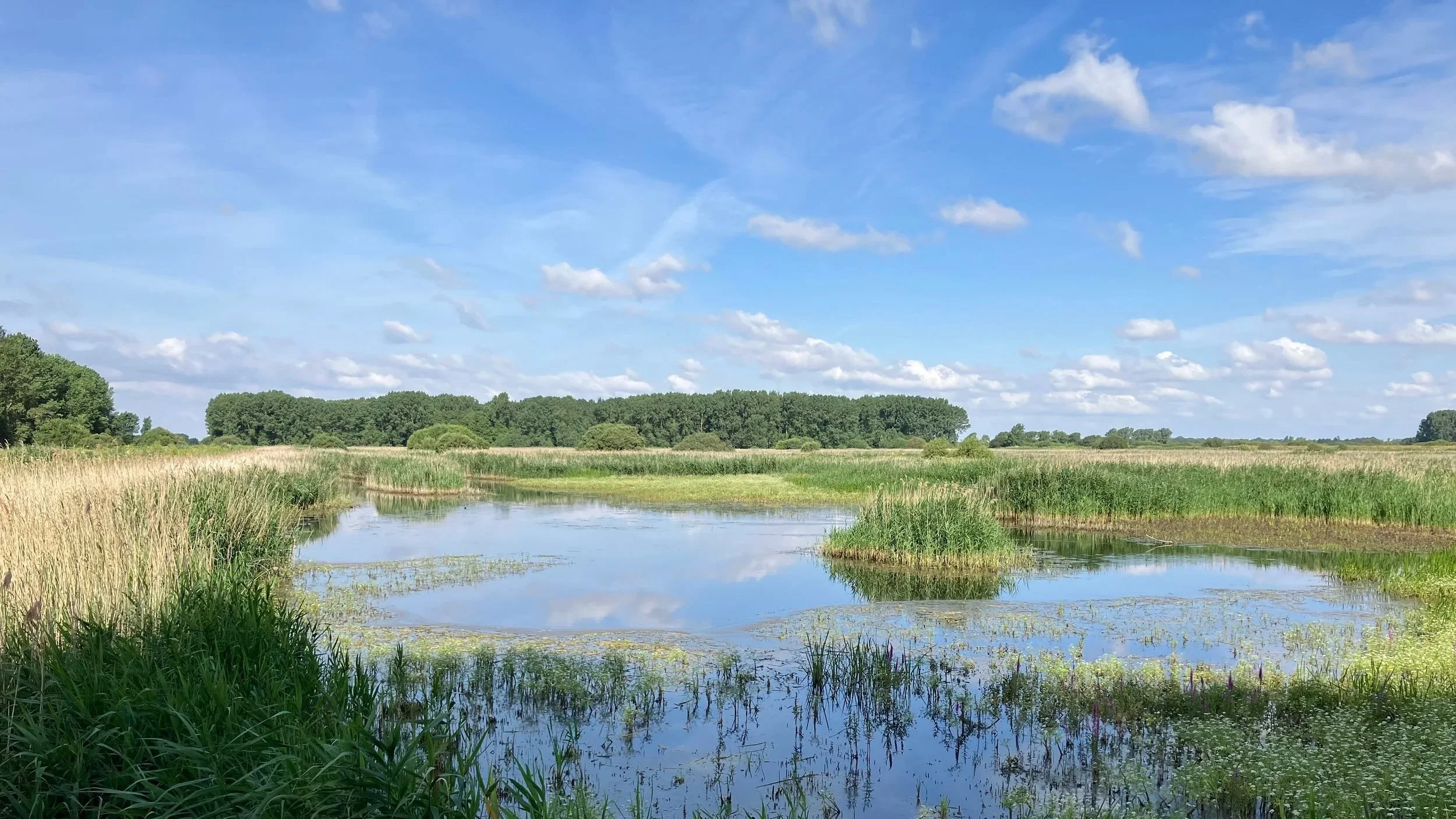
Lakenheath is a restored wetland created from former arable fields. Extensive reedbeds, grazing marsh, wet grassland and young woodland support Bitterns, Marsh Harriers, Hobbies and Common Cranes, with long views across a landscape still revealing its recent origins. Nearer circuits suit a half day; reaching Joist Fen and the riverbank turns it into a longer visit.
Best for: Restored reedbed, Bitterns, harriers, cranes and conservation at landscape scale.
Read how Lakenheath Fen was created Official RSPB information
Lark Valley · SWT reserve
SWT Lackford Lakes
Lackford is a former gravel-working landscape of open water, reedbed, meadow and woodland near Bury St Edmunds. Its different lakes create sheltered edges and open views for Kingfishers, grebes, terns, passage waders and winter wildfowl. A visitor centre, hides and connected paths make this one of west Suffolk’s easiest wetlands to explore at several different lengths.
Best for: Inland wetland birding, Kingfishers, hides and a flexible visit near Bury St Edmunds.
Breckland · National Nature Reserve
Cavenham Heath National Nature Reserve
Cavenham protects a dry Breckland mosaic of acid grass heath, heather, bracken and sandy ground, with riverside meadow, scrub and woodland beside the River Lark. Spring and early summer are strongest for heathland song and open-country activity, while the river and woodland keep the walk varied. This is sensitive ground with few visitor facilities, so keep to established public access and follow temporary restrictions.
Best for: Breckland heath, open-country birding and a quiet riverside walk.
Breckland · SWT reserve
SWT Knettishall Heath
Knettishall combines lowland heath, acid and chalk grassland, woodland and the Little Ouse valley. This mosaic is richer than the word “heath” suggests and gives a useful introduction to the Brecks without requiring a search through the wider forest. Spring and early summer favour bird song and open-ground activity; woodland flocks and the riverside landscape carry later visits.
Best for: Breckland habitats, heathland birds and an exploratory inland walk.
Waveney headwaters · SWT reserve
Redgrave and Lopham Fen National Nature Reserve
Redgrave and Lopham Fen straddles the Suffolk–Norfolk border at the source of the River Waveney. Fen meadow, reedbed, scrub, wet woodland and open pools support a rich wetland community, with Hobbies hunting over the reserve in summer and Barn Owls using the broader landscape. Plants and insects are as important to the visit as birds, making this best approached as a slower natural-history walk.
Best for: Valley fen, mixed natural history and a slower wetland walk.