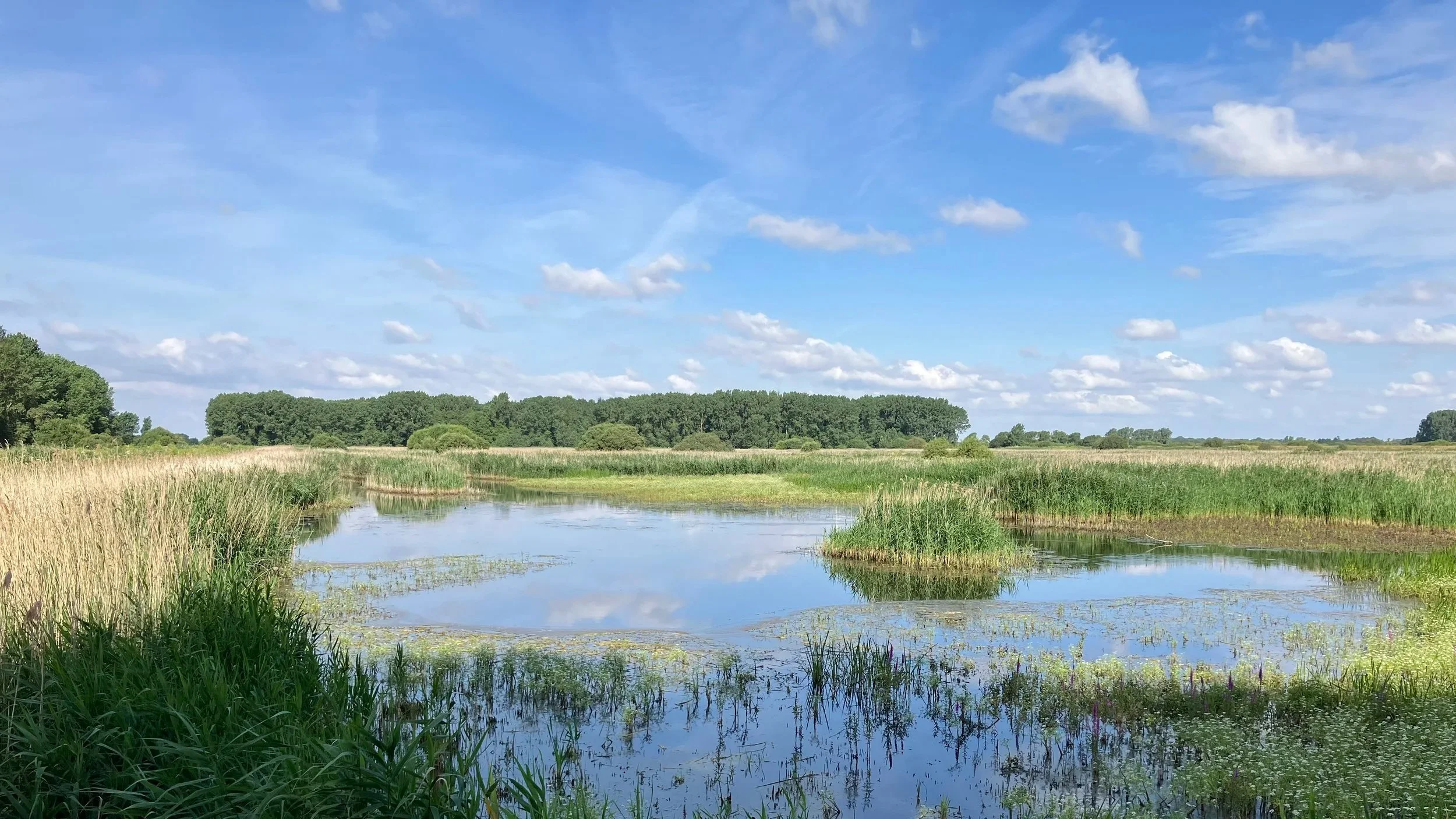
Important update — 1 August 2026: A major wildfire affected Dunwich Heath on 29 July. Fire services have asked people to avoid the area. Check the National Trust’s current notices before planning a visit; the normal description below does not currently represent conditions on the ground.

Places to go birding in Suffolk

Suffolk runs from the reedbeds, heaths and shingle of the North Sea coast to the estuaries of the Alde, Ore, Deben and Orwell, then west into Breckland and the Fens. This directory introduces the principal reserves and established public birding sites across those very different landscapes.

These short entries are starting points rather than live access notices. Fuller Radius & Flyway guides will be added over time, while the concise entry will remain here so the page continues to work as a complete, scannable directory.

North Suffolk and the coast

Broadland marshes, reedbeds, heath, woodland and shingle on one of Britain’s most productive stretches of migration coast.

SWT Carlton Marshes

Carlton Marshes opens onto the Waveney valley at the southern edge of the Broads. Grazing marsh, fen, reedbed, pools, dykes and wet woodland support a broad wetland community, with Marsh Harriers regularly crossing the open sky and wildfowl spreading across the reserve in the colder months.

A visitor centre and network of trails make Carlton a straightforward introduction to Suffolk’s Broadland landscape, but the reserve is large enough for a longer exploration. Spring and summer favour reedbed activity and insects; autumn and winter shift the emphasis towards raptors, waders and ducks. Check current trail conditions before travelling.

Check official Suffolk Wildlife Trust information

RSPB and SWT Dingle Marshes

Dingle Marshes lies between Dunwich and Walberswick, where freshwater reedbed and grazing marsh meet saline lagoons, woodland and a mile-long shingle ridge. The reserve’s value comes from this meeting of freshwater and coastal habitats rather than from a compact circuit of closely spaced hides.

Bitterns and Marsh Harriers are associated with the reedbeds, while the pools and shore add wildfowl and waders. Access from Dunwich beach quickly becomes exposed, and shingle makes distances more tiring than they appear. Treat it as a coastal walk and check both weather and current access notices before setting out.

Check official RSPB information View Suffolk Wildlife Trust information

Dunwich Heath and Beach

Dunwich Heath combines lowland heath, scrub, sandy cliffs and beach immediately beside the Minsmere–Walberswick wetland system. Its dry ground and open sea views make it a useful contrast to the neighbouring reedbeds and grazing marshes.

Spring and early summer bring heathland song and display, while late summer colours the heath and autumn can produce visible or grounded migrants along the coast. Use the marked paths, keep well clear of ground-nesting birds and check the National Trust’s current parking, facilities and seasonal notices.

Check official National Trust information

RSPB Minsmere

Minsmere brings reedbed, shallow lagoons, wet grassland, heath, woodland and vegetated shingle into one large reserve. The scrape is central to its reputation, but moving between the coast, woods and reedbeds reveals a much wider range of birds and fieldcraft.

It is a genuine year-round site. Spring and summer favour breeding wetland and heathland birds; migration expands the possibilities in spring and autumn; winter brings wildfowl, waders and raptors. The visitor centre and several trails allow different visit lengths, though a first visit can easily fill a day.

Check official RSPB information

RSPB North Warren

North Warren stretches between Aldeburgh and Thorpeness through grazing marsh, reedbed, heath and woodland. The marshes can hold substantial winter gatherings of ducks, geese and swans, while the drier ground and reedbed broaden the site’s interest in spring.

This is a more dispersed landscape than a conventional visitor-centre reserve. Different paths reveal different habitats, and water levels strongly affect what can be seen from the marsh viewpoints. It works well as a half-day walk or as part of a longer coastal day with Aldeburgh and the nearby heaths.

Check official RSPB information

Alde, Ore, Deben and Orwell

Estuary walls, grazing marsh, saline lagoons and fragile shingle, including remote islands and some of the county’s strongest passage sites.

Orford Ness National Nature Reserve

Orford Ness is a long shingle spit of international importance, with saline lagoons, grazing marsh and a striking military landscape. It rewards attention to habitat and scale rather than a quick circuit: much of the interest lies in how wildlife occupies a severe, shifting coast.

Public access is only by the National Trust ferry from Orford Quay, and booking is normally essential. Routes are long, open and carefully controlled to protect exceptionally fragile vegetated shingle and breeding birds. Check sailing days, weather and the day’s open routes before making the journey.

Check official National Trust information

RSPB Havergate Island

Havergate is a small, low island in the River Ore, managed around saline lagoons and coastal breeding habitat. Passage and winter bring waders and ducks, while the breeding season adds gulls, Avocets and, in recent years, Spoonbills.

This is not a reserve that can be visited independently. Access is by pre-arranged RSPB boat visit from Orford and availability is limited. Check the current programme before planning around it, bring food and water, and expect an exposed island with only basic facilities.

Check official RSPB information and visits

RSPB Boyton and Hollesley Marshes

Boyton and Hollesley are two quiet coastal marshes beside the Alde–Ore estuary. Wet grassland, lagoons, ditches and river walls support breeding Lapwings, Redshanks and Avocets, with larger numbers of ducks and geese using the area in winter.

The two sites have separate approaches rather than one continuous visitor circuit. Birding is open, often distant and exposed to wind, and facilities are limited. A telescope is useful, particularly outside the breeding season; stay on the public routes and follow all signs around livestock and sensitive nesting areas.

Check official RSPB information

SWT Trimley Marshes

Trimley Marshes sits behind the Orwell estuary near Felixstowe, with a reservoir, shallow lagoons, reedbed and grazing marsh overlooked by a string of hides. Its wetland birds occupy the same view as cranes and shipping from the port, an industrial edge that makes the site unusually distinctive.

The reserve is productive throughout the year, with breeding Avocets and other wetland birds in spring and summer, passage waders in autumn and large wildfowl flocks in winter. Allow for the approach: the hides are about a 45-minute walk from the public car park, and the track can be wet or muddy.

Check official Suffolk Wildlife Trust information

Landguard Nature Reserve and Bird Observatory

Landguard occupies the exposed shingle point at the southern end of Felixstowe. Sea, harbour and sparse coastal cover concentrate visible and grounded migrants, while the bird observatory records passage through a setting dominated by the port and open water.

Spring and autumn are the main seasons, but the site can be quiet when weather produces no movement. It is open, windy and visually busy, so patient scanning matters. The observatory is separately run and entry is not automatic; contact it in advance if you wish to visit the building rather than the public reserve.

Check official Landguard information Visit Landguard Bird Observatory

West Suffolk and the Brecks

Restored fen, gravel lakes, dry heath and wet valley mire across Suffolk’s inland flyways and the Breckland border.

RSPB Lakenheath Fen

Lakenheath Fen is a restored wetland created from former arable fields. Extensive reedbeds, grazing marsh, wet grassland and young woodland now support Bitterns, Marsh Harriers, Hobbies and Common Cranes, with long views across a landscape still revealing its recent origins.

Spring and early summer bring the loudest reedbed activity, while autumn and winter favour raptors and open wetland birding. The reserve is large and the longer routes add up; choose a nearer circuit for a half day or allow much longer to reach Joist Fen and the riverbank.

Read how Lakenheath Fen was rebuilt Check official RSPB information

SWT Lackford Lakes

Lackford Lakes is a former gravel-working landscape of open water, reedbed, meadow and woodland near Bury St Edmunds. The different lakes create sheltered edges and open views for Kingfishers, grebes, terns, passage waders and winter wildfowl.

A visitor centre, hides and connected paths make this one of west Suffolk’s easiest sites to explore without reducing it to a single viewpoint. Winter is strong for ducks and larger flocks; spring and summer bring breeding activity, insects and more bird song along the wooded edges.

Check official Suffolk Wildlife Trust information

Cavenham Heath National Nature Reserve

Cavenham Heath protects a dry Breckland mosaic of acid grass heath, heather, bracken and sandy ground, with riverside meadow, scrub and woodland beside the River Lark. It offers a distinctly open inland landscape after the enclosed hides and reedbeds of the coast.

Spring and early summer are the clearest time to hear and watch heathland birds, while the river and woodland keep the walk varied. This is sensitive ground with few visitor facilities. Use established public access, obey any temporary restrictions and do not pursue or publish precise locations for scarce breeding birds.

Check official Natural England information

SWT Knettishall Heath

Knettishall combines lowland heath, acid and chalk grassland, woodland and the Little Ouse valley. The resulting mosaic is richer than the word “heath” suggests and gives a useful introduction to the Brecks without requiring a search through the wider forest.

Early mornings in spring and summer are strongest for bird song and open-ground activity; later in the year the landscape itself, woodland flocks and riverside wildlife carry more of the visit. Ponies graze the reserve, dogs must be kept on leads and some paths are uneven, so check current notices before choosing a route.

Check official Suffolk Wildlife Trust information

Redgrave and Lopham Fen National Nature Reserve

Redgrave and Lopham Fen straddles the Suffolk–Norfolk border at the source of the River Waveney. Fen meadow, reedbed, scrub, wet woodland and open pools support a rich wetland community, with Hobbies hunting over the reserve in summer and Barn Owls using the broader landscape.

This is as much a place for plants, spiders and insects as for a long bird list. Spring and summer reveal the fen at its most active; winter can bring open views and occasional Starling gatherings. Trails cross wet ground and may change with conditions, so use the visitor information before travelling.

Check official Suffolk Wildlife Trust information