
Fatbirder: Planning a Birding Trip at Home or Abroad
By Mark Hunt
Fatbirder is a free online directory for birdwatchers, featuring destinations worldwide. Each country and county page includes local birding guides, reserve details, checklists, trip reports, and links to local groups. It helps people plan trips abroad or explore nearby areas.
The site has been online since 1997. Bo Beolens maintains it, with contributions and corrections from birders worldwide. When I asked which parts readers found most useful, he pointed to the geographical pages. From the feedback he receives, trip planning seems to be the main reason people use the site.
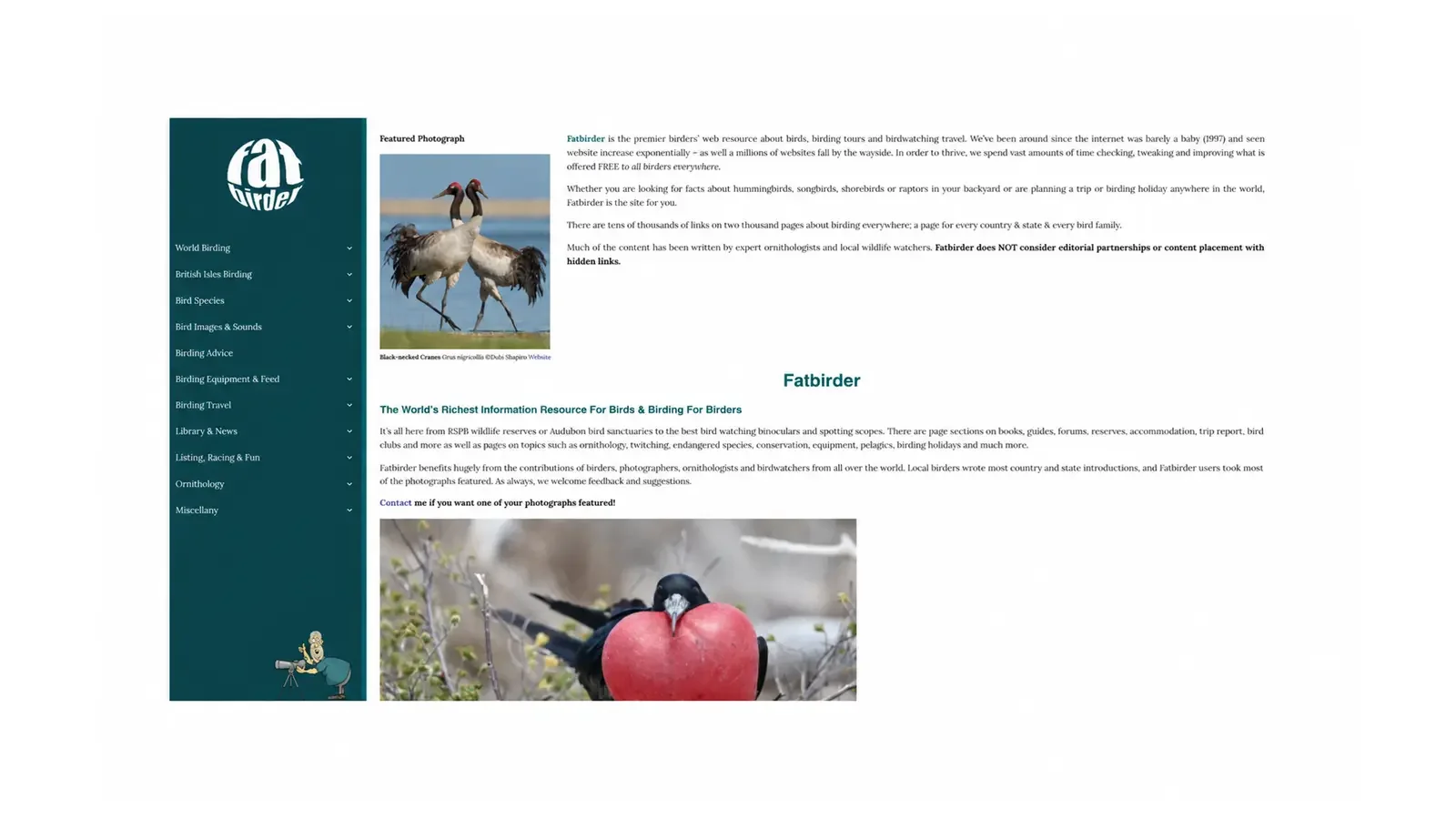
Fatbirder's homepage and directory navigation. Black-necked Cranes photograph © Dubi Shapiro; partial Great Frigatebird photograph © Nick Ludovic Green. Screenshot reproduced with permission from Fatbirder.
Start with the destination
If you’re planning a trip in Britain, the British Isles Birding menu takes you to pages for each county. For trips abroad, the World Birding section lists destinations in other countries, often with regional pages under each country.
The introduction is worth reading before moving to the links. It gives context to the places listed below: the landscape, the main habitats and the birding for which an area is known.
For example, the Isles of Scilly page talks about the islands’ autumn migrants and summer seabirds. It also includes links to the local bird group, recent sightings, the wildlife trust, tours, and trip reports. This gives visitors different ways to explore the area, not just a list of places.
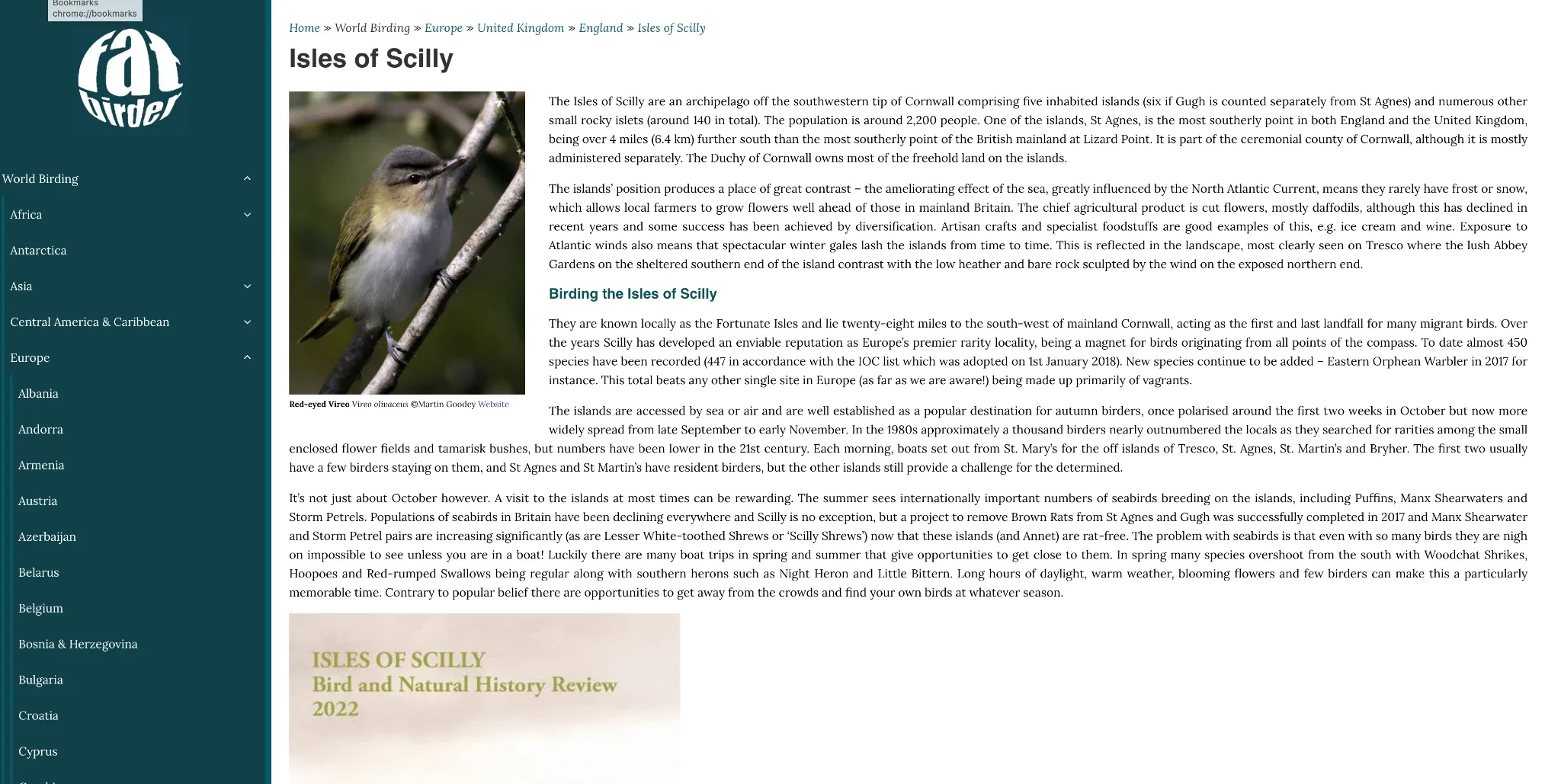
The Isles of Scilly page introduces the islands' birding before listing local information and resources. Red-eyed Vireo photograph © Martin Goodey. Screenshot reproduced with permission from Fatbirder.
Find reserves and local information
The geographical pages gather information that would otherwise require several separate searches. Local bird clubs, wildlife organisations and reserve websites sit alongside other resources for the area.
The Sussex page is a good example. It lists groups like the Sussex Ornithological Society and Sussex Wildlife Trust, and reserves such as Pulborough Brooks and Rye Harbour. Some entries also have a satellite view link, which helps you see where a reserve is in the landscape.
Fatbirder provides the overview and links to more detailed information. The linked reserve or organisation website is the next step for current visiting arrangements.
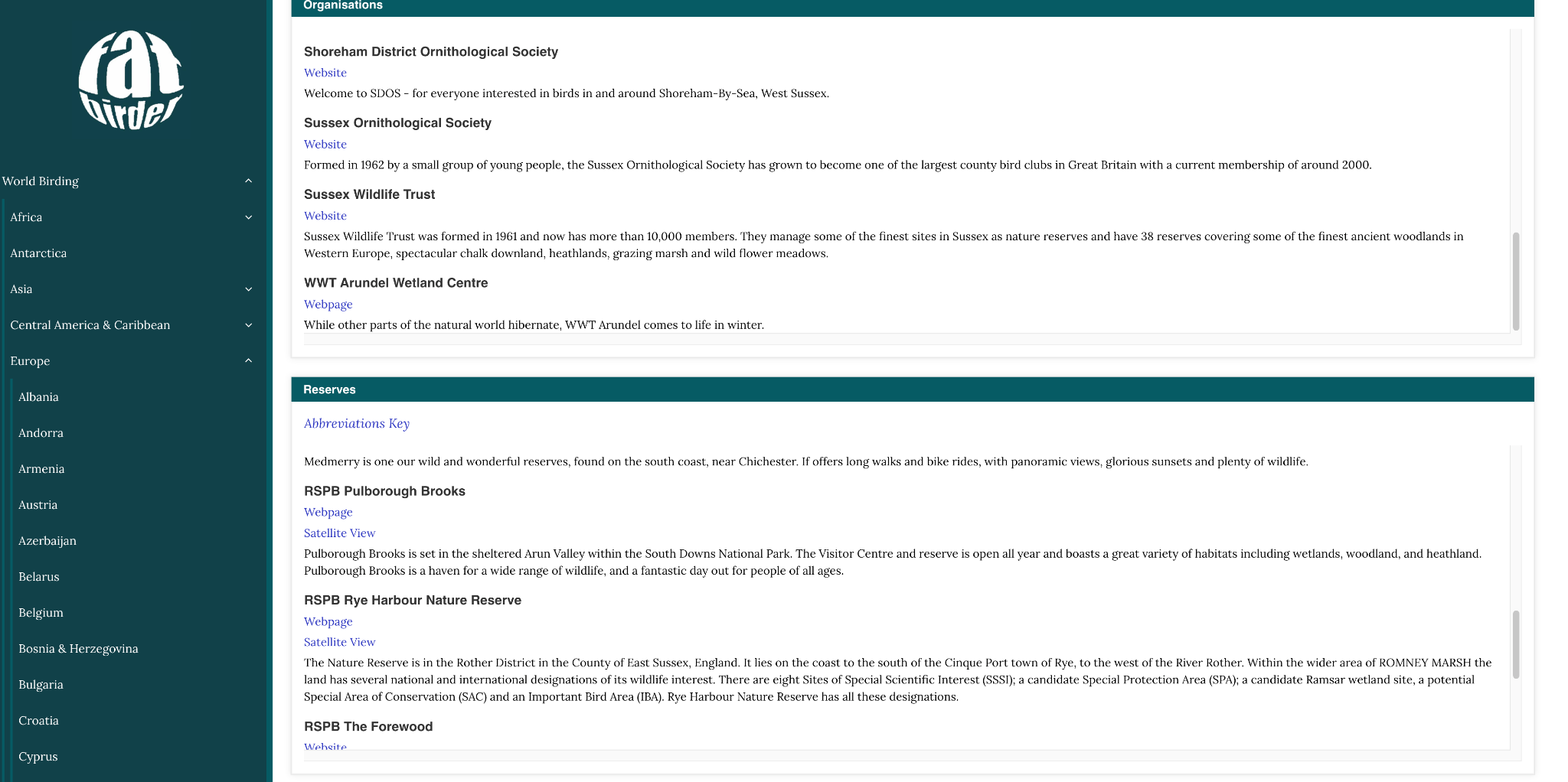
Organisation and reserve listings on Fatbirder's Sussex page, including links to websites and satellite views. Screenshot reproduced with permission from Fatbirder.
Use trip reports and checklists together
Trip reports show how birders planned their visits, including where they went and what they saw.
Checklists show which birds have been recorded in the area. Reading them alongside trip reports helps distinguish the wider species list from what visitors actually found during a particular season.
For East Anglia, Fatbirder has dedicated pages for Norfolk, Suffolk and Cambridgeshire and Peterborough. Each brings together local birding information and links, with material to explore beyond the best-known reserves.
Beyond trip planning
Fatbirder also features pages on bird families, reviews of books and equipment, and a homepage link to Bo’s Grumpy Old Birder column in Birdwatching. These sections are worth a look, but the geographical pages are the best place to start if you’re planning a visit.
This site is included in our Resources directory.