
Landguard Point brings migrant birds, open shingle and seawatching together at the southern tip of Felixstowe. The Port of Felixstowe is remarkably close: ships pass the point while birdwatchers search the low scrub and watch the sea. There are no hides to work through. The value of a visit is in checking several different habitats and giving passing birds time to appear.
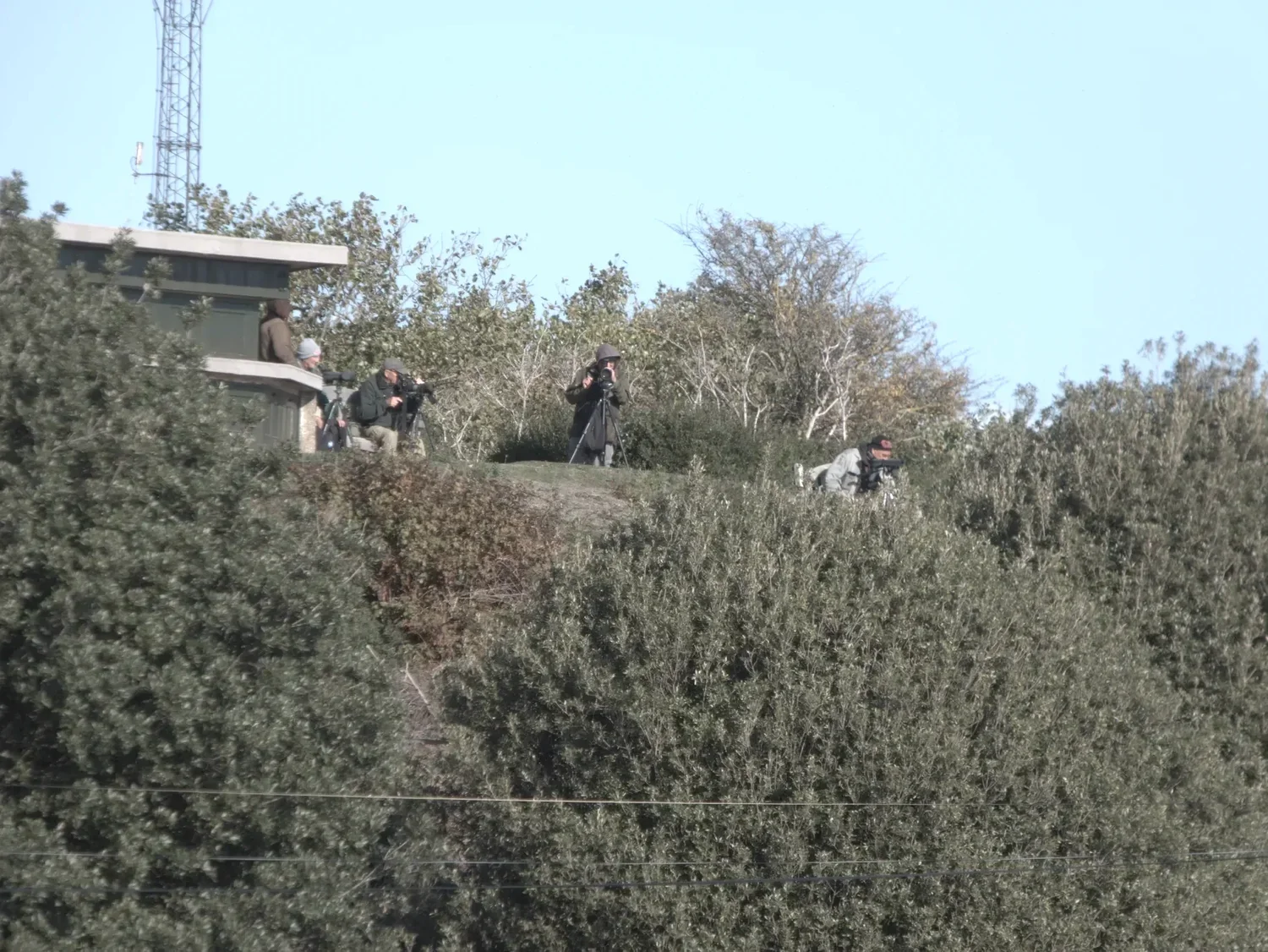
On 17 October 2026, I walked 2.6 km in about an hour and a half and recorded 21 species. It was a relatively short visit, but the open ground, sheltered bushes and sea gave me different things to watch. Birdwatchers were looking out from the observatory during an open day. Beyond them, the cranes and ships made it impossible to forget how close this small reserve is to a working port.
Choosing where to start
For a bird-focused first visit, I would allow at least two hours at Landguard, and longer if there is visible migration or you intend to watch the sea. You can enter from View Point Road near the fort and harbour, or from Manor Terrace at the northern end of the reserve. The first puts you close to the point, observatory and viewing area; the second lets you walk the reserve from end to end. Landguard's official directions show both parking areas.
If time is short, I would start at View Point Road, check the sightings board near the reserve entrance, then walk towards the point and old groyne. Return through the open ground and give the scrub around the old military structures time before leaving. For a longer visit, begin at Manor Terrace and follow the paths south, looking into the Butts and the low cover on the way. The official Landguard visitor information and on-site map are better navigation references than a pin marking the middle of the reserve.
The point, shore and passing birds
The southern tip gives a view across the busy mouth of the Stour and Orwell and out to the North Sea. It is the obvious place to stop and scan the water. A telescope will help with more distant seabirds and wildfowl; binoculars are enough to begin watching nearer birds and movement over the point. Check the shore and rock structures as well as the open water, particularly in winter.
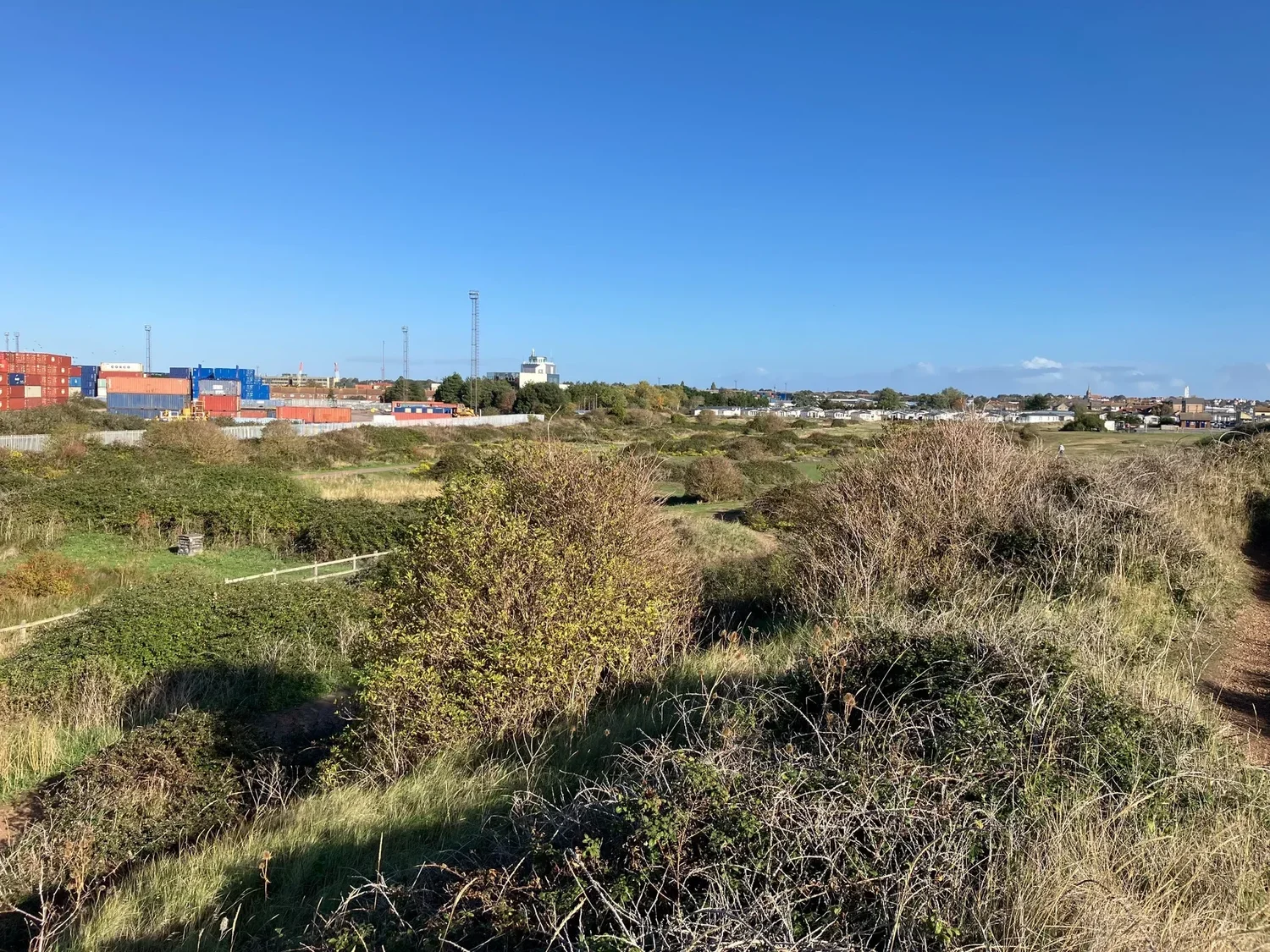
The ships are part of the experience. On my visit, a container vessel lay across the water beneath the cranes. From the shingle, the working port felt much closer than it does from most bird reserves. The view also makes the geography of the site clear: a bird arriving from the sea meets a narrow spit with low vegetation, open ground and a few patches of shelter.

Work the open ground and sheltered cover
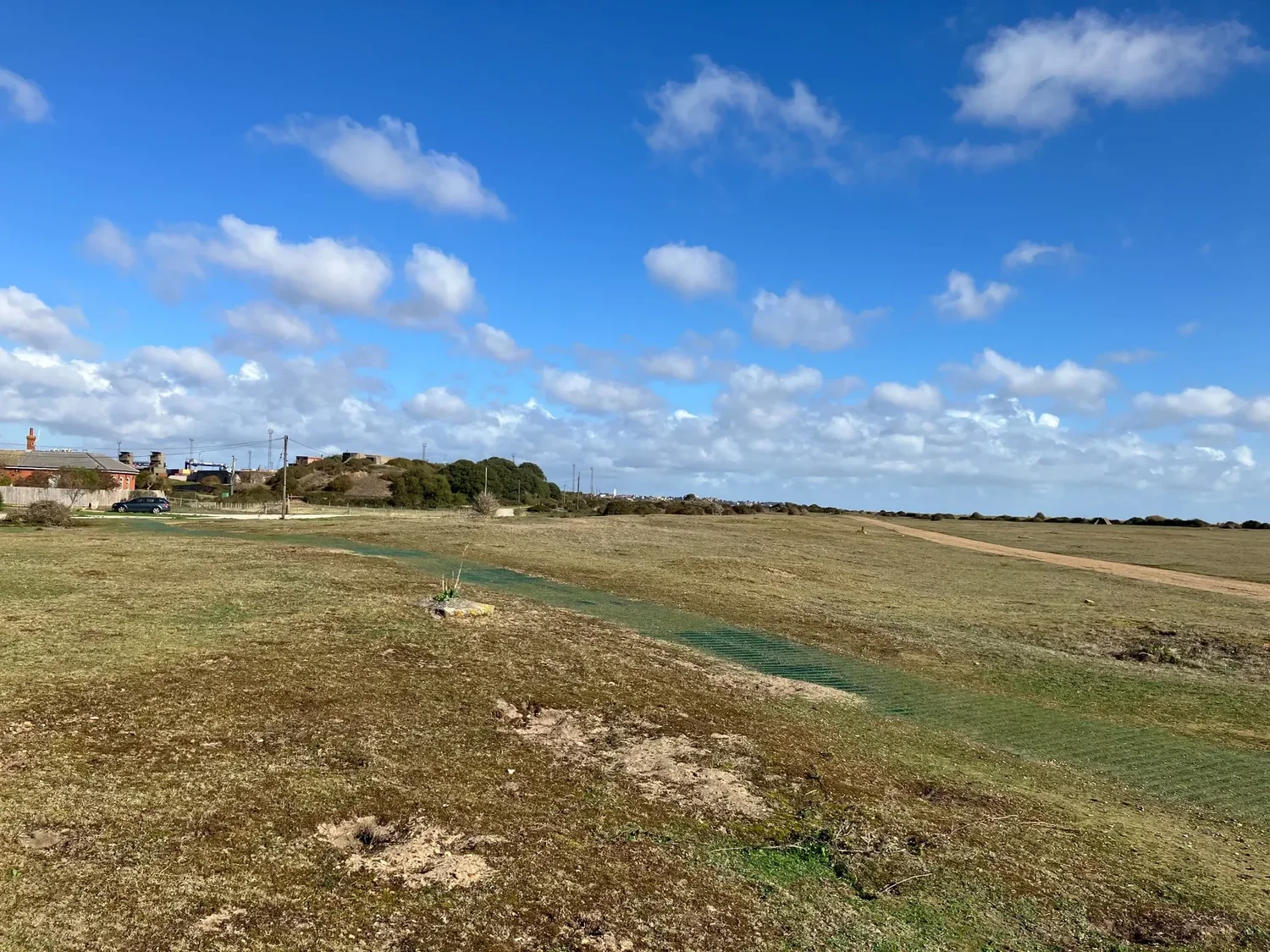
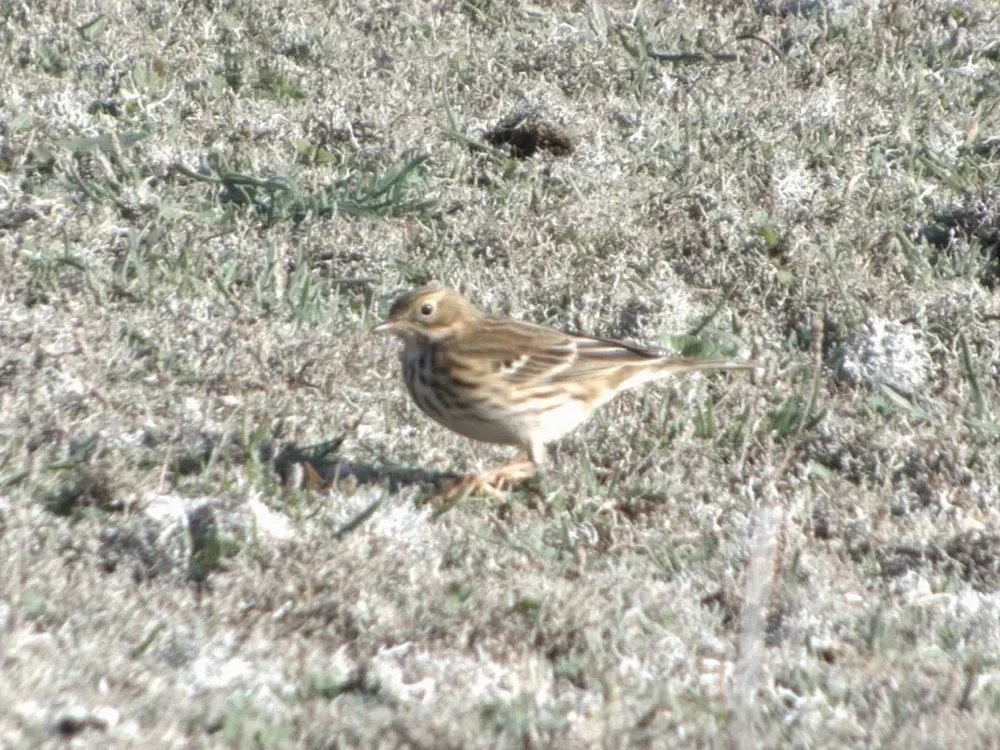
The short grass and sparse shingle vegetation deserve a slow look. I counted 12 Meadow Pipits and two Stonechats on my October visit. Some of the pipits were easy to overlook against the pale ground until they moved. Wheatears are another passage bird to look for in spring and autumn. Walk the marked paths and pause to scan ahead instead of expecting every migrant to be sitting in a conspicuous bush.
The scrub and bushes provide a different kind of search. My checklist included a Blackcap, seven Blackbirds and four Robins. Those birds were recorded on the peninsula; the counts alone cannot tell us which were passing migrants. A warbler may call from cover without showing itself well, and a bird reported earlier in the morning may already have moved on. Give the sheltered patches a listen and watch the edges for movement.
The bird observatory and its sightings
Landguard Bird Observatory carries out a daily bird census and ringing studies. Its recent sightings are useful before a visit, but a recorded bird is not necessarily still present when you arrive. Counts of birds flying past are different again from birds that have settled on the reserve.
The observatory compound is separate from the freely accessible nature reserve. It is normally visited through membership or prior arrangements, and it also holds organised events. The observatory's visitor information explains the arrangements.
When to go
Spring and autumn are the main seasons for looking for grounded migrants in the shingle and scrub. Wheatears are a good example of why it pays to scan the open ground. Autumn can also bring visible movement overhead and wildfowl passing the coast. I recorded one Brent Goose on my October route; a single bird is a useful reminder to keep checking the water and sky even when most of your time is spent on land. Winter shifts attention towards the sea and shore, while summer gives more reason to look at the plants, insects and breeding birds of the reserve. What is present depends on weather and the day of your visit; Landguard's observatory reports show the variation better than a fixed list of target species.
The vegetated shingle is one reason the reserve is protected. It supports specialised plants and nesting Ringed Plovers, whose eggs and chicks are hard to see against the stones. Follow the signed paths and respect seasonal cordons, particularly on the beach. Landguard's current guidance also explains the dog restrictions, which vary by area and season.
Parking, facilities and a second stop
Planning a visit: The reserve is freely accessible throughout the year. Parking charges apply at Manor Terrace and View Point Road; check current charges and directions before setting off. Public toilets are available at Manor Terrace and by the View Point Café. The wide concrete route provides an easier way through the reserve, with a boardwalk towards the shore; the Butts and some shingle paths are rougher underfoot. Check Landguard's access information for current details.
Landguard and Trimley Marshes make a worthwhile full day of Suffolk birdwatching. I would use the morning for Landguard's migration and sea watch, then give Trimley the afternoon for its lagoons, hides and Orwell mud. Allow at least four hours for Trimley, including its substantial walk from the car park. If you want to work both places thoroughly, start early and leave a shorter visit to Landguard for another day.