
I took the Panasonic Lumix FZ82D through three weeks of autumn birding in East Anglia. It was light enough for the long walks and regularly produced photographs that were useful for recording a sighting. Whilst many of the images looked quite good on the camera screen, they were rather soft when enlarged. Looking through the whole lot now, it is clear that light intensity is far more important to image quality than I initially thought. A lot of the days during the test were pretty dull, and some were dreadfully windy. The best pictures were taken when the sun was at its strongest. The less-than-ideal ones were still often useful as birding records.
I'm a birder taking photos as I go along, not a photographer out to get the very best possible shot with that camera. All the bird photos in this article were taken handheld with IS on. They're what I've brought home during normal birding, not the result of a controlled experiment in identical conditions. To see what a photographer can do with the same model under different circumstances, look at John W. Wall's photos on Nature Where I Live, taken with the FZ80D (the FZ82D in another market).
A camera I was willing to carry
I bought the FZ82D because I do a lot of walking and wanted a long zoom without carrying a big camera and a set of separate lenses. I could keep it in the bag with my binos, take a few shots and be on my way. That's the sort of thing that makes a difference when photography is just part of the day's birding rather than the raison d'être.
The battery was sufficient. On one day at Cley I managed over 600 photos and a couple of short videos and still had plenty of charge remaining. That's just one day's use, not some kind of battery life test.
The lens zooms to 1200mm full-frame equivalent (that's its angle of view, not its resolving power). At the long end, it has an f/5.9 maximum aperture. In poor light, if I want a faster shutter speed to freeze movement, I have to raise the ISO and accept more noise and less fine detail. Otherwise I have to use a slower shutter speed. Panasonic lists the camera's specifications here.
What the changing light showed me
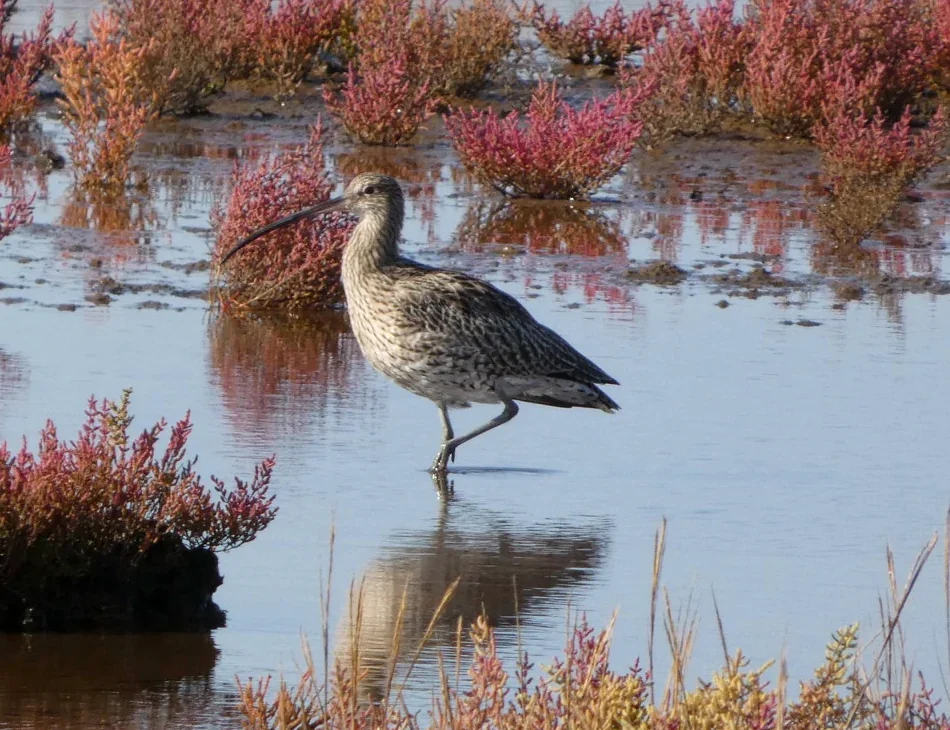
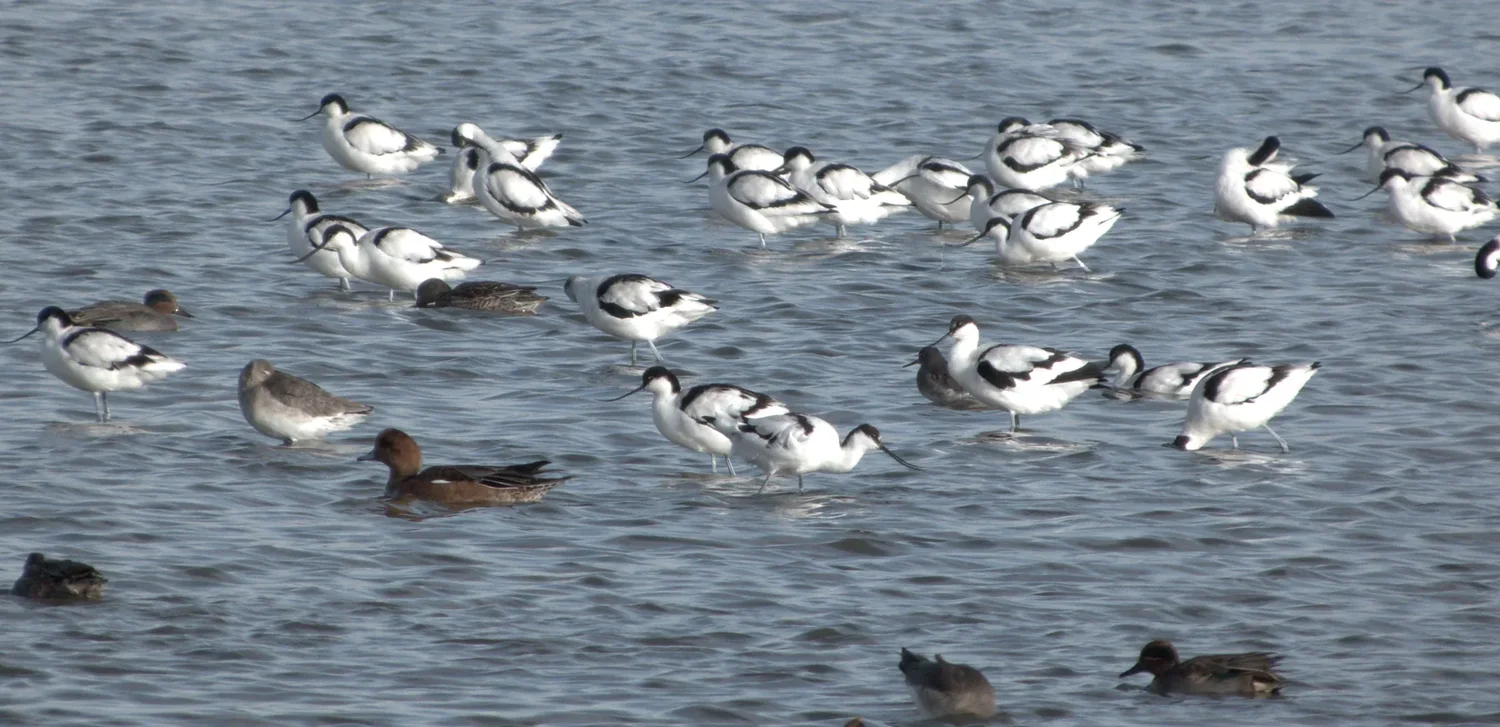
The Curlew (bright autumn sun) is one of the better shots I've made. The bill, eye, and plumage pattern are all very clear, and the saltmarsh is a good background. The Avocets at Trimley Marshes were taken in rather better light than most of the shots on the trip. They're all quite clearly defined in shape and pattern (black and white) even though they were quite a distance away. Good reminders that the camera can produce quite attractive pictures as well as records when the conditions and the subject are right.
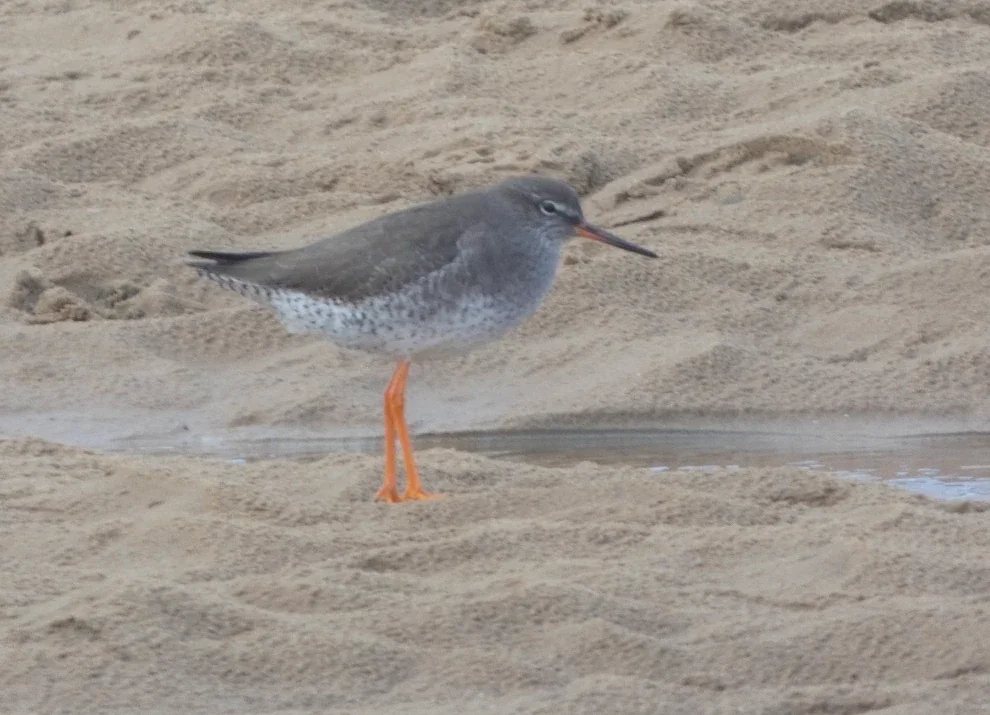
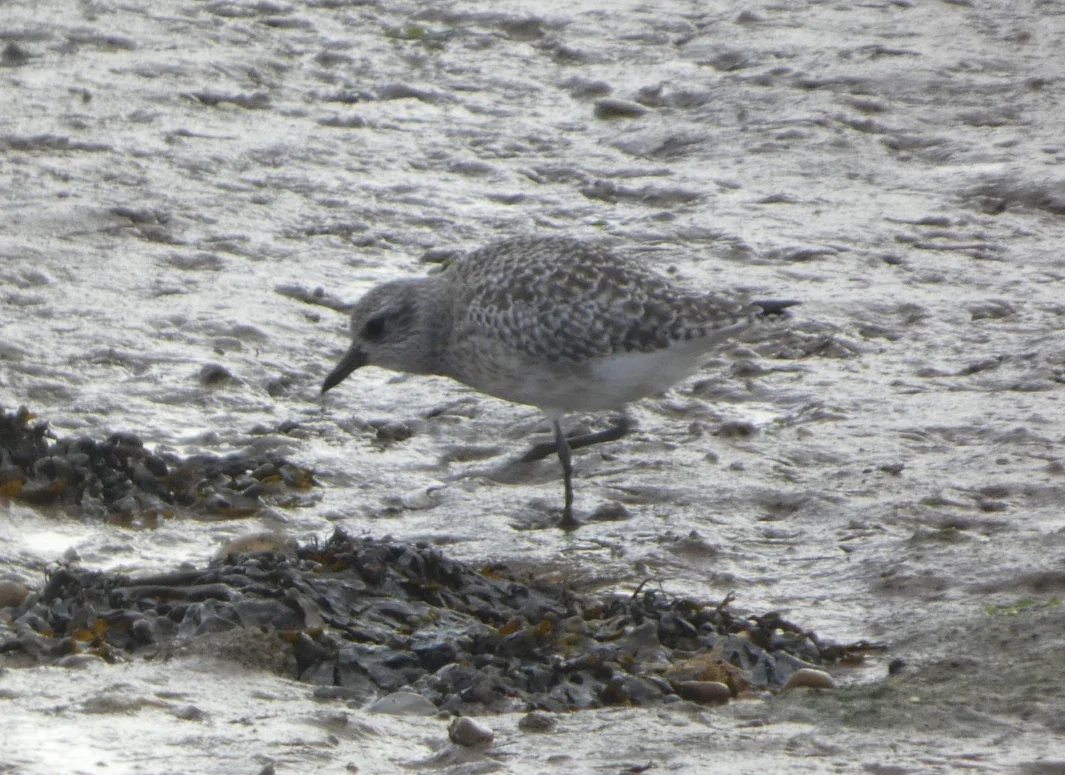
The Wells–Holkham shore was a different proposition. The wader photographs were taken in high winds. On the day I photographed the Redshank, the reserves I had hoped to visit were closed, sand was blowing across the beach, and I was struggling to stand upright. That photograph is a worthwhile record: the orange legs, bill and breast markings remain visible. The Grey Plover also retains enough shape and plumage for a useful record, although the flat, bright mud and wind did the picture no favours. Neither is a fair example of what the camera might do on a calm, sunny day.
Near dusk, I photographed a Snow Bunting on the shingle. It is grainier and less detailed than the Curlew, but the bird's shape and black-and-white wing pattern are clear enough to be useful. The image is a record made in low light, and I have kept that low-light character in the version shown here.
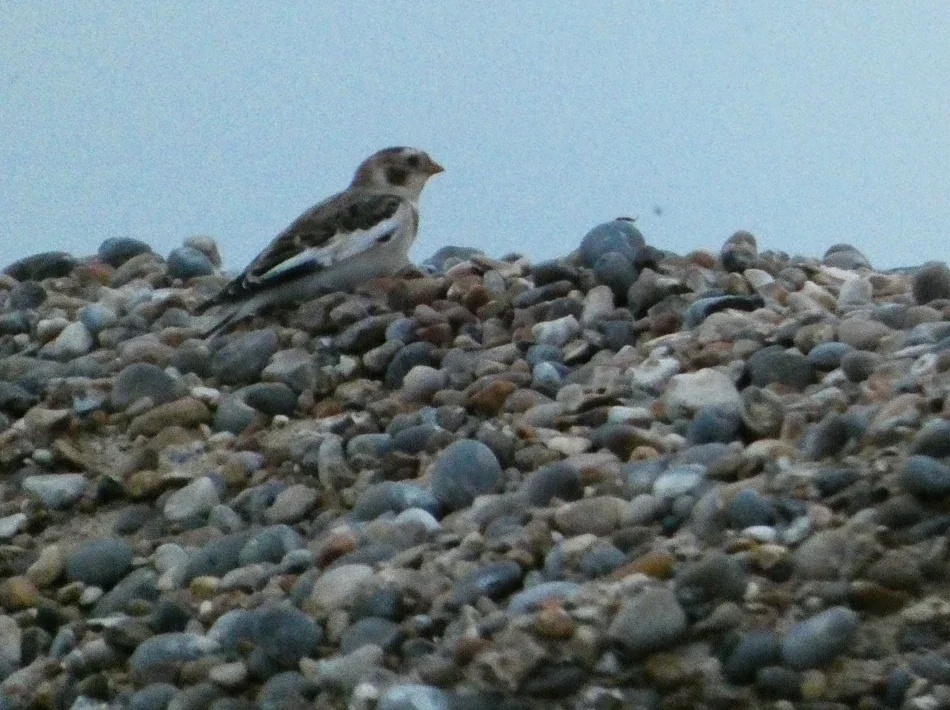
I'd probably draw a fairly modest conclusion from that lot. Better light improved my chances of getting a good image; in much worse light I still often came away with enough information to help with identification. The birds are different species at different distances and in different situations so don't really isolate light as the sole factor.
Stabilisation, focus and moving birds
Handholding the long zoom in those winds was a real challenge. I recall reports of gusts around 70mph that day (I didn't actually measure the wind at the camera). The image stabilisation was very useful in those conditions, and I was able to get quite usable images of stationary and slowly moving birds. Image stabilisation will reduce my camera shake; it won't stop a bird moving, it won't arrest the wind moving the perch, and it won't make an exposure any faster. That's my field experience; that's not a measured stabilisation test.
Focus was a separate issue. In mist, or when the bird was very low contrast against its background, the autofocus would often simply fail to acquire the subject at all. The egret shot illustrates the conditions (though of course one shot doesn't prove why the focus failed). In poor light it was very difficult to follow flying birds. I did manage to get a few shots that gave us some identification details, but no flight shot from that trip would have been one I'd picked as an article shot.
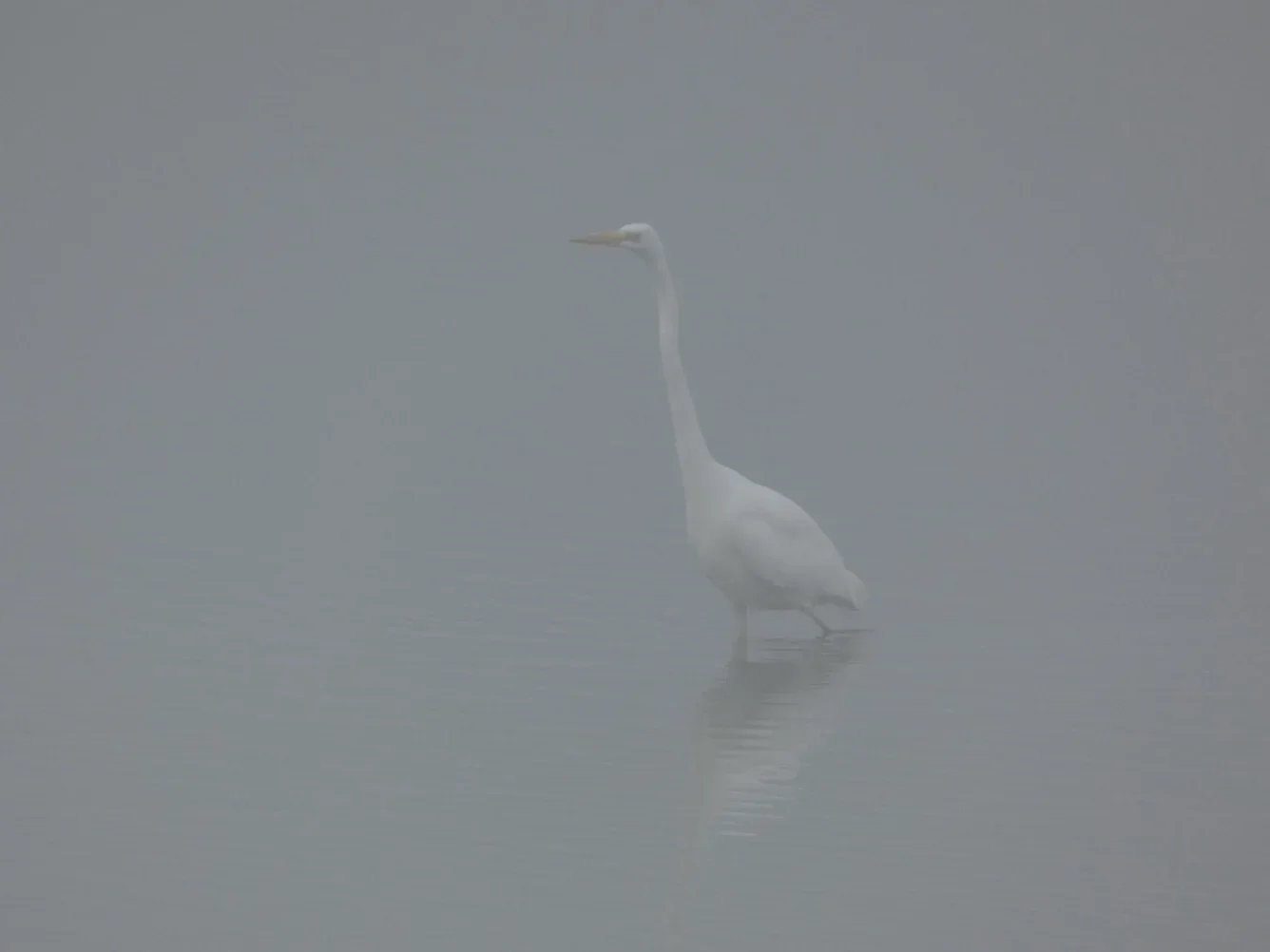
At full zoom, the narrow field of view made it very difficult to find a moving bird before I even started focusing. A smaller area of focus helped when there were branches in front of a perched bird. I did a couple of attempts at manual focus, which was quite adequate on static subjects, but at full zoom simply wasn't quick enough for a bird in motion or one about to go. At Holkham, we had a bird which I identified in the field as a Dusky Warbler, which simply disappeared before I could get a photo of it. That would have been a good record, but there's no photo to confirm that field ID.
The Kingfisher and the difference between a record and a portrait
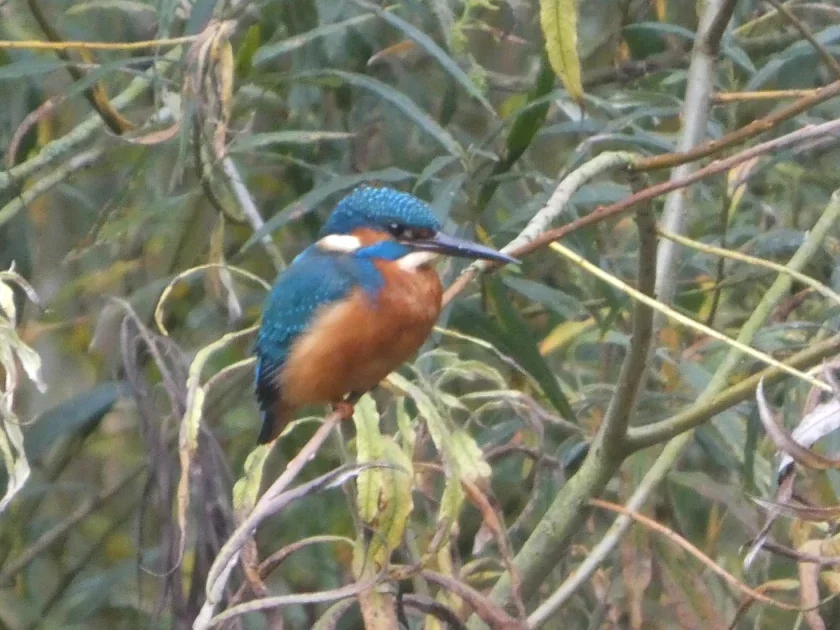
One Kingfisher stayed on its perch long enough for me to take several frames. I was looking for a properly sharp image, and none of them had the fine feather detail that I was after. It was a record of the bird; it wasn't really a portrait. I don't know from the display-sized copies whether the main problem was a very slightly out-of-plane focus, small movements, distance, air conditions or simply the optical and sensor limitations of that particular shot. The full resolution originals and the exposure settings would be required to really get to the bottom of it.
The gulls showed another sort of limit. I identified a Yellow-legged Gull in the field and photographed it in good sun. The three birds are reasonably clear, but I did not get the open-wing views and other angles I would need to establish that identification confidently from the photographs alone. That was a failure to record the necessary evidence, rather than a failure of sharpness.
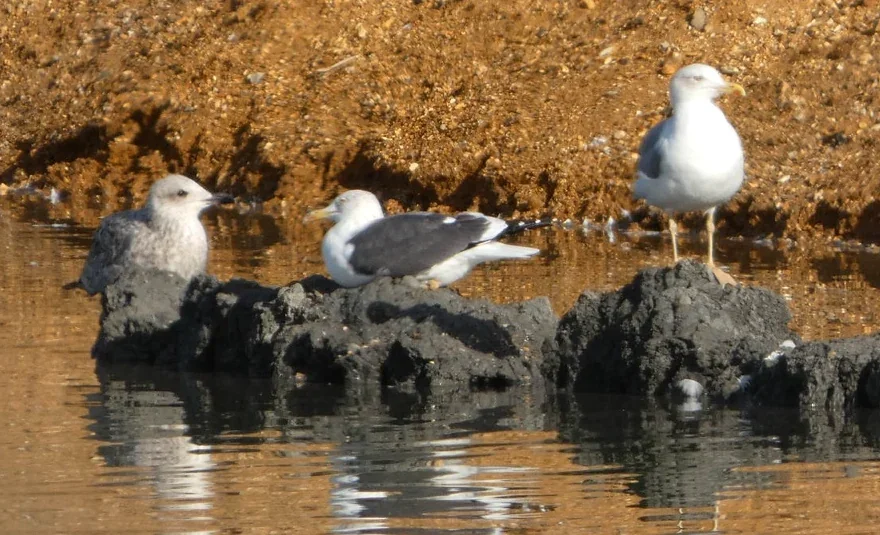
A modest tweak to exposure or contrast can go a long way toward presenting a photograph, and a little sharpening can make the recorded edges far more legible. It's of course not going to recover any feather detail that the camera didn't actually record.
Why poor light made sharp images harder
At 1200mm equivalent, even slight movement is conspicuous when I enlarge a bird photograph. For a pin-sharp image of a moving bird, I might need a shutter speed around 1/1000 second or faster, sometimes 1/2000 second; a bird holding still can be photographed more slowly. Image stabilisation helps with my hands, but it cannot freeze the bird. At full zoom the lens opens only to f/5.9, so in dull autumn light a fast shutter means raising the ISO. On this small sensor, that brings more noise and less fine detail. Keeping the ISO low instead means a slower shutter and a greater risk of motion blur. Strong sunshine gives me more room to combine a fast shutter with a lower ISO. That helps explain the pattern I saw, although light was not the only difference between these photographs.
Conclusion
For the price and weight, I still think the FZ82D is very good value. I could certainly carry it all day. It provides useful identification records even in poor autumn light and on occasion I'd actually get a very nice shot when the light was better. I'd like to try it again in the summer when the light is better, and that will tell us a bit more about its performance in stronger light.