
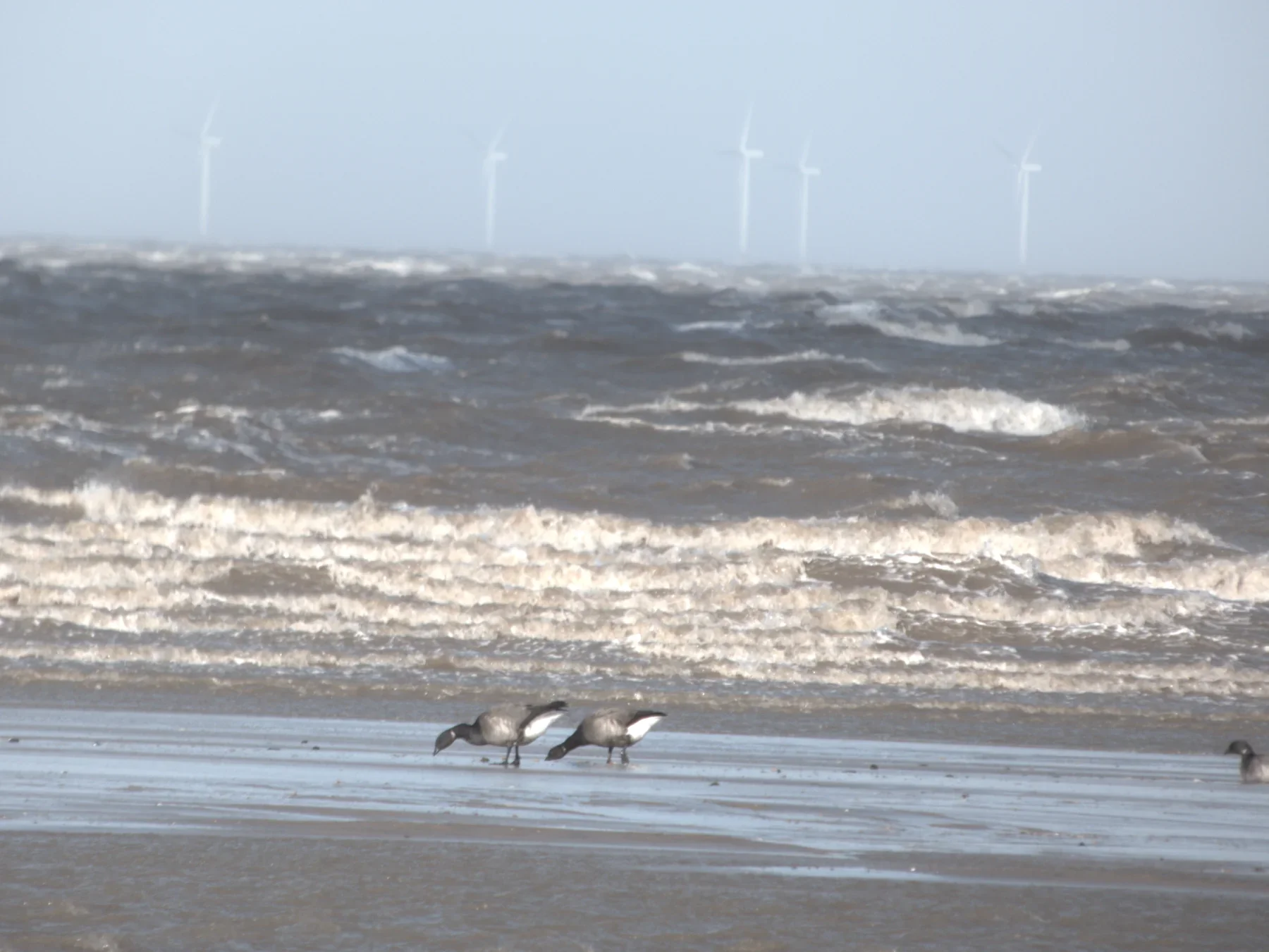
At a distance, Brent Geese can appear more like dark ducks than geese. In my photo of two of them feeding just below the breakers, the white under their tails is far more apparent than the small patches of white on their necks. The patches are easier to see when the birds lift their heads.
If you’re looking for Brent Geese on the East Anglian coast in winter, start by scanning the exposed shore and shallow water. When the tide has covered the feeding area, look across the saltmarsh and adjacent grazing fields, or check sheltered water where the birds may be resting. A flock can use several of these places during a single visit.
Brent Goose or Canada Goose?
Look at the position of the white marking. An adult Brent Goose has a small patch on the side of its black neck. A Canada Goose has a much broader white patch on the cheek and under the chin. The Brent has a shorter bill and a more compact body. The Canada Goose has a longer neck and a paler breast. RSPB Brent Goose account · RSPB Canada Goose account
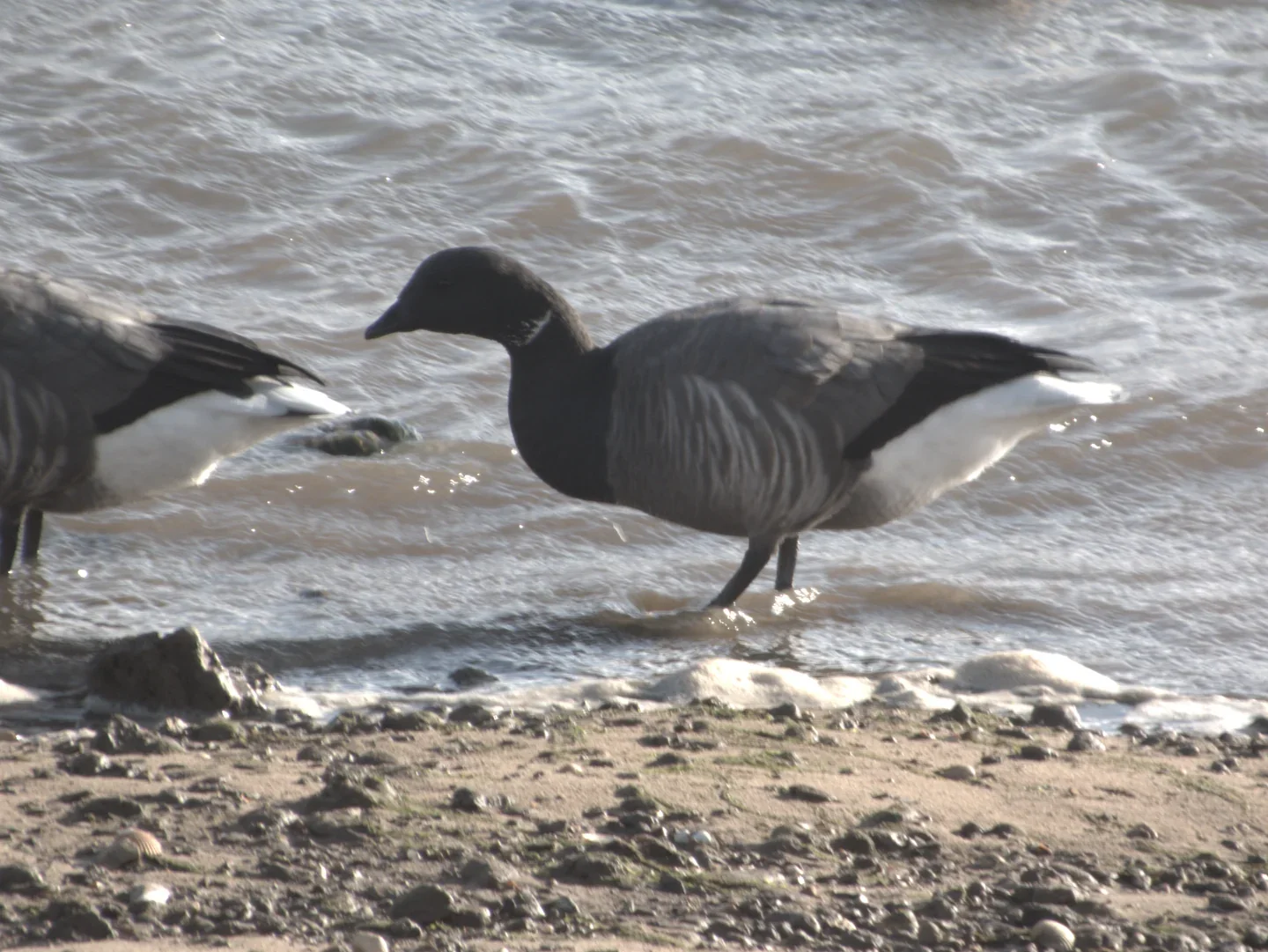 Dark-bellied Brent Goose
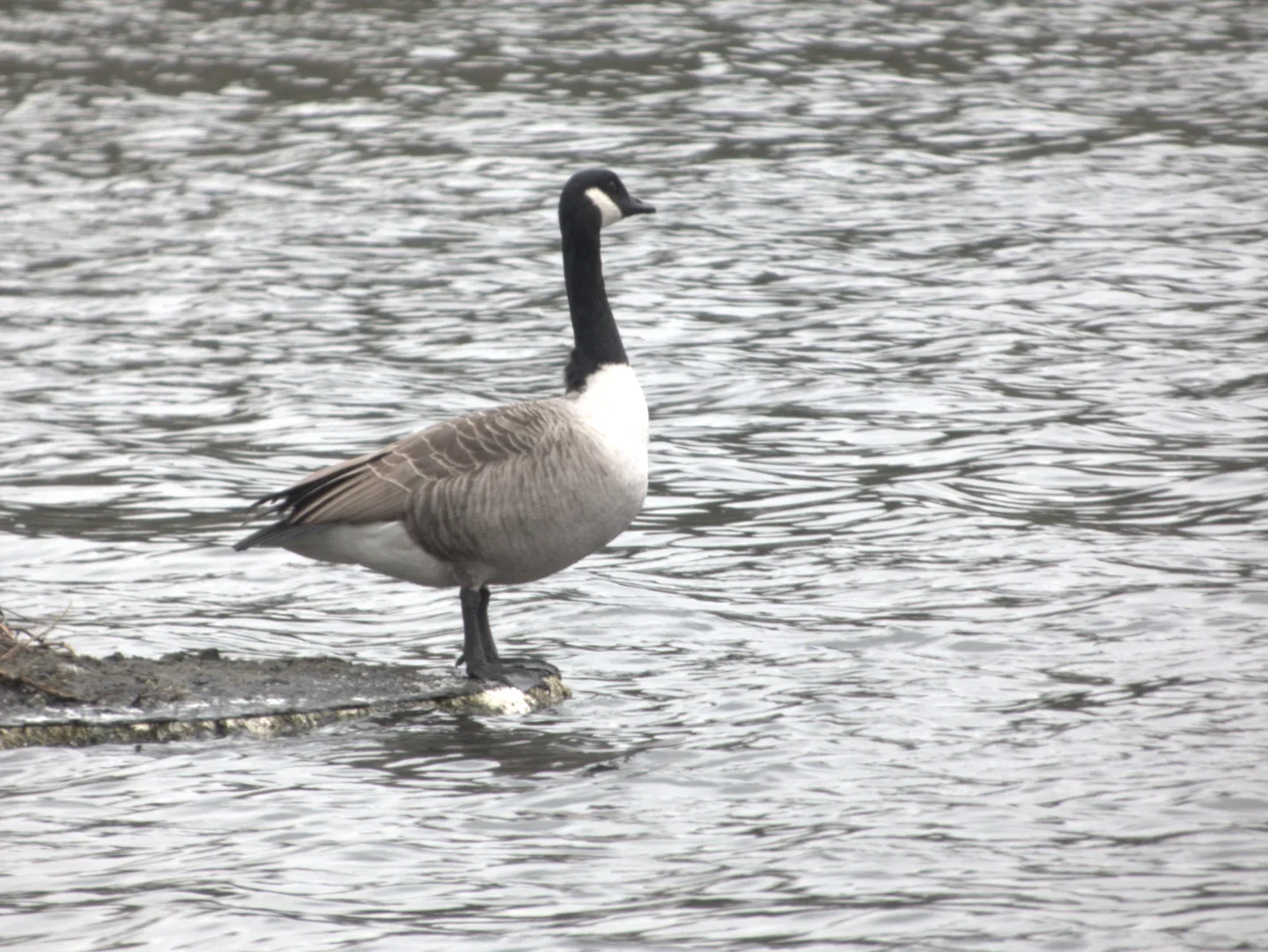 Canada Goose
Dark-bellied and Light-bellied Brent Geese
Both are subspecies of Brent Goose. Dark-bellied Brent is the form you’re most likely to see on the East Anglian coast. Its smoky grey-brown belly contrasts only slightly with the black breast, and the strongest contrast is with the white under the tail. On a Light-bellied Brent, also called Pale-bellied, the much paler belly stands out against the black breast. Look for where the contrast is strongest, since sunlight can make a Dark-bellied bird look quite pale. BirdGuides photographic guide
In Britain, Light-bellied birds from Svalbard winter mainly around Lindisfarne. Strangford Lough in Northern Ireland is the main wintering site for the Canadian population on this side of the Atlantic. BTO Brent Goose account
A rising tide changes where to look
Brent Geese feed on eelgrass, algae and saltmarsh vegetation. As the tide rises, the exposed feeding area shrinks. Birds can feed in the shallows while the food is within reach. Some flocks move to saltmarsh or nearby fields, and others rest while feeding grounds are covered. WWT report on Brent Goose feeding areas
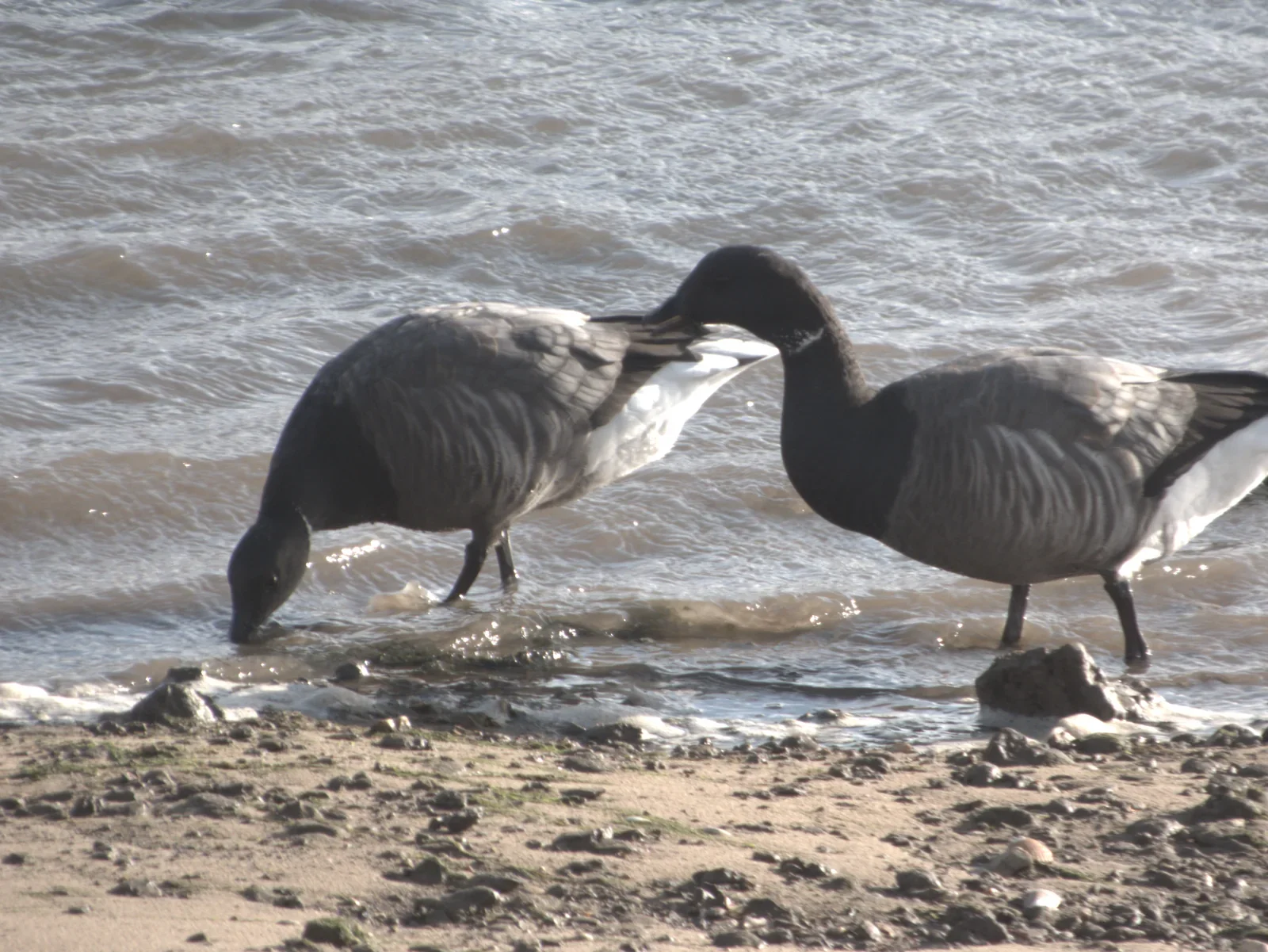
At Trimley Marshes, I saw the Avocets move onto the freshwater pools as the tide rose on the Orwell. There were Dark-bellied Brent Geese on the pools as well. I’d start with the river view from the bank while there’s still mud exposed, then check the pools from the hides as the water comes up. At Cley, I’d check the grazing marsh from the East Bank, where Brent Geese feed in winter. Trimley Marshes guide · Cley and Salthouse Marshes guide
The feeding grounds change through winter
Over three winters on the Norfolk coast, Juliet Vickery and colleagues found that Dark-bellied Brent Geese fed first on algal beds, then increasingly on saltmarsh, grassland and arable fields as food on the shore dwindled. In one of those winters, a storm stripped away much of the algae and the geese switched to saltmarsh earlier. An exposed shore can therefore be quiet even at low tide. Scan the grazing marsh and adjacent fields before moving on. Norfolk study by Vickery and colleagues
The Dark-bellied Brent Geese that winter here breed in Arctic Russia. One bird tagged in Essex spent two months on the German Wadden Sea during its spring migration before continuing east. Our month-by-month guide to bird migration in Britain puts those spring departures alongside the movements of other winter visitors. Essex Wildlife Trust tracking project