

Cley and Salthouse Marshes: a birding guide
Cley and Salthouse Marshes are large enough to reward a full day, but trying to cover every hide, bank and stretch of shingle can make the visit less productive. Choose between the central scrapes, East Bank and the open coast according to the birds, water and weather.
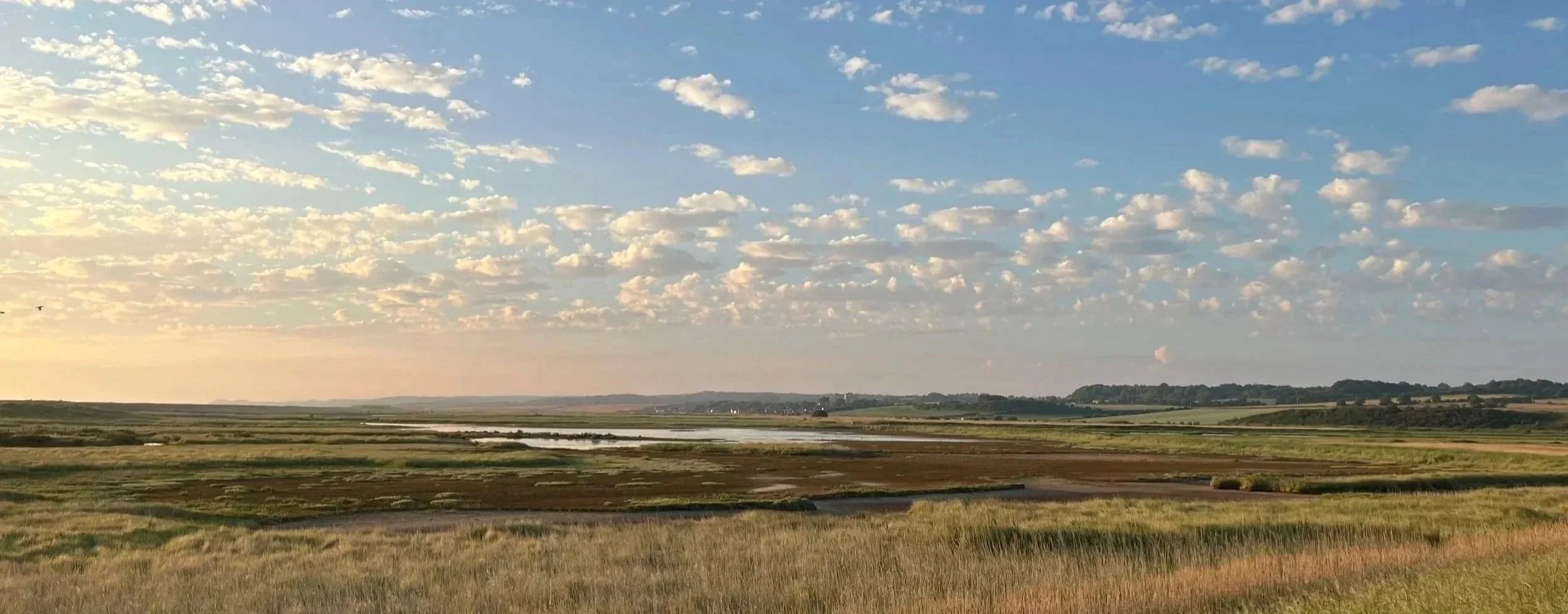
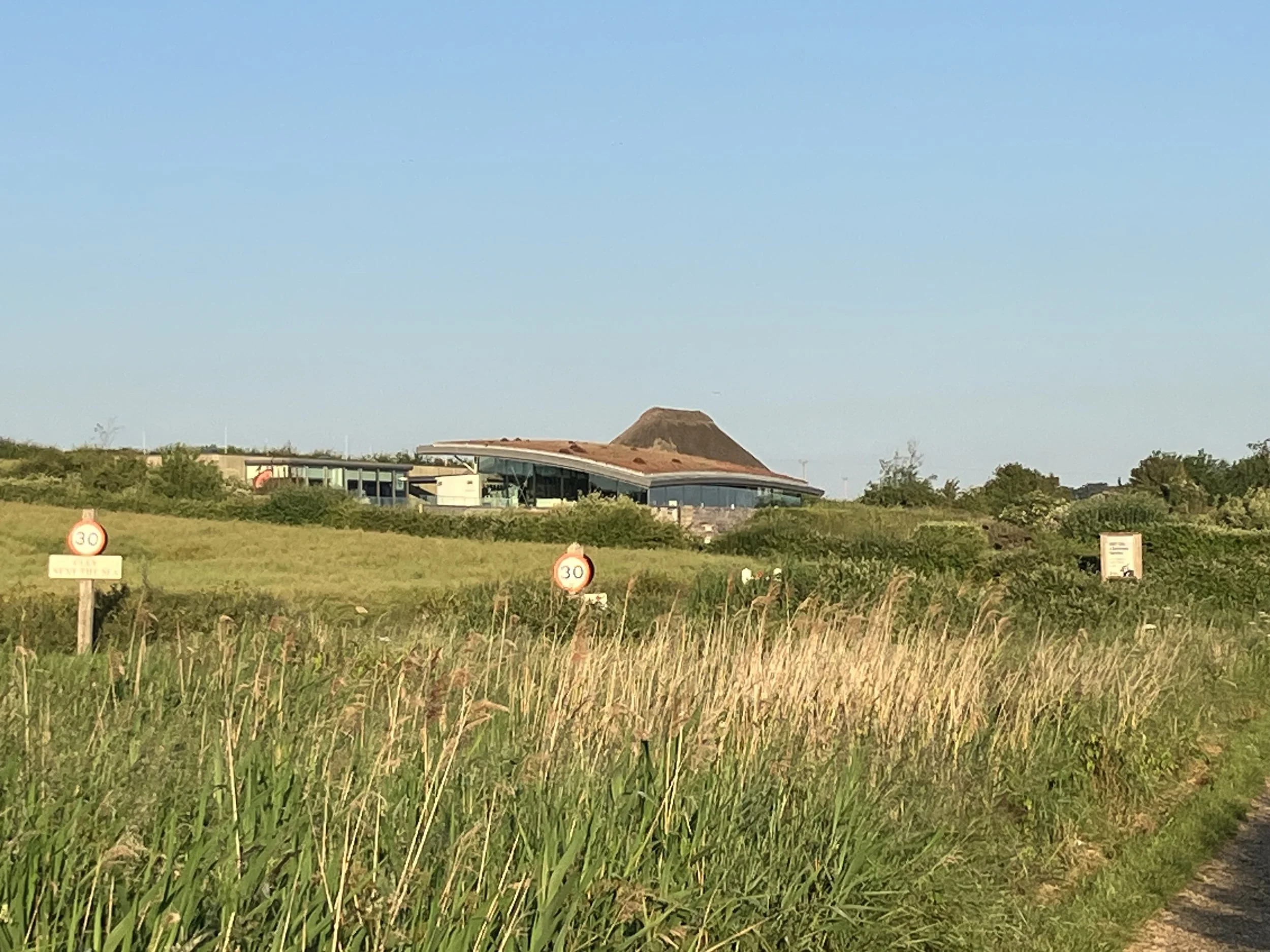
View across Cley and Salthouse Marshes
Cley’s reputation can encourage a first visit built around rare birds. That is understandable, but it is not the best way to read the reserve. Its real strength is the connection between freshwater pools, reedbed, grazing marsh, brackish lagoon, shingle and sea. When one part is quiet, another may be holding birds for a clear reason. The best starting point, therefore, is not fixed. Check the latest reports, check the wind, and ask about water levels before committing to the day. The central hides are the obvious choice when waders and wildfowl are using the managed scrapes. East Bank makes more sense when Arnold’s Marsh, the eastern reedbeds or the sea are likely to matter. Salthouse is not simply the far end of a compulsory circuit; it can be the right place to begin.
Decide where to start
The visitor centre offers a broad view across the marshes and is a useful first stop, especially if it’s open and staff can explain where birds have been feeding. A report from the previous day may no longer be useful if water levels, disturbance or weather have changed. For a short visit, choose one of two main approaches:
Central hides: best when you want sustained views over the freshwater pools and scrapes.
East Bank: best when you want to combine reedbed, wet grazing marsh, Arnold’s Marsh and the coast.
With a full day, you can combine the two. The shingle beach or Salthouse should still be added for a reason, not simply because they appear on the map.
The central hides and scrapes
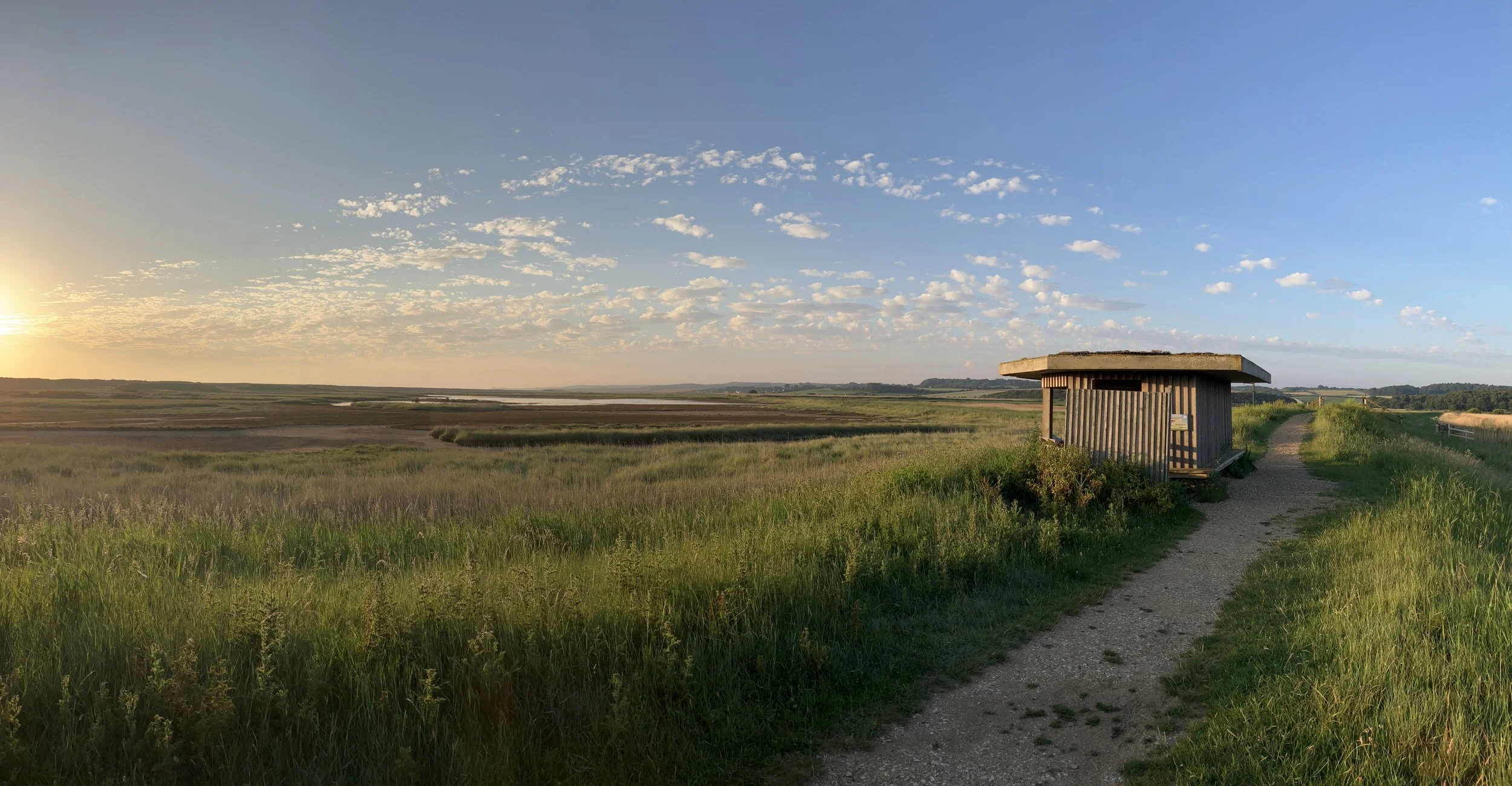
From the visitor centre, the reserve entrance lies across the A149. Paths and boardwalks lead towards Bishop’s Hide and the central hides, which overlook pools managed for breeding and passage birds. This is the part of Cley where a telescope and patience usually matter more than distance covered. Waders can feed close to a hide, rest on an island, or hide partly along a muddy edge. Work through the common birds before looking for anything less familiar. A flock of Dunlin, Black-tailed Godwits or Ruff deserves more than a quick scan, especially during passage. The same pools can look very different from one visit to the next. Exposed mud benefits feeding waders, while deeper water may favour wildfowl. A bird reported from one scrape may move when a raptor passes over or when the feeding edge changes. It is often worth returning to a hide later rather than treating each viewpoint as completed.
East Bank and Arnold’s Marsh
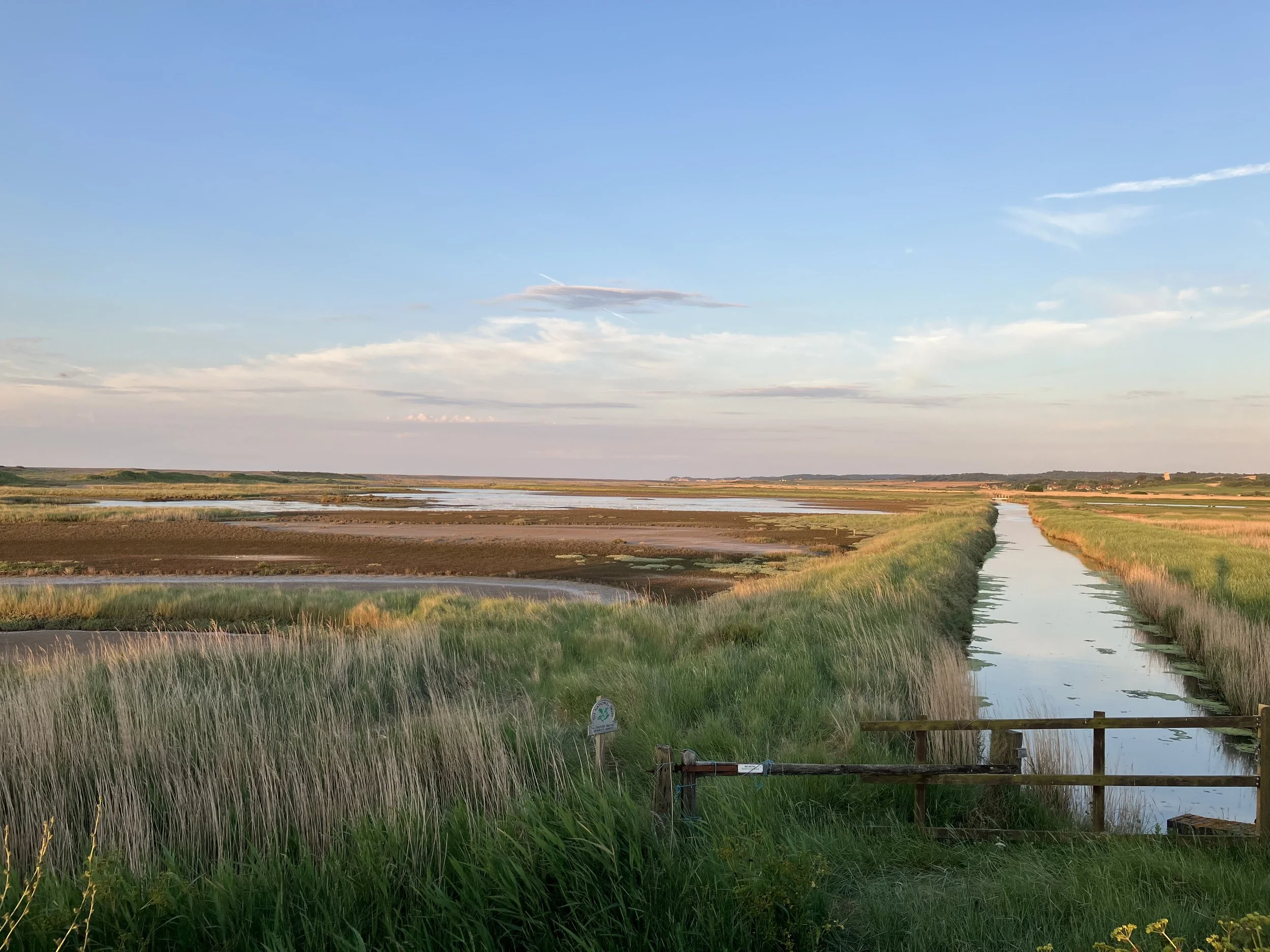
East Bank is a raised, hardened route running north towards the shingle. It gives open views across reedbed and wet grazing marsh before reaching Arnold’s Marsh, a brackish lagoon near the coast. The walk is useful because the habitats change without requiring a complicated circuit. You may hear or see reedbed birds along the bank. The pools and wet meadows can hold breeding or passage waders, while Arnold’s Marsh often adds another selection of waders and, in summer, resting terns. In winter, geese and wildfowl may spread across the wider marshes. Don't hurry to the beach just because it is visible ahead. Stops along the bank can be more productive than the destination, and birds on the eastern side may be easier to find when watched from one position for several minutes.
The beach and sea
The sea gives Cley another character, but sea-watching is strongly affected by weather. Northerly and north-westerly winds can bring movement closer to the coast, especially from late summer through autumn. On quieter days, many birds may pass too far out to identify, or there may be little movement at all. A telescope, warm layers and time are useful even outside winter. If the sea is active, an intended ten-minute check can become the main part of the visit. If conditions are unpromising, there is little value in remaining there merely because Cley is known for seawatching. The shingle also takes more effort than a surfaced path. Walking west towards the Gillmor Discovery Hide or east towards Salthouse can be worthwhile, but the ground is slower and more tiring than the distance suggests. The Gillmor hide, introduced in 2025, overlooks North Scrape from just inland of the beach and can be moved when a major storm is forecast.
Salthouse is a separate choice
You can approach the eastern side of the joined reserve from East Bank, Iron Road, or Salthouse. It feels more open than the central hides, with wet grazing marsh, pools, reedbed and the shingle ridge spread across a wider landscape. This area comes into its own when birds are reported east of East Bank, when migrants use the coastal edge, or when winter flocks feed across the marshes. The shingle near Salthouse may hold Snow Buntings in winter, but their presence should be checked rather than assumed. You can connect Cley and Salthouse on foot, but it is not always the best use of a birding day. If time is limited, bird one section properly. A long circuit can leave you walking through the least productive habitat when the birds are concentrated elsewhere.
Why the reserve keeps changing
The pools are not static pieces of scenery. Water levels are managed to maintain freshwater reedbed, wet grassland and feeding areas for waders and wildfowl. North of the freshwater marshes, the reserve becomes increasingly brackish and saline as it meets the shingle coast. The New Cut, a drain along the northern part of the reserve, helps remove salt water after storm flooding. Recent work has moved its most vulnerable section, reprofiled North Scrape and created new channels within the reedbed. These changes are intended to protect freshwater habitat for as long as possible while the coast is increasingly affected by rising sea levels and winter storms. This management helps explain why birds redistribute around Cley. A scrape productive on one visit may offer different feeding conditions the next. Current water and weather can be more useful than an old list of where a species is usually seen.
Cley through the year
Spring brings breeding activity and migration. Avocets, Redshanks and other wetland birds use the pools and marshes, while newly arrived warblers bring sound back to the reedbeds. Passage waders and coastal migrants depend on conditions and may stay only briefly.
Summer is not an empty interval between migrations. Breeding birds remain active; terns use Arnold’s Marsh, and Spoonbills from the north Norfolk population may visit the pools to feed. Give nesting birds space, and watch for seasonal signs and cordons.
Autumn gives the widest range of possibilities. Wader numbers and variety can build on the scrapes, migrants may appear along the coast, and suitable winds can produce seabird passage. The best part of the reserve may change during the day.
Winter brings wildfowl, geese, waders and raptors across the marshes. The exposed coast can be cold, but the central hides allow longer examination of flocks. Snow Buntings may use the shingle towards Salthouse, though numbers and locations vary.
How long to allow
A half day is enough for either the central hides or East Bank and Arnold’s Marsh. A full day lets you combine the central scrapes with one coastal or eastern extension without rushing. Trying to include every part of Cley, the full shingle walk and another North Norfolk reserve usually weakens the day. If the birds are active, stay with them. If reports or conditions point elsewhere, change the plan early rather than completing a route out of obligation. Cley can also serve as the anchor for a long weekend of birding on the North Norfolk coast.
Access, facilities and current reports
The Norfolk Wildlife Trust visitor centre is on the south side of the A149, opposite the main reserve entrance. The reserve is open from dawn until dusk, while the visitor centre and café have separate seasonal hours. Some parking and hide access charges apply, and arrangements can change. The Coasthopper bus stops outside the reserve. Boardwalks and hardened paths give access to several hides and much of East Bank, but the shingle is considerably harder going. Assistance dogs are permitted on the main reserve. Other dogs are restricted to specified routes, including Beach Road, the shingle bank and East Bank, and must be kept on a lead. Check the current Norfolk Wildlife Trust information before travelling, particularly if accessibility, parking or dog access will determine the visit.
Cley Bird Club reports cover the wider Cley Square, not only the reserve. Check the named location before treating a sighting as a reason to visit a particular hide or bank. Cley does not need a rarity list to justify a day. Its value lies in the choices it offers. A good visit may mean two hours working carefully through the central pools, a slow walk along East Bank or a seawatch that becomes worthwhile when passage starts. Choose the part that suits the evidence in front of you.
Information checked: 29 August 2026