
By Mark Hunt
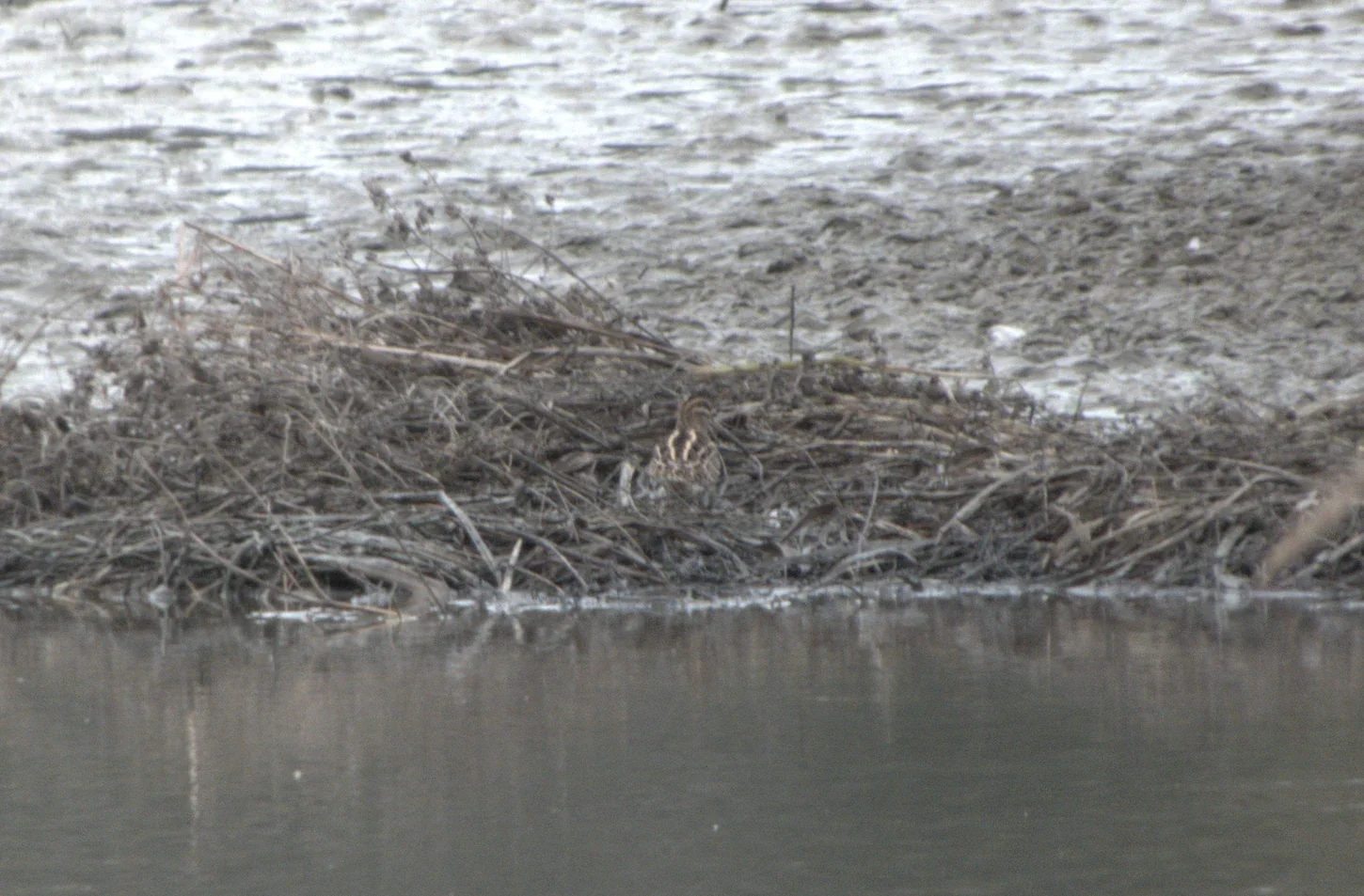
At Lackford Lakes near Bury St Edmunds, I’d start at the Slough, a shallow lake a short walk from the visitor centre. Its low islands and muddy edges give you ducks and waders in the same view. In a little over two hours at the reserve on 20 October 2026, I recorded 31 species, including five Common Snipe and 30 Lapwings. The Greylag Geese dipping their bills in the shallows were easy to pick out. In one of my photographs, a snipe is almost in the centre of the frame, among dead stems by the water, and it still takes a moment to spot. Regulars told me they’d seen as many as 16 on a good day.
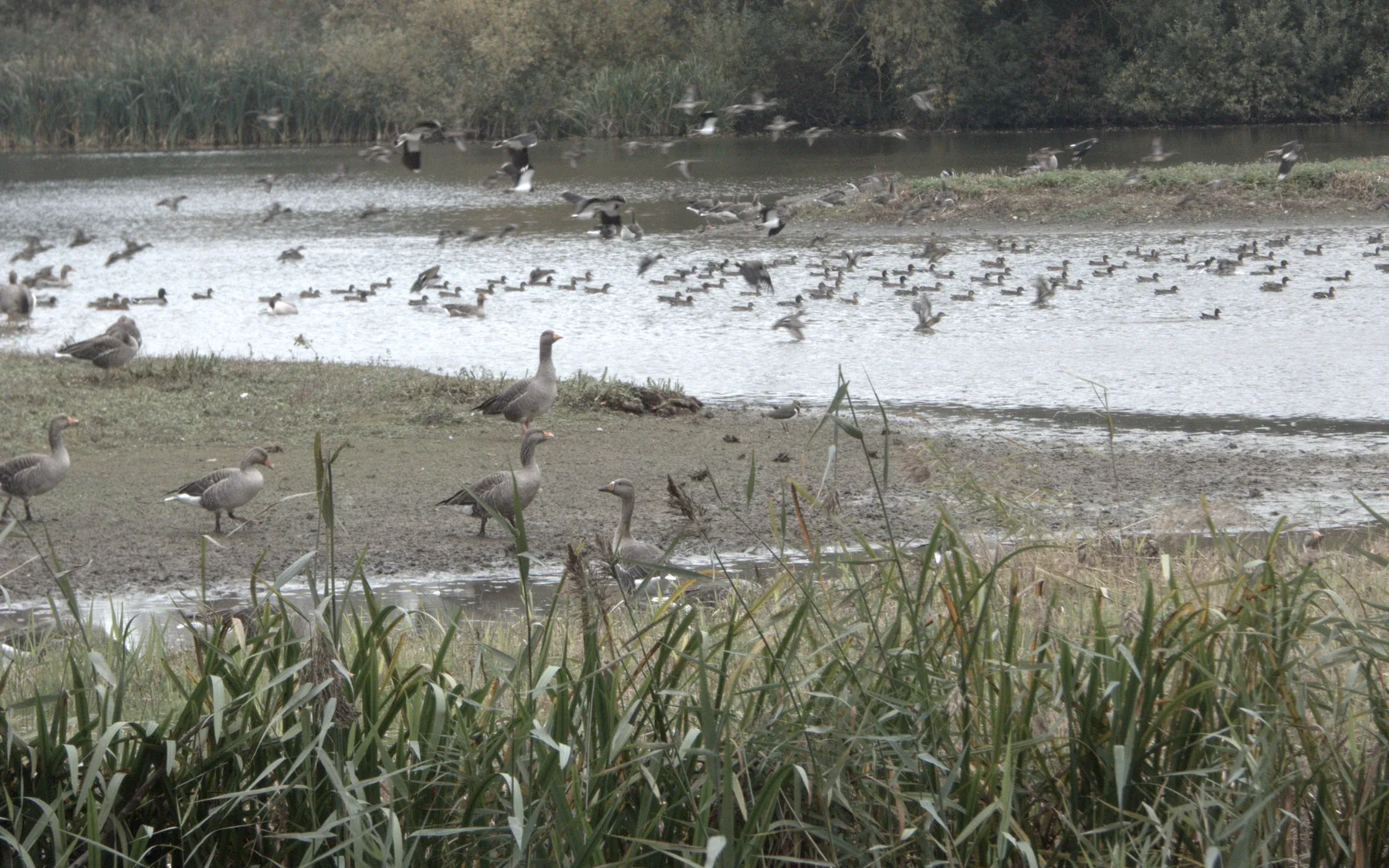
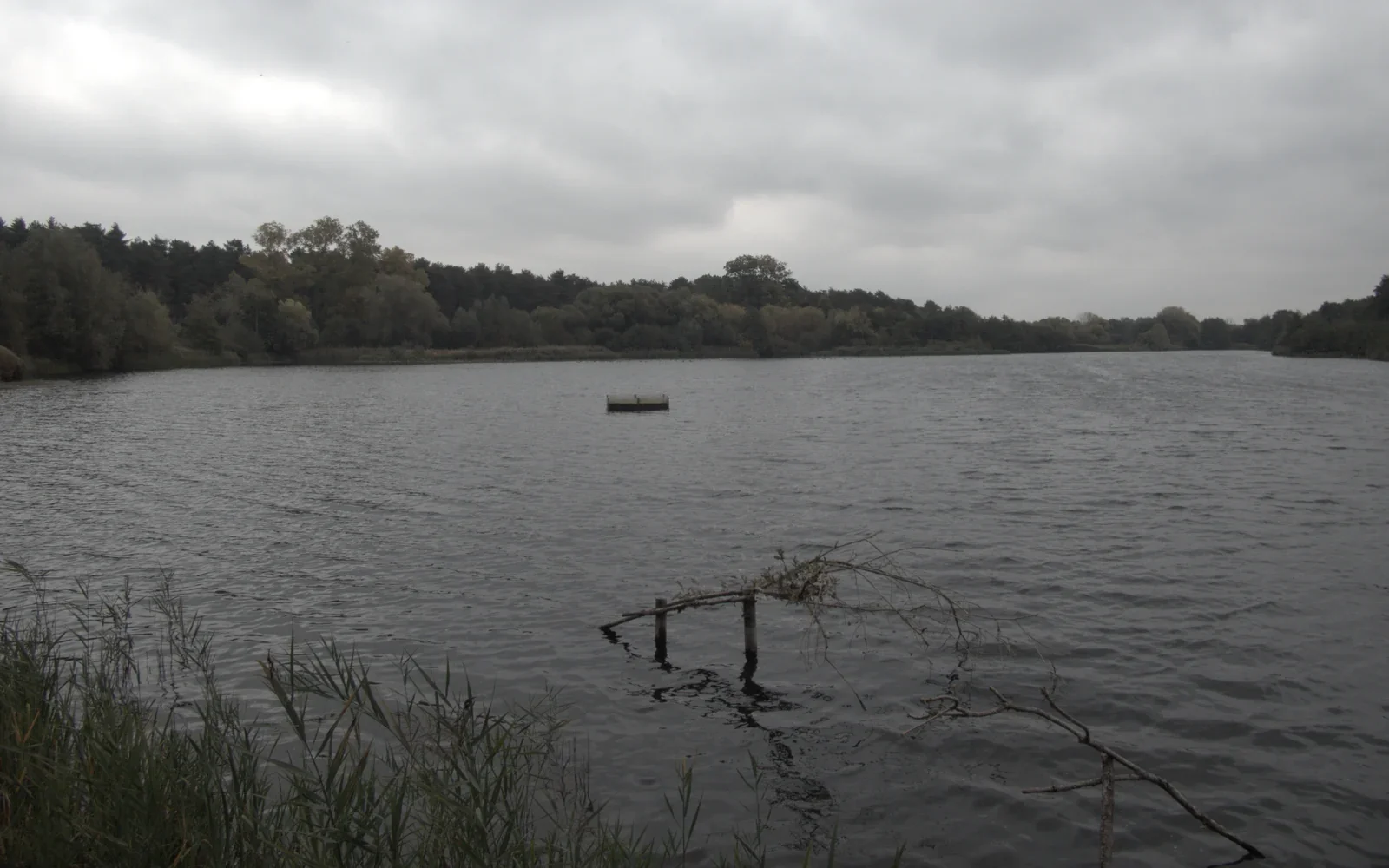
The lakes at Lackford were created when sand and gravel were dug out of the River Lark valley. The Sailing Lake and the bigger eastern lakes offer wide views of open water. At the Slough, it’s worth taking your time along the edges, where birds can vanish behind a low island or into a few inches of cover. If I had an hour, I’d spend most of it here. Allow two to three hours if you want to visit several hides and walk out to the eastern lakes. Suffolk Wildlife Trust’s history of Lackford Lakes.
The Kingfisher Trail and the Slough
The Kingfisher Trail is half a mile long and marked in blue on the reserve map. I’d try Bernard’s Hide first. Start with the water just below the hide, then check the ends of the islands and the exposed mud. For Snipe, look where the mud meets dead stems and low plants. A still bird can blend in with the bank until it moves. If an island blocks your view, Paul’s Hide or the Double Decker viewpoint gives you a different angle. Lackford Lakes trail map (PDF).
The Slough is also a good spot to watch for Kingfishers. Keep an eye on low branches and posts over the water. A Kingfisher can be gone before you raise your binoculars, but if you follow the edge with your eyes you might see where it lands. Bess’s Hide overlooks Long Reach, another place where the reserve team has reported Kingfishers. Lackford Lakes wildlife sightings.
Through Ash Carr to the eastern lakes
The green East Lakes Trail is marked as two miles on the reserve map. It goes through Ash Carr, the wet woodland between the Slough and the eastern lakes. In winter, stop for mixed flocks of tits and look for Marsh Tit. By February, the reserve team singles out this stretch for drumming Great Spotted Woodpeckers.
At Bess’s Hide, look out over Long Reach, then continue to Plover Lake and scan the open water for diving ducks and grebes. Steggall’s Hide is near the far end of the route beside Wilson’s Flood. If wildfowl are spread out, the eastern trail gives you several lakes to check. Bess’s Hide is a good place to turn back if time is short. The East Lakes path is more undulating than the blue trail and can be muddy. Discover Suffolk’s access notes.
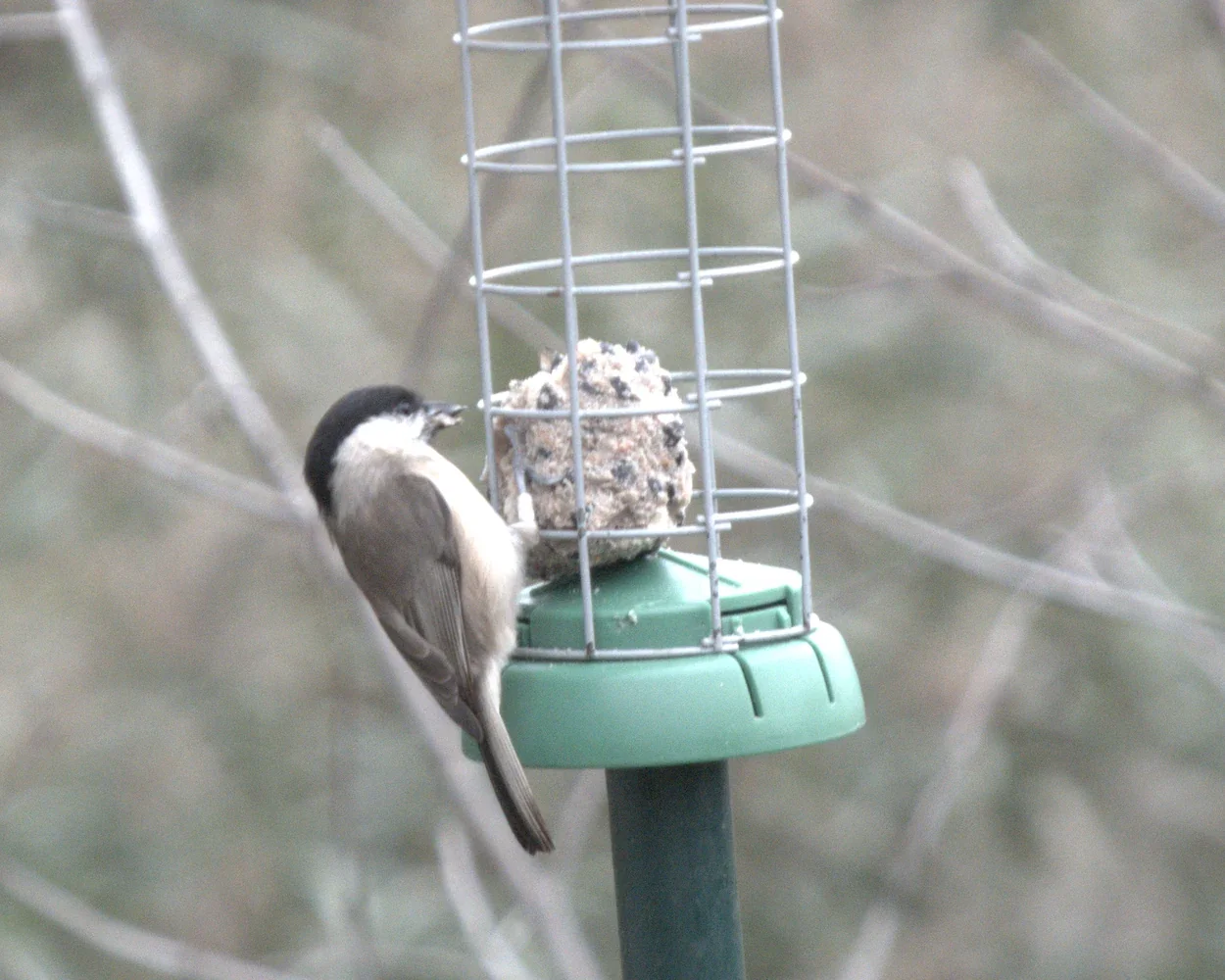
Back at the visitor centre, it’s worth spending a few minutes watching the café feeders. I photographed a Marsh Tit there on my October visit. How to tell Marsh Tit from Willow Tit.
What changes through the year
From autumn into winter, the Slough is a good place to watch Teal and Shoveler and to look for Lapwing and Snipe around the islands. In winter, scan the Sailing Lake for Goldeneye and check the larger lakes for Goosander. In spring, spend some time by the reed edges for Reed and Sedge Warblers. For Nightingale, try the red Sayer’s Breck path on an April or May morning. The reserve team has heard them singing along this route. Seasonal sightings from the reserve team.
Making Lackford Lakes a regular patch
If you live nearby, try the same short walk for your first few visits. Count the Teal on the Slough from the same hide each time and note how much mud is visible. A change in water level alters the amount of exposed feeding ground for waders. You can make that comparison on a short visit and save the eastern lakes for a day when you have more time. What regular visits teach you about a birding patch.
Getting to Lackford Lakes
The entrance and car park are off the A1101 between Flempton and Lackford, at IP28 6HX. From Bury St Edmunds, take the 16 or 355 bus to Lackford village and follow Church Walk, marked in black on the reserve map. Check the return bus times before you go. The Kingfisher Trail is wheelchair-friendly, and the visitor centre has a café and an accessible toilet. The reserve is open from dawn to dusk via Church Walk. The car park and visitor centre have separate opening times. Suffolk Wildlife Trust visitor information.
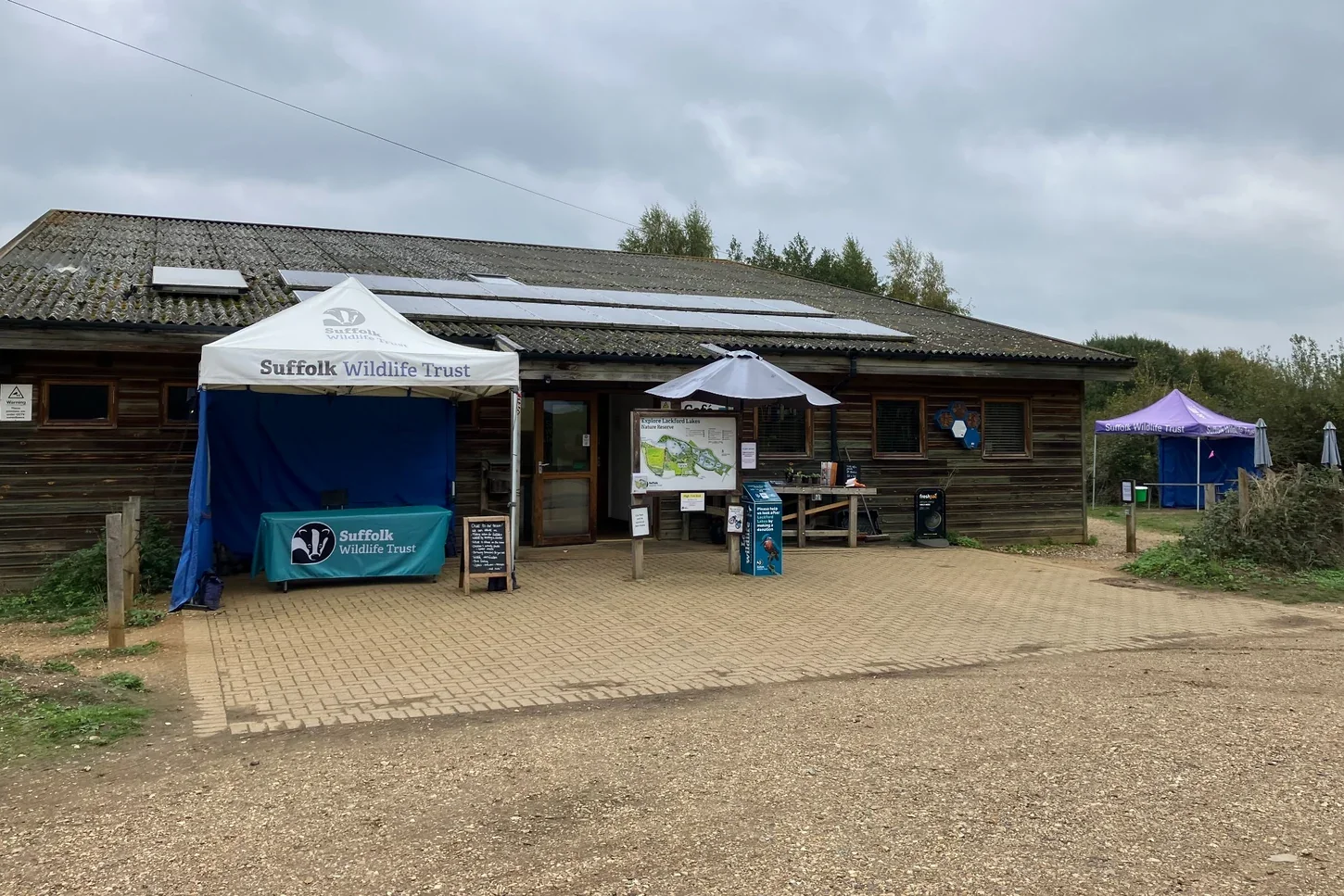
Visitor information checked 13 November 2026.
For more places nearby, see Where to watch birds in Suffolk.