
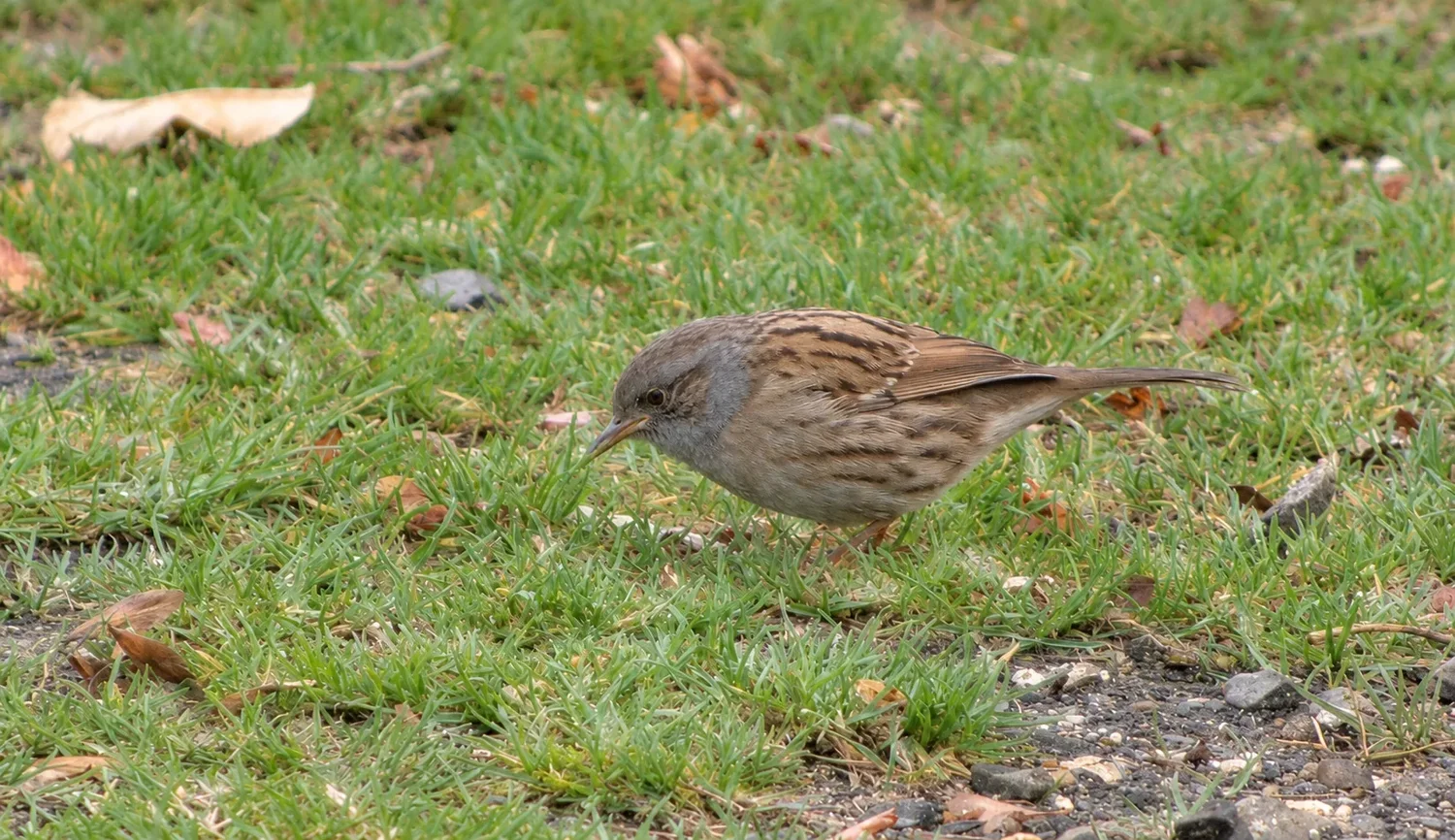
A Dunnock can look very much like a rather grey sparrow as it emerges from beneath a bush. The quickest way to tell the two apart is by the bill. The Dunnock’s is fine and pointed; the House Sparrow’s is deep and heavy, built for handling seeds. A fuller view reveals the Dunnock’s grey face and breast against its streaked brown back.
Compare it with a female House Sparrow
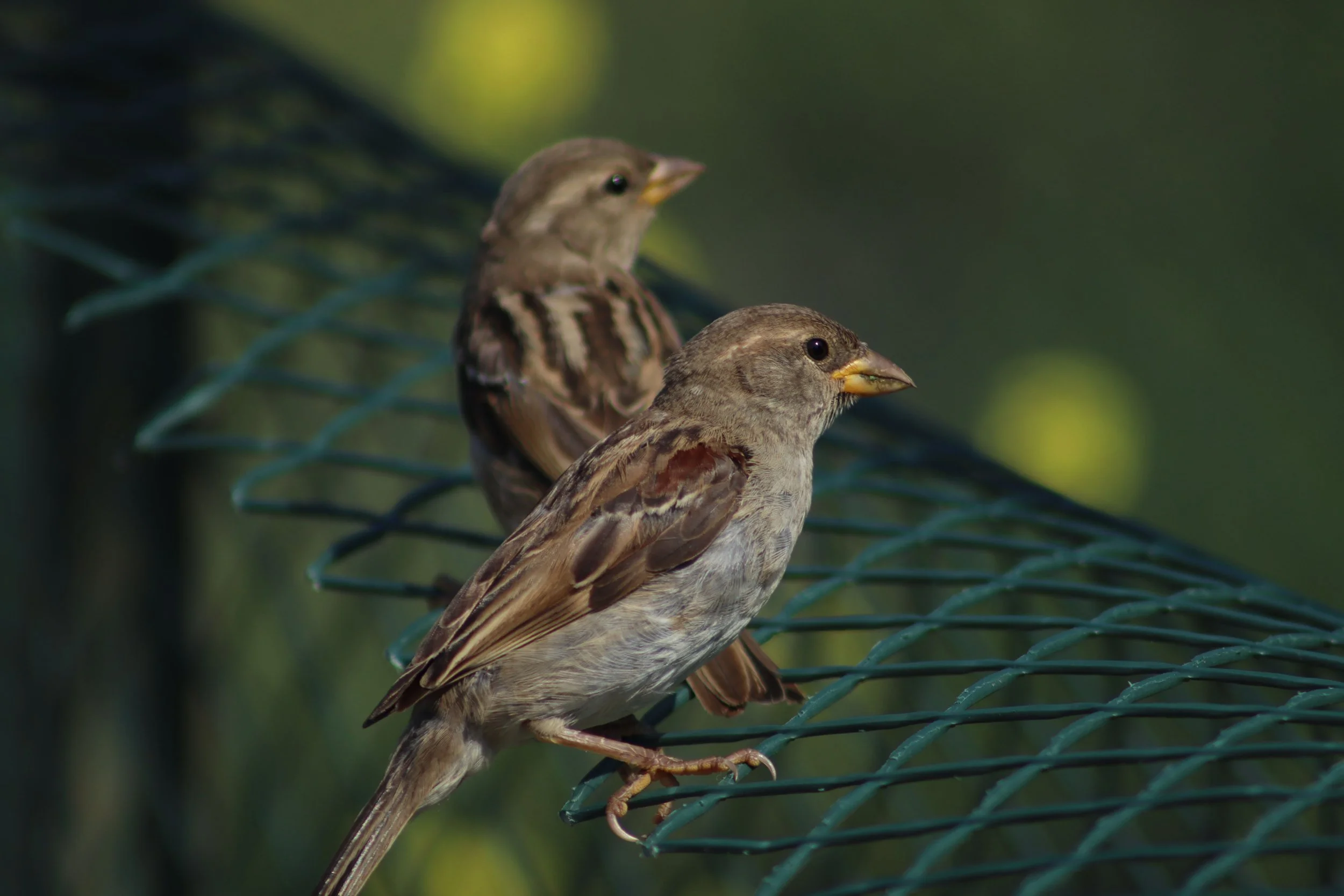
A male House Sparrow’s black bib makes the comparison straightforward. The bird most likely to be confused with a Dunnock is the plainer female or juvenile House Sparrow. Its head is brown rather than distinctly grey, often with a pale stripe behind the eye, and it has the thick, triangular bill of a sparrow.
Both birds have brown backs, so that alone is a poor way to separate them, particularly in a photograph taken from behind. In a side view, look at the bill first and then at the amount of grey on the face and breast.
Watch the edge of the bushes
Dunnocks spend a lot of time on or close to the ground. They often move through low vegetation and beneath bushes, appearing for a moment before disappearing again. The photograph here catches one in the open on grass and gravel. In thicker cover, you may get only a brief glimpse.
House Sparrows use bushes too. They’re generally more conspicuous, and you’ll often see them in groups around feeders. A Dunnock is more often seen alone or with one other bird. Use that behaviour as a clue, then wait for a view of the bill and head. A sparrow on the ground doesn’t suddenly become a Dunnock.
The old name hedge sparrow reflects where you’re likely to encounter a Dunnock, though it isn’t a sparrow at all. It belongs to the accentor family. Once you’re familiar with its quiet way of moving through cover, you may begin noticing a bird that has been using the garden all along.
If you’ve established that the bird is a sparrow, our Tree Sparrow and House Sparrow identification guide takes the comparison further.