
Tree Sparrow vs House Sparrow: How to Tell Them Apart
Tree Sparrows (Passer montanus) and House Sparrows (Passer domesticus) are easiest to separate by looking at the head. A Tree Sparrow has a complete chestnut crown, a white cheek with a black spot and a small black bib. An adult male House Sparrow has a grey crown, plain greyish cheeks and a larger black bib. Female and juvenile House Sparrows are plainer brown birds and do not show the Tree Sparrow’s black cheek spot.
That answer works when the bird gives a reasonable view. Problems begin when it is distant, partly hidden or mixed into a flock. Size and habitat can then seem more useful than they really are. The safest approach is to check the face first, decide whether you are looking at a male or female-type House Sparrow, and use behaviour or location only as supporting evidence.
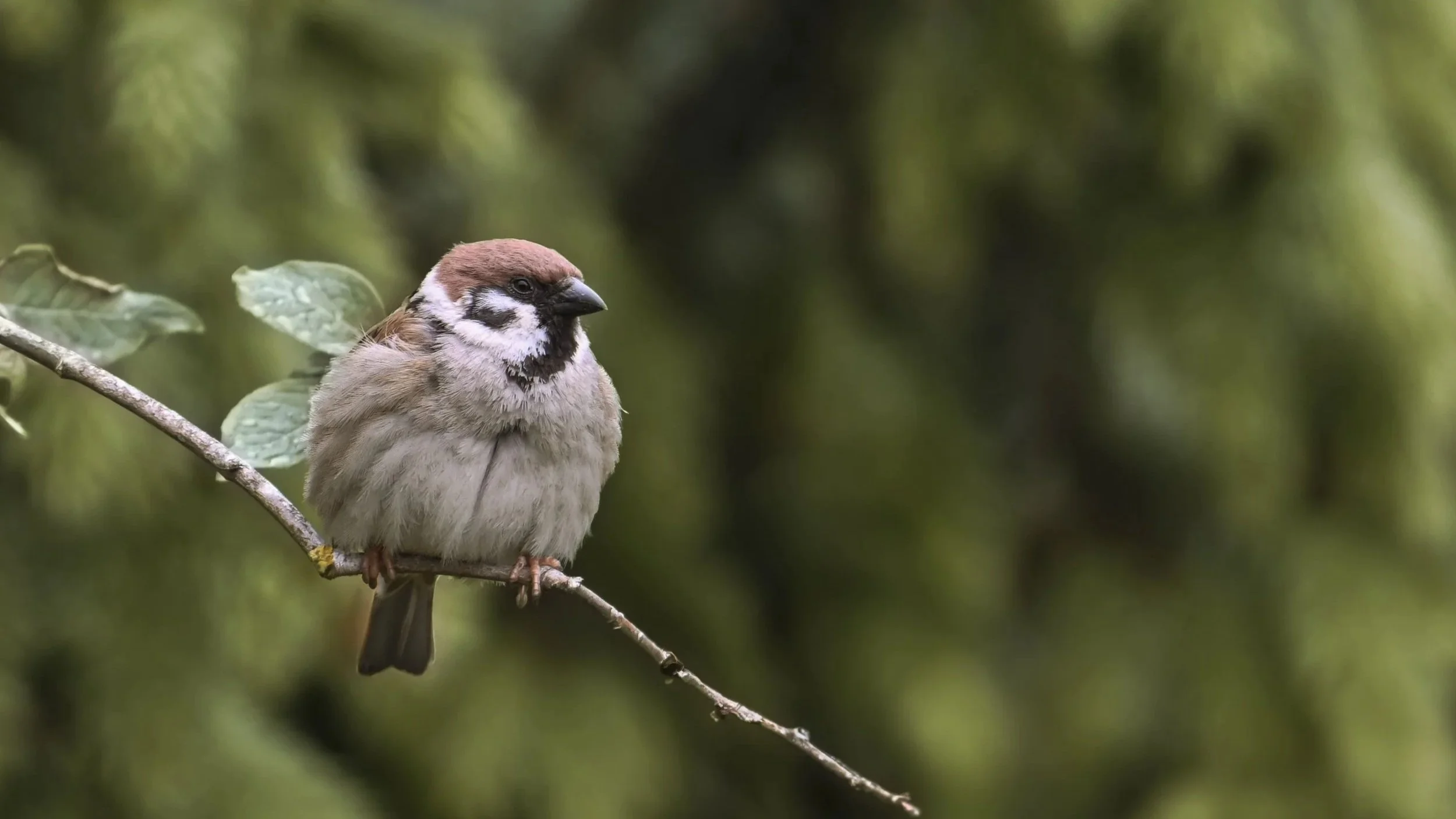
Tree Sparrow. The black spot sits within a white cheek, beneath a complete chestnut crown. Photo by Alexas Fotos via Pexels.
The quickest reliable distinction
Look for the Tree Sparrow’s black cheek spot. It sits in the centre of a clean white cheek and is normally visible from either side of the head. The crown and nape are chestnut, with no grey centre, and a narrow white collar separates the chestnut nape from the brown back.
No House Sparrow has this combination. Adult males have grey on the crown and plain greyish or whitish cheeks. Females and juveniles lack the male’s grey crown and black bib, but their heads remain softly patterned in brown and buff. They do not acquire the Tree Sparrow’s white cheek, black cheek spot and complete chestnut cap.
If you can see a genuine black spot in a white cheek, the identification is straightforward. If the cheek is hidden, do not replace that evidence with a guess based on where the bird is feeding.
| Character | Tree Sparrow | Male House Sparrow | Female or juvenile House Sparrow | Value in the field |
|---|---|---|---|---|
| Cheek | White, with a distinct black spot | Plain greyish or whitish cheek; no black spot | Plain buff-brown head; no black spot | Strongest feature when seen clearly |
| Crown | Chestnut from forehead to nape | Grey crown with chestnut at the sides and nape | Brown crown with a pale buff line behind the eye | Strong supporting feature |
| Bib | Small, neat black bib | Usually larger, but variable with age, season and individual | Absent | Useful, but do not judge the species from bib size alone |
| Collar | Narrow white collar around the rear of the neck | No complete white collar | No complete white collar | Useful in a rear or side view |
| Sexes | Adult males and females look alike | Male is strongly marked | Female is much plainer | Important before making the comparison |
| Juvenile plumage | Duller version of the adult pattern; the isolated cheek spot remains the key when visible | Juveniles do not yet show the adult male’s full pattern | Plain-headed and broadly similar to a female | Judge the arrangement of the head pattern, not its colour intensity |
| Size and shape | Slightly smaller and often neater | Usually heavier-looking | Usually heavier-looking | Supporting only unless the birds are together |
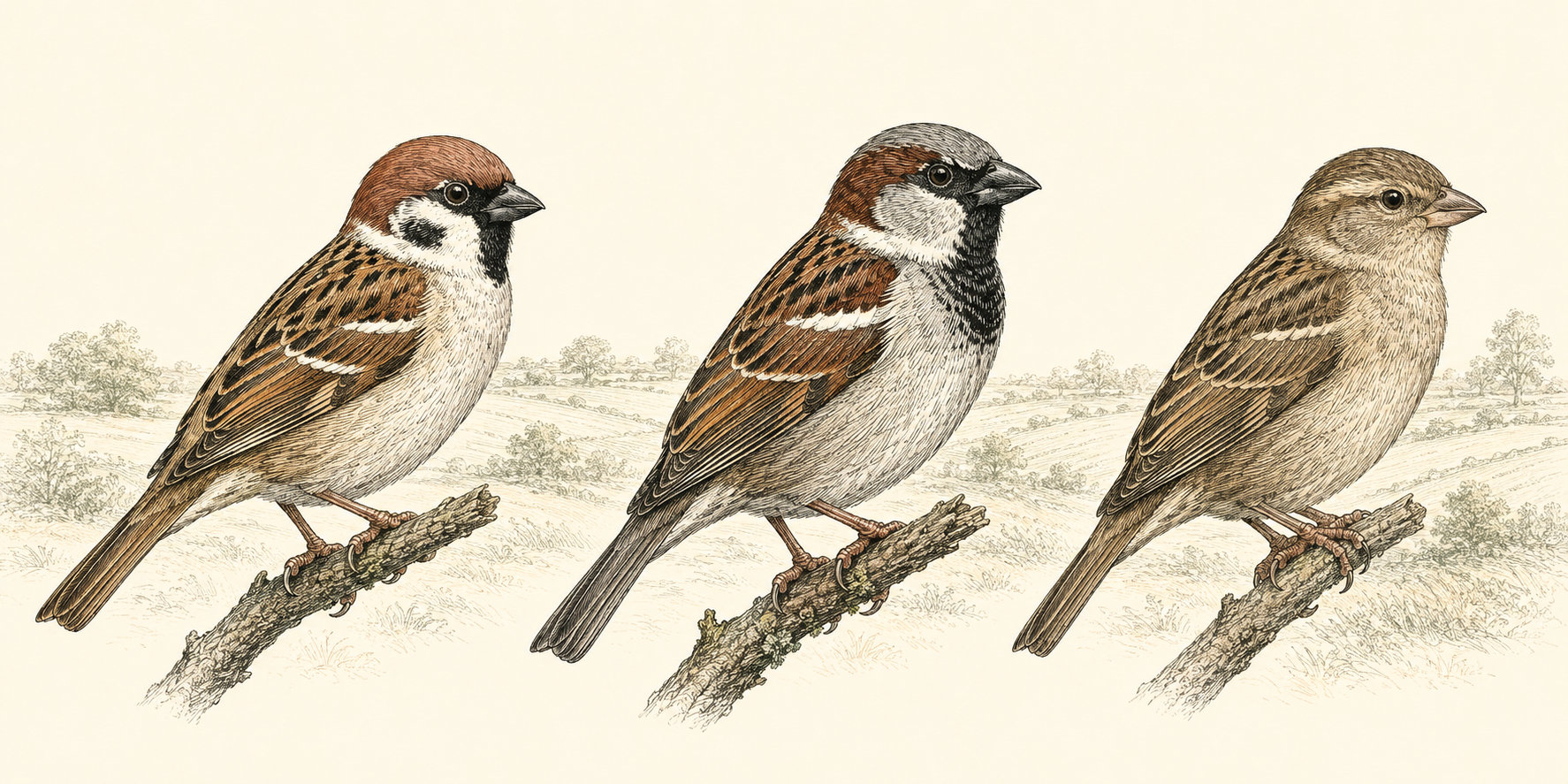
Tree Sparrow, male House Sparrow and female-type House Sparrow. Start with the face pattern: Tree Sparrow combines a chestnut crown with a white cheek and black cheek spot; male House Sparrow has a grey crown and plain cheek; female and juvenile House Sparrows lack both bold patterns.
How to identify female and juvenile House Sparrows
Most short identification guides compare a Tree Sparrow with a male House Sparrow. That is useful, but it can leave the impression that every House Sparrow has a grey crown and black bib.
Female House Sparrows have a plain buff-brown crown and cheeks, a broad pale eyebrow, a streaked brown back and pale grey-buff underparts. The bill is thick and conical. They have no black bib, isolated cheek spot or complete chestnut cap. Juveniles look broadly female-like, although young males later begin to acquire the stronger male pattern.
These plainer birds can be dismissed as “just a brown sparrow”, but they should not be mistaken for a Tree Sparrow once the face is visible. The Tree Sparrow is more consistent in adult plumage: males and females share the same main head pattern. Juveniles retain that arrangement with weaker contrast.
Juvenile Tree Sparrow or juvenile House Sparrow?
A juvenile Tree Sparrow retains the adult species’ cap, pale cheek and isolated dark cheek patch, although all are duller. A juvenile House Sparrow is plainer-headed, female-like and lacks the isolated cheek spot. On a young Tree Sparrow, the crown is muted brown-chestnut rather than rich chestnut, while the small bib and pale collar also contrast less strongly.
The arrangement matters more than the strength of the colours. Look for a separate dark patch within the pale cheek, a brown-chestnut cap continuing across the crown and nape, and a pale collar behind the head. A juvenile House Sparrow instead has a plainer brown head, usually with a pale line behind the eye, but no isolated cheek spot or complete cap-and-collar pattern.
Do not reject Tree Sparrow merely because a young bird lacks the clean appearance of an adult. Equally, do not turn a shadow or untidy juvenile feathering into a cheek spot. Adults accompanying a young bird provide useful context, but the identification should still rest on the juvenile’s own plumage. If the cheek and crown pattern cannot be resolved, leave it as a sparrow.
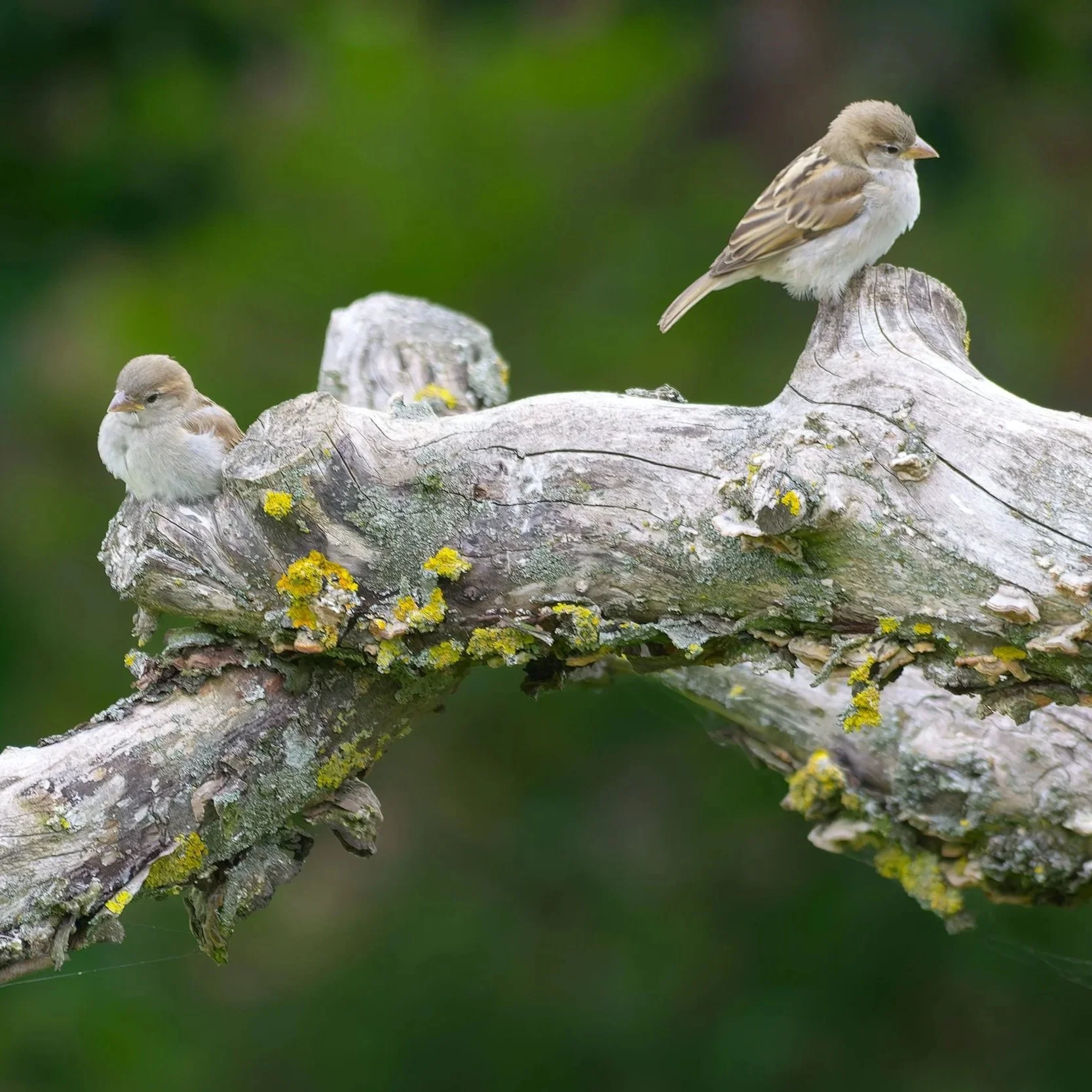
Juvenile House Sparrows. The heads are plain and female-like, with no isolated dark spot in the cheek. Photo by Guido Fochtler via Pexels.
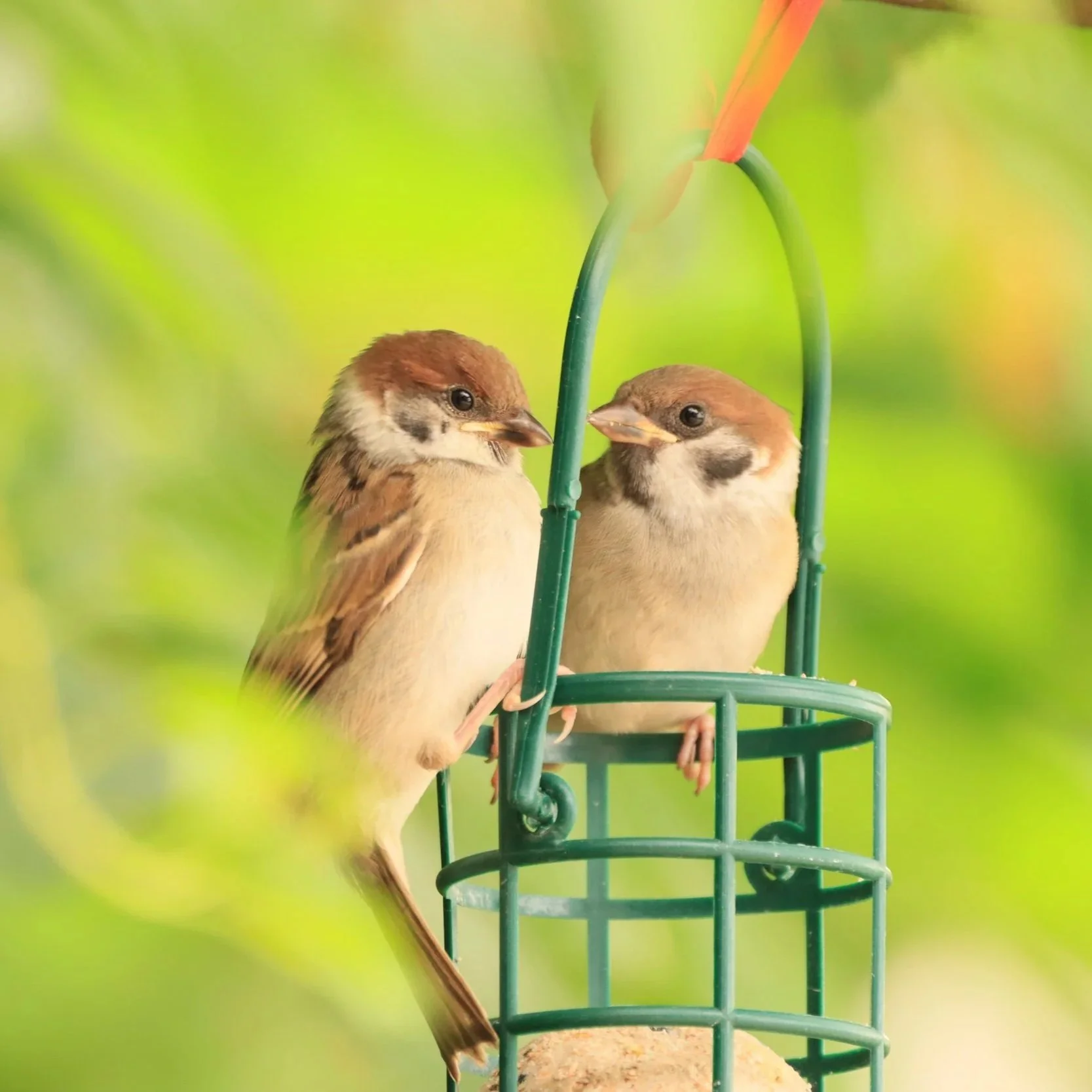
Juvenile Tree Sparrows. The adult face pattern is already present, but the colours are duller and less sharply contrasting. Photo by Bernhard Ederer via Pexels.
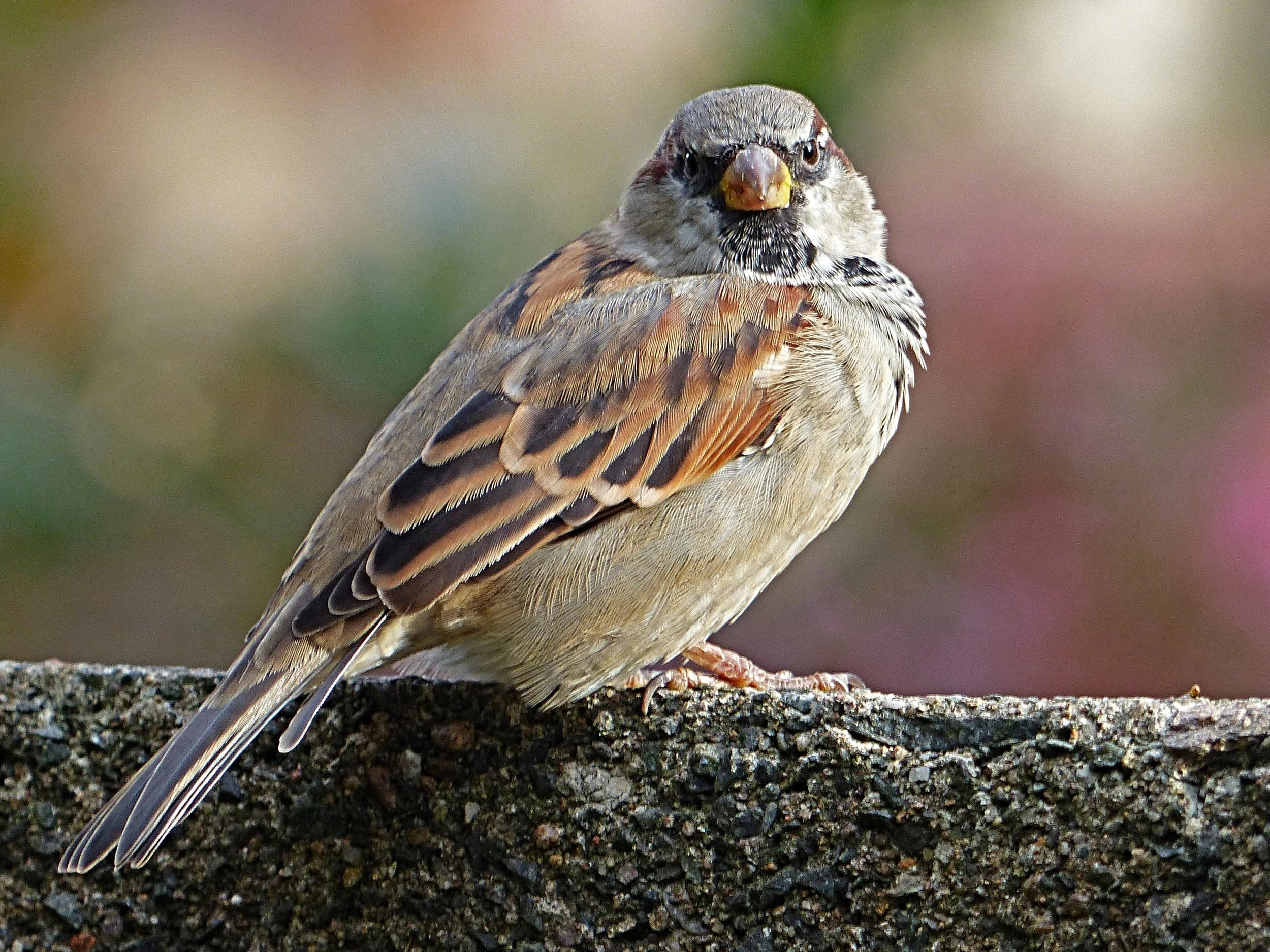
Adult male House Sparrow: grey crown, plain cheek and a black bib that varies in extent. Photo by Pixabay via Pexels.
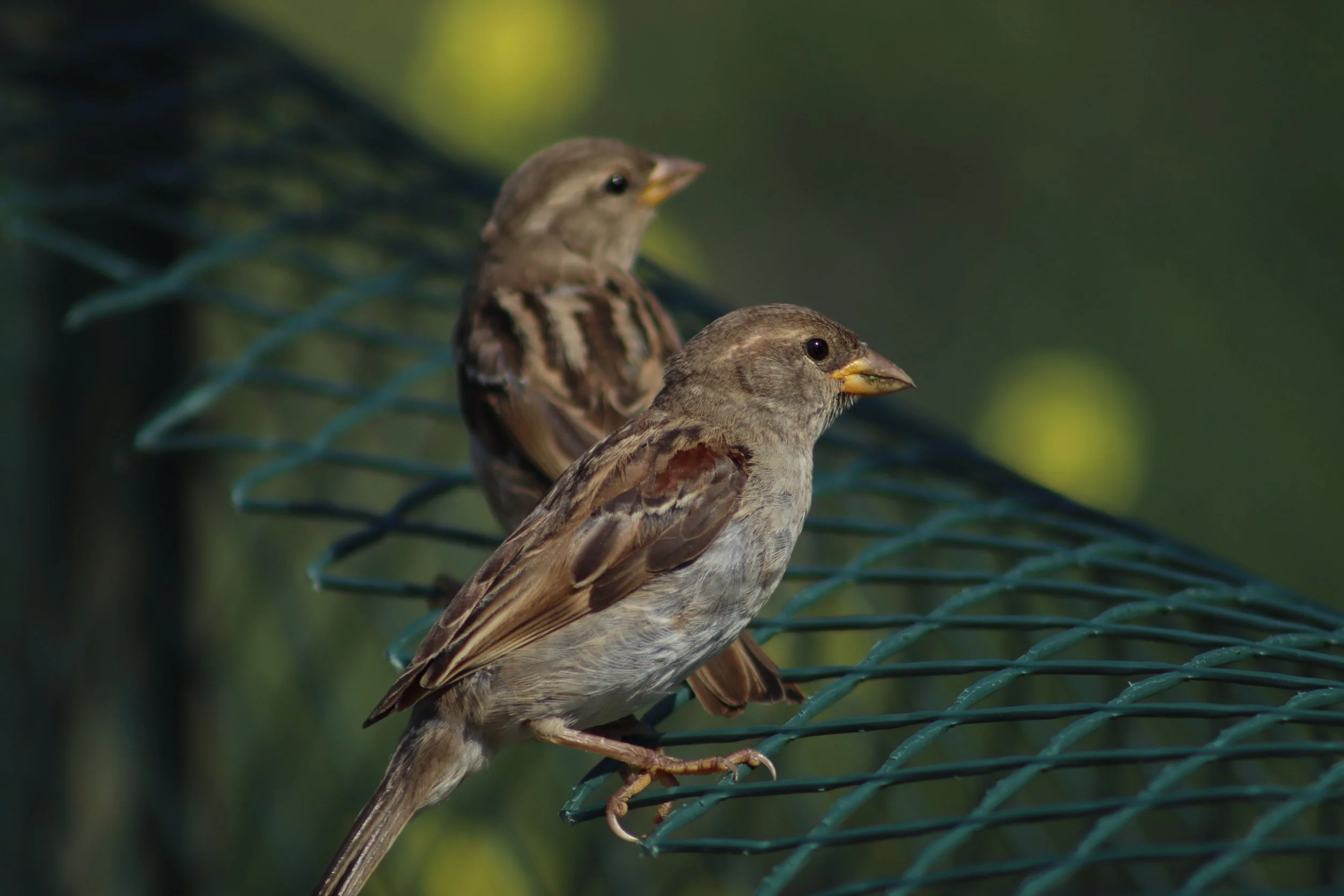
Female-type House Sparrows: plain buff-brown heads, without the Tree Sparrow’s black cheek spot. Photo by Tristan Ho via Pexels.
Do not begin with size
Tree Sparrows are on average smaller than House Sparrows. The difference is real: BTO gives average weights of about 21 g for Tree Sparrow and 27.3 g for House Sparrow. In the field, however, a few grams are difficult to judge unless birds are close together and in similar postures.
A fluffed Tree Sparrow can look substantial, while a stretched or partly hidden House Sparrow can look small. Distance removes dependable scale, and posture also changes the impression of shape. Use size and build to support a head pattern, not to replace one.
Habitat changes the odds, not the identification
House Sparrows are closely associated with people. They nest in buildings and are common around villages, farms, gardens, stations and town centres. Tree Sparrows in Britain are more strongly associated with lowland farmland, field edges, hedges, rural settlements and loose breeding colonies.
This makes habitat useful when deciding which species is more likely. Tree Sparrows sometimes visit rural feeders and use nest boxes or farm buildings. House Sparrows also feed in farmland and hedges. On the continent, Tree Sparrows may live much closer to houses than many British birders expect.
Treat location as prior information. It tells you which bird to look for first, but the face should still decide the identification.
Mixed flocks are worth checking carefully
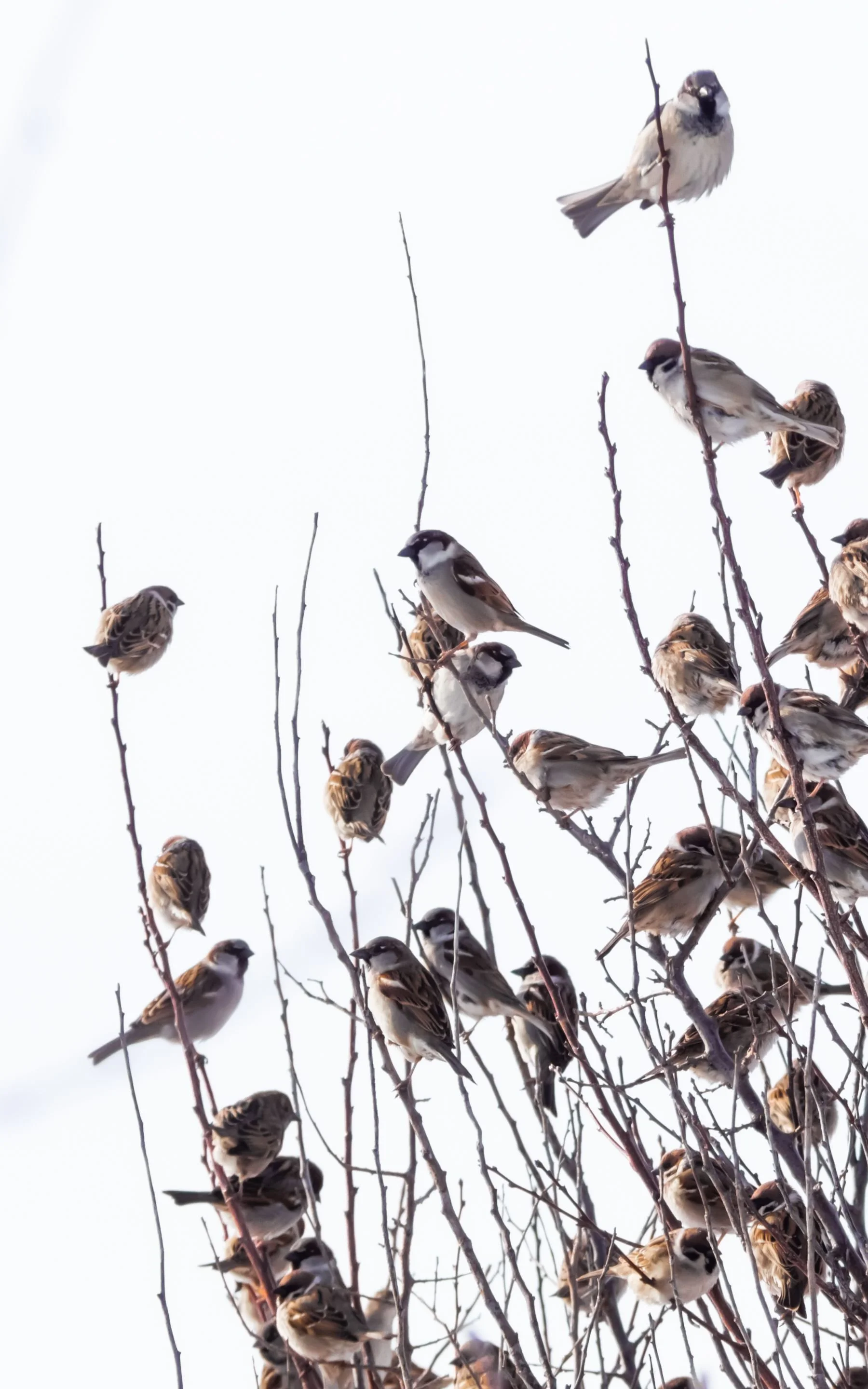
A mixed sparrow flock. Tree Sparrows are the chestnut-capped birds with black cheek spots among the plainer and grey-crowned House Sparrows. Photo by Lisá Yakurím via Pexels.
One or two Tree Sparrows can join other seed-eating birds outside the breeding season. A flock around stubble, a farmyard or rural feeding station should not be treated as one uniform group merely because most of the birds appear to be House Sparrows.
Scan the heads rather than trying to judge every bird’s size. A clean white cheek can show at distance before the black spot becomes obvious. If one bird looks different, follow it until you obtain a side view of the face. A photograph may help, but only if the cheek is sharp enough to show a real mark rather than a shadow or compression artefact.
This is also where Merlin Sound ID can mislead. A suggested species may prompt a useful search, but the app cannot show which bird in a mixed flock made a sound. The visual evidence still has to be attached to the right individual.
Calls can help, but the overlap is real
Both species give short sparrow calls, and neither is well served by a single written imitation. Tree Sparrow calls are often described as slightly sharper or more nasal, sometimes rendered as zee rather than the House Sparrow’s familiar cheep. With experience, a full series can draw attention to a Tree Sparrow in a mixed flock.
A brief call from an unseen bird is weaker evidence. Individual calls vary, flocks overlap and other sounds may be present. Record several phrases if possible, then check them against reliable examples. Voice is most useful when it leads you to a bird whose face can be examined.
Common mistakes
Assuming every brown sparrow is a female House Sparrow
A Tree Sparrow’s back is also brown. The useful difference is on the head. Wait for the cheek, crown and collar rather than classifying the whole bird by its general colour.
Calling a shadow a cheek spot
Twigs, deep shade and the edge of the bib can create a dark patch in a photograph. A genuine Tree Sparrow cheek spot sits within the white cheek and should make sense across more than one frame or change of posture.
Using the bib as the deciding feature
Male House Sparrow bibs vary, and their appearance changes with feather wear. A Tree Sparrow normally has a smaller bib, but “small bib” is not as dependable as the cheek and crown pattern.
Identifying from habitat alone
A sparrow beside a farmhouse is not automatically a House Sparrow, and a sparrow in a hedge is not automatically a Tree Sparrow. Both species can occur around rural buildings and farmland.
Forgetting female and juvenile House Sparrows
A guide that shows only adult males creates an unnecessary identification problem. Female and juvenile House Sparrows are plain-headed birds. They do not show the Tree Sparrow’s sharply divided chestnut, white and black face.
A rare exception: male Spanish Sparrow
Spanish Sparrow should not become a third routine choice in Britain. BTO describes it as an extremely rare visitor, with only a handful of accepted British records. An adult male can recall Tree Sparrow because the crown is completely chestnut, but it lacks the isolated black spot in the centre of a white cheek. Instead, black extends broadly across the throat and breast and continues as dense dark streaking along the flanks.
This comparison applies to an adult male. Female and immature Spanish Sparrows are much less distinctive and should not be identified from this short guide. Any plausible British bird would need several sharp photographs, notes on structure and plumage, and prompt discussion with the relevant county recorder.
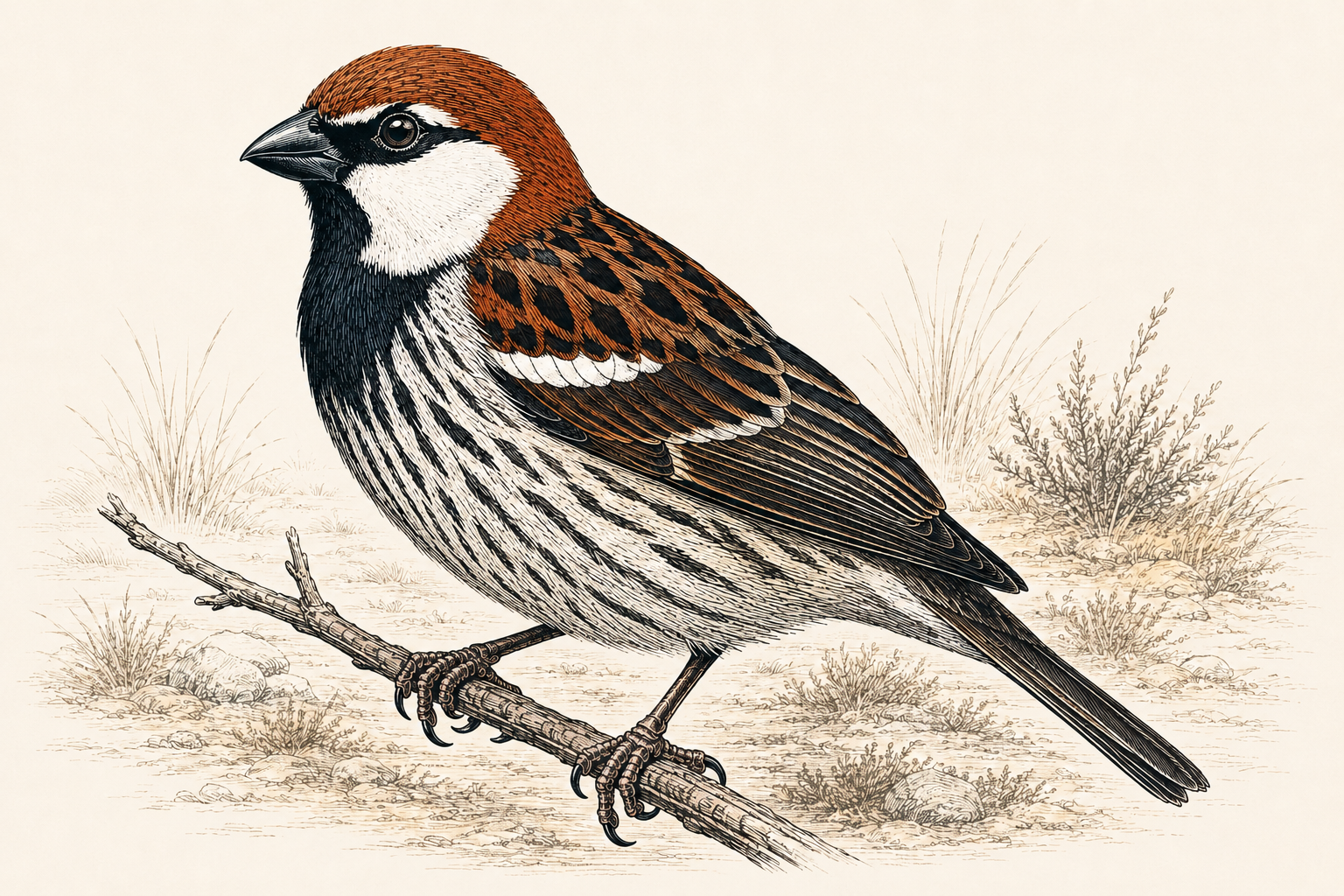
Male Spanish Sparrow. The complete chestnut crown recalls Tree Sparrow, but it lacks the isolated black cheek spot and has extensive black across the breast, continuing as dense streaking along the flanks
A simple field sequence
When a sparrow is not immediately obvious, use this order:
Find the cheek. Is there a distinct black spot inside a white cheek?
Check the crown. Is it completely chestnut, or grey/brown in the House Sparrow pattern?
Look behind the head. Can you see the Tree Sparrow’s white collar?
Decide which House Sparrow plumage is relevant. Adult male, female or juvenile?
Use size, habitat and behaviour as support. Do not allow them to overturn a clear head pattern.
Leave it unidentified if the face was never visible. “Sparrow sp.” is better than a confident name built from poor evidence.
The same rule—rank the strongest field marks and stop when they are hidden—also underpins the comparison of Marsh Tit and Willow Tit.
Why the distinction now matters
Both species are Red-listed in the UK because of severe population declines, but their current distributions differ greatly. House Sparrows remain widespread, despite large long-term losses. BTO estimates about five million breeding pairs and reports an 18 per cent decrease between 1995 and 2024.
Tree Sparrows underwent a much steeper historical decline and disappeared from many former areas. BTO currently classifies the breeding population as stable over 1995–2024 and reports a 37.3 per cent contraction in breeding distribution. They remain concentrated mainly in eastern and lowland areas, with local strongholds rather than an even national spread.
That uneven distribution makes a well-documented record useful. Where Tree Sparrows are scarce, keep photographs that show the cheek and crown, note the size and composition of the flock, and submit the record through BirdTrack or the appropriate county recording system. A clear record does more than add a name to a list; it helps show where a much-reduced farmland bird still occurs.
Sources and further reading
BTO identification video: House Sparrow, Tree Sparrow and Reed Bunting
Game & Wildlife Conservation Trust: Tree Sparrow and House Sparrow comparison
Information checked: 29 August 2026.