

A Good Morning for Little Terns
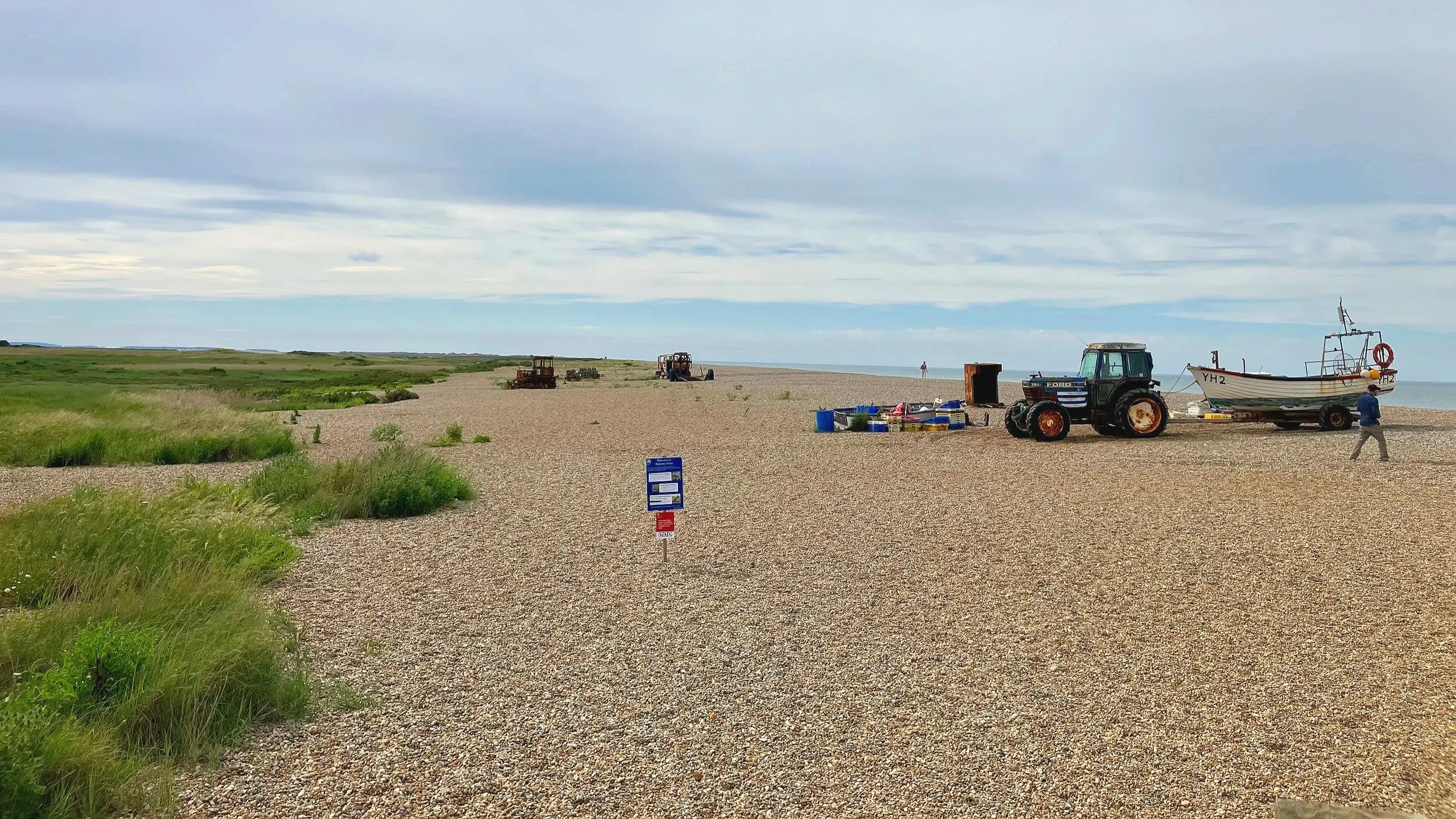
blakney point from the car park at Cley reserve.
The coastal walk from Cley Beach to Blakeney Point is among the finest in Norfolk. By late July, as the breeding season ends, the spit remains full of activity. Little Terns patrol the shoreline with sand eels in their beaks, Arctic Terns glide between the sea and their colonies, and Ringed Plovers move ahead of walkers before settling on the shingle. This landscape exudes vitality without congestion. Groups of terns regularly appear overhead, their distinctive calls carried by the wind long before they are visible.
It is a remarkable natural spectacle, especially given how unlikely such ecological events are.
Little Terns are among Britain's most vulnerable breeding seabirds. Unlike gulls or larger terns, they make no substantial nest, laying their eggs in shallow scrapes on open shingle only a few meters above the high-water mark. Their eggs are superbly camouflaged, but that strategy offers little protection against a determined predator, an exceptionally high tide, or repeated disturbance.
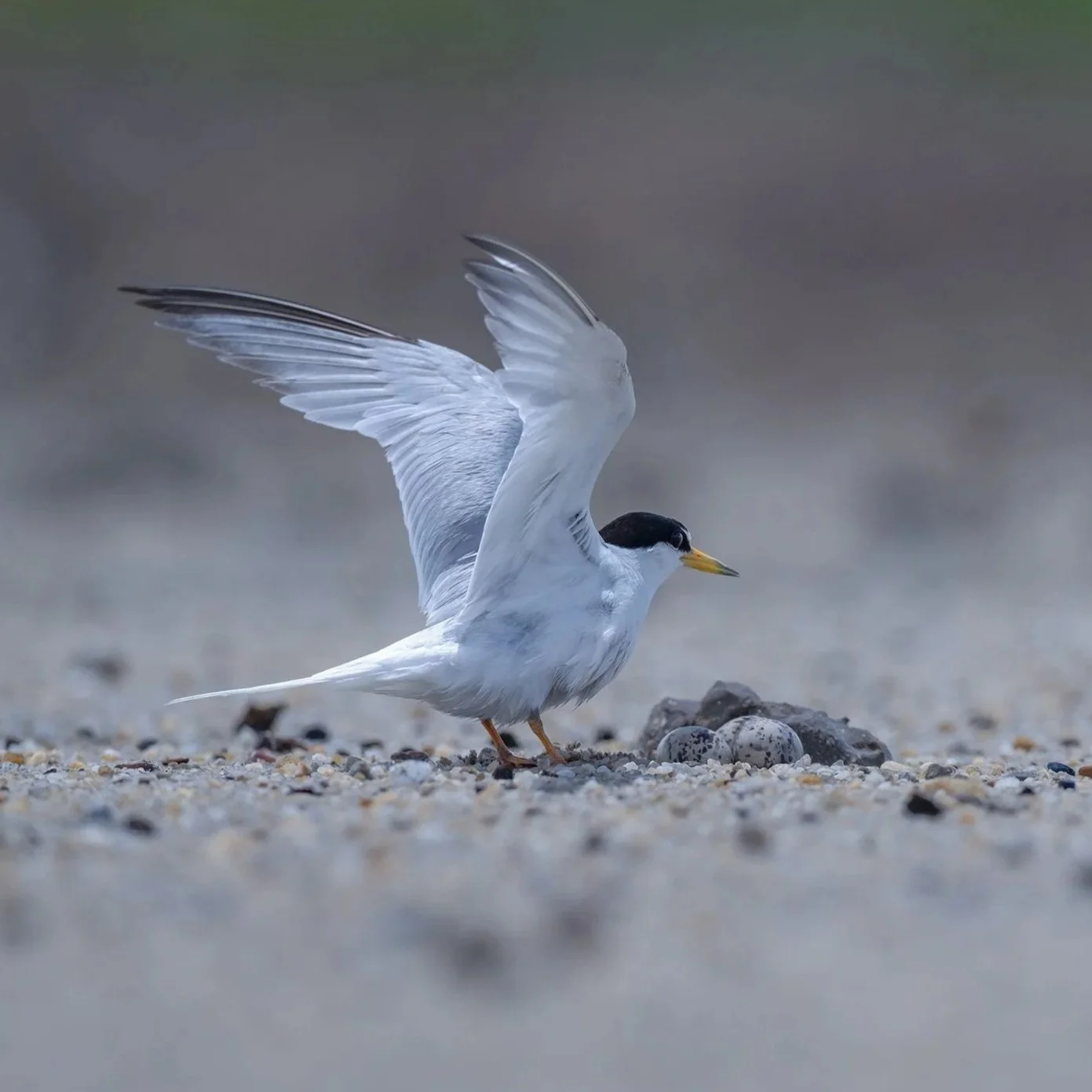
Little tern at nest
The challenges begin well before the chicks hatch.
Foxes can devastate a colony in a single night. Carrion Crows, gulls, and other opportunistic predators take eggs and young chicks whenever the opportunity arises. Spring tides and storm surges can flood nesting beaches, while coastal change continually reshapes the narrow strips of shingle the birds depend upon. Even well-meaning visitors can unknowingly flush incubating adults from their nests, exposing eggs and chicks to the sun or to predators searching for an easy meal.
For a species that raises only a small clutch each year, these pressures quickly add up. Little Terns continue to breed successfully at Blakeney Point for good reason.
Throughout the nesting season, wardens and volunteers quietly manage the colony. Temporary electric fencing keeps foxes out of the most sensitive nesting areas while allowing smaller wildlife to move freely. Rope barriers mark breeding areas without closing large parts of the beach, and wardens spend many hours talking with visitors, explaining why apparently empty stretches of shingle are actually home to hundreds of well-camouflaged nests.
Monitoring is equally important. Each season, breeding pairs are counted, and nests are recorded. This information helps the conservation managers understand whether colonies are thriving or struggling and guides future management. The work is repetitive and often goes unnoticed, but it helps provide the evidence needed to protect one of Britain's rarest breeding seabirds. Looking at data for the 2023 breeding season, wardens recorded 96 pairs that successfully fledged at least 49 chicks. The benefits extend beyond Little Terns themselves.
The same protected areas provide space for Ringed Plovers to nest on the upper beach, while Oystercatchers patrol the shoreline probing for shellfish. Offshore, Common and Arctic Terns constantly commute between feeding grounds and the colony, and Sandwich Terns often pass along the coast. Grey Seals haul out on nearby sandbanks, showing that Blakeney Point is not just a bird reserve but part of a larger coastal ecosystem where saltmarsh, dunes, mudflats, and open sea remain closely connected.
Walking the spit, it is easy to notice the birds and overlook the management that supports them. The fencing is temporary. The rope barriers are unobtrusive. Wardens rarely draw attention to themselves. Good conservation often has this quality: when it succeeds, the work fades into the background and wildlife remains the focus.
Blakeney Point's story is not one of nature left alone. It is a story of careful stewardship. Generations of reserve staff and volunteers have worked to protect the site. Their efforts have sustained one of England's most important Little Tern colonies while protecting a remarkable assemblage of coastal wildlife. For visitors, none of this needs to be visible.
What remains is the experience itself: a late July morning, the sound of terns overhead, Ringed Plovers running across the shingle, seals resting beyond the surf and a coastline that feels as wild today as it has for generations.
That sense of effortless abundance is perhaps the greatest compliment any conservation project can receive. Behind every successful colony lie thousands of hours of rigorous management, scientific monitoring, and practical fieldwork. At Blakeney Point, these efforts have allowed wildlife to take center stage, granting visitors the true pleasure of walking through one of Britain's finest breeding seabird landscapes.
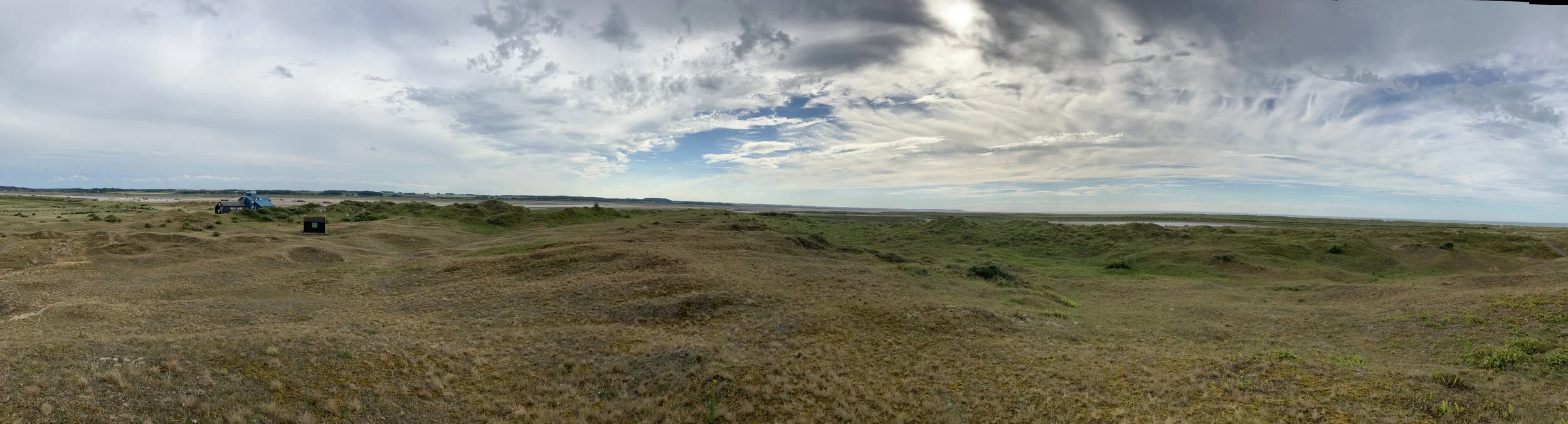
Blakeney point, visitors center to the left.
Visiting Blakeney Point
The National Trust provides practical information on access, seasonal restrictions, wildlife highlights and walking routes.