

Why Do Birds Sing at Dawn?
Territory defence is only part of the answer. Research on Reed Buntings shows that dawn song can also be linked to mate choice and breeding outside the social pair.
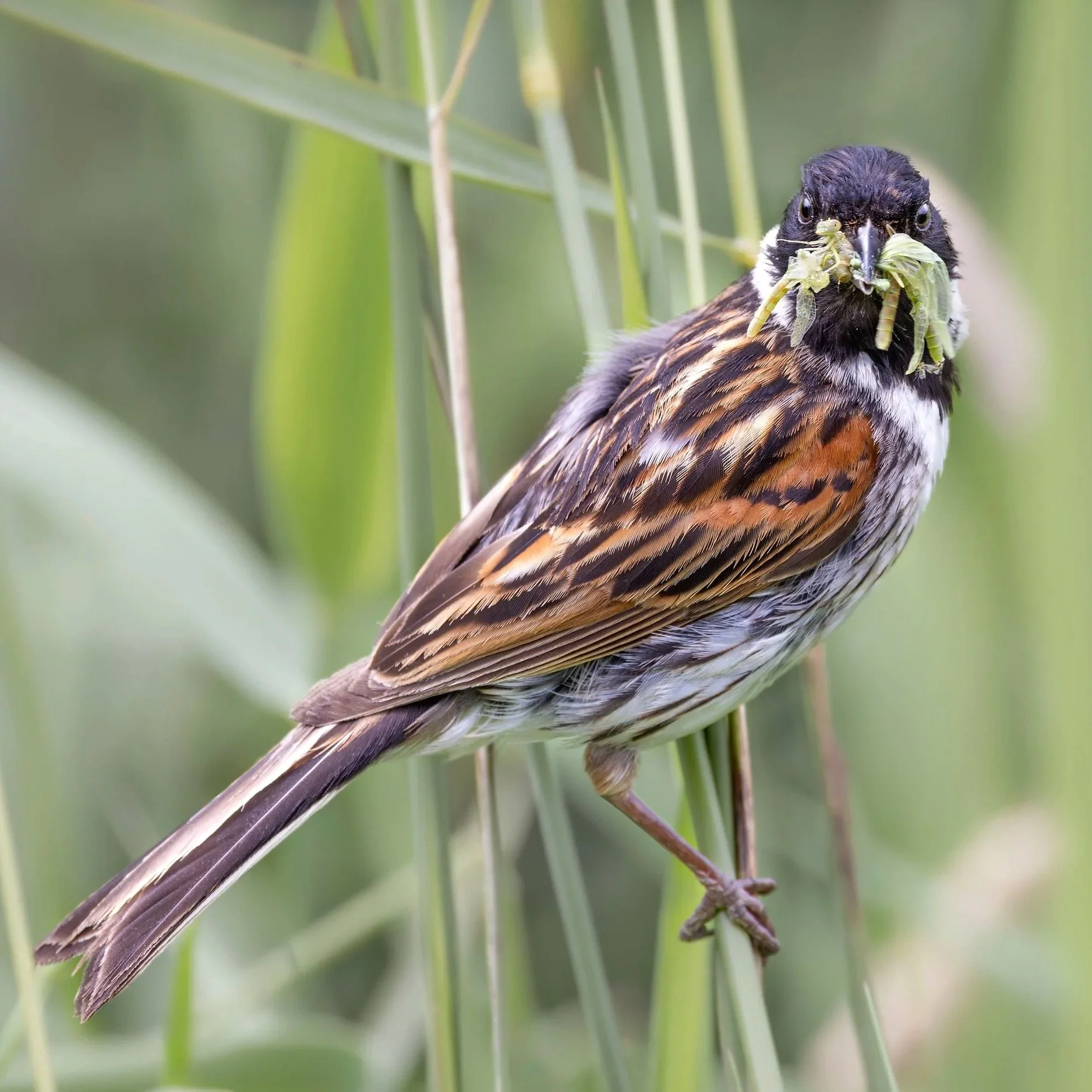
A male Reed Bunting. Research has connected the species' distinct dawn song with extra-pair breeding success.
The dawn chorus is often explained in a single sentence: male birds sing to defend a territory and attract a mate. That is true, but incomplete. Different species may gain different advantages from singing before sunrise, and the same song can do more than one job.
This becomes clear once we look beyond the pair we can see. A male and female may share a territory, build a nest and feed their young together, yet not be the genetic parents of every chick in that nest. In some species, dawn song appears to be part of this less visible side of the breeding season.
Reed Buntings provide one of the clearest examples.
There is no single explanation for the dawn chorus
Bird song has two familiar functions. It warns other males that a territory is occupied and advertises the singer to potential mates. Both remain important after pairing. A territory still needs defending, and the behaviour of neighbouring birds continues to change throughout the breeding season.
But neither explanation tells the whole story. Some males continue to sing strongly at dawn after territories and social pairs have been established. Researchers have proposed several overlapping reasons for this early burst of activity, including the timing of territorial disputes, opportunities for mate assessment and the fact that males and females may leave their roosts at different times.
A 2023 study of Blue Tits, for example, found that males sang more when their mates were inside the nest box and therefore temporarily apart. The authors proposed that a dawn chorus could arise partly because males begin their day before females leave the roost. It is a useful addition to the argument, but not a universal answer. The importance of each explanation likely differs between species.
What DNA revealed about Reed Buntings
Reed Buntings appear socially monogamous. A male and female occupy a territory and raise a brood together. Before genetic testing, behaviour of this kind was often taken as evidence that the pair were also the parents of every chick.
DNA fingerprinting showed otherwise.
In a 1994 study of one Reed Bunting population, 118 of the 216 chicks tested had been fathered by a male other than the female's social partner. Fifty of the 58 nests contained at least one extra-pair chick. These figures should not be treated as a fixed rate for every Reed Bunting population, but they showed how much could be missed by watching the social pair alone.
The researchers also compared parental care with paternity. When a pair produced two broods, the male generally brought more food to the brood in which a greater proportion of the chicks were his. The study suggested that males could adjust their effort according to their likely paternity, although it did not establish exactly how they made that assessment.
The pair bond was real. So was the care given to the nest. But the genetic relationships within it were more complicated than they appeared.
A distinct song before sunrise
The genetic evidence raised another question. If females sometimes mated with males outside the social pair, how might those males advertise themselves?
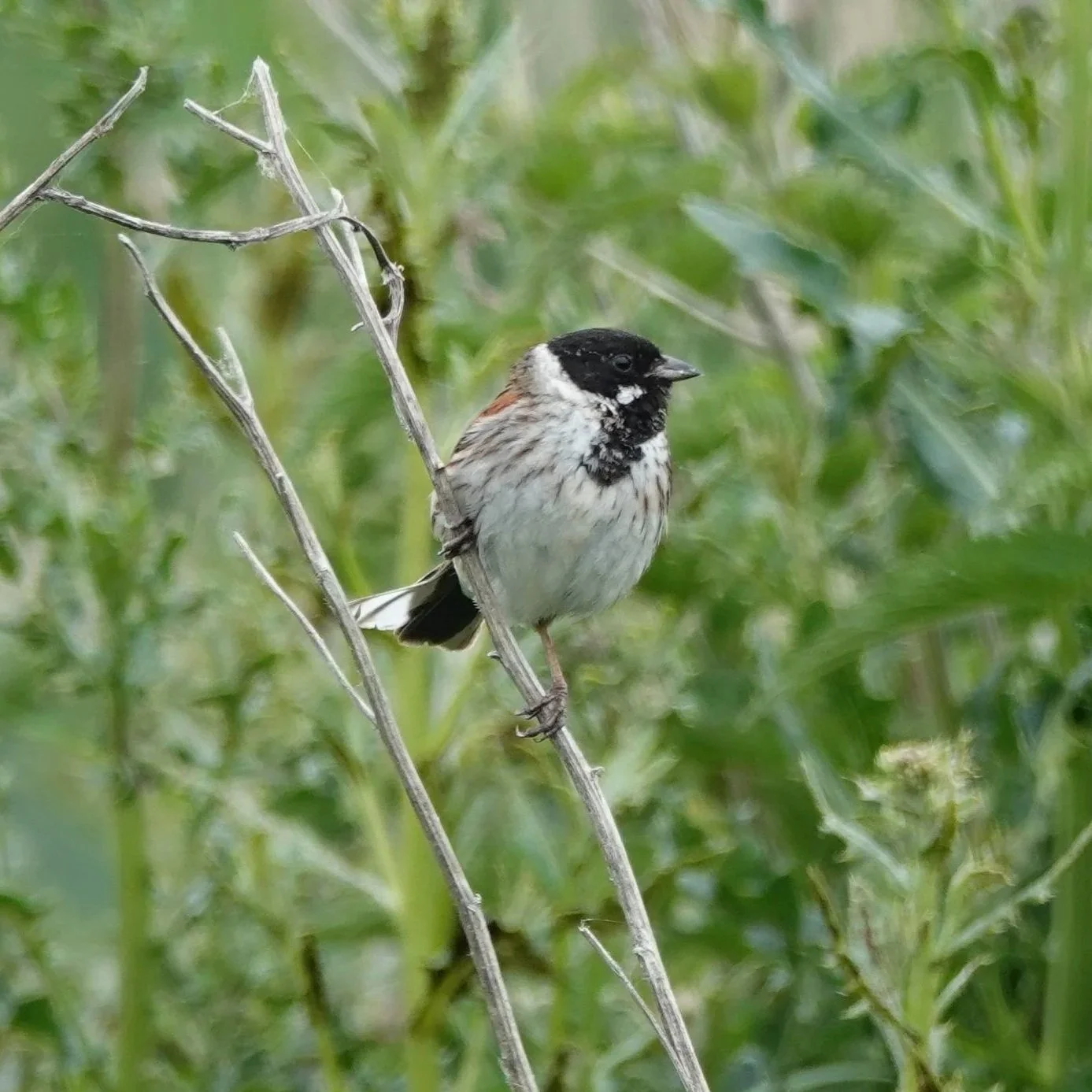
Reed Bunting (Emberiza schoeniclus)
A 2009 study of Reed Bunting song examined a form of continuous singing heard mainly at dawn. It was not simply ordinary daytime song performed earlier. The structure and delivery differed enough for the researchers to classify it as a distinct dawn song.
The males did not develop this song because they had already paired, nor did they switch to it as a deliberate appeal for a second mate. That popular version of the story goes beyond the evidence. Reed Buntings already possessed a particular dawn performance; the study asked whether differences in that performance were connected with reproductive success outside the pair bond.
They were. Males with higher song rates and more varied dawn songs were more likely to gain extra-pair paternity and fathered more young in neighbouring nests. Older males also had greater extra-pair success, and age explained much of the difference between individuals.
This is an association, not proof that a female heard a particular performance and chose its singer. A successful male might sing more because he was older, in better condition or dominant for reasons that also influenced female choice. Even so, the result provides strong evidence that dawn song belongs within the mating system, rather than serving only as a territorial notice.
What might females gain?
It would be easy to describe extra-pair mating as a female simply choosing a better male. The evidence is more interesting than that.
A 2006 study of sequential Reed Bunting broods tested several possible benefits. Its results did not support a simple claim that females consistently sought males with superior genes. They were most compatible with the idea that a female could gain by mating with a male who was genetically less similar to her. The possible explanations are not mutually exclusive, and the greater success of older males left room for male quality to matter as well.
Further research published in 2007 strengthened the compatibility explanation. Extra-pair chicks were more genetically diverse than their maternal half-siblings, were larger and heavier before fledging, and were more likely to be recorded after leaving the nest. Their fathers were also less genetically similar to the females than the social males were.
The female therefore retained the territory and parental care associated with her social partner while some offspring could gain from a different genetic match. That does not mean every extra-pair mating is beneficial, or that the same explanation applies to every species. It shows why female choice cannot be left out of an account of dawn song.
What a dawn performance can tell us
For a Reed Bunting, dawn song may be heard by several audiences. It can advertise occupation of a territory to other males, carry information about the singer and affect breeding success beyond the social pair. These functions can operate together.
We should still be cautious when listening to an individual bird. We cannot hear a male singing from a reed stem and know whether a neighbouring female is assessing him, whether a rival is responding or whether his social mate is still at the roost. Research identifies patterns across birds and breeding attempts; it does not reveal the immediate purpose of every phrase.
That uncertainty does not make the dawn chorus less interesting. It changes the question. Instead of asking what all birds are saying at dawn, we can ask what a particular species might gain by singing then, who can hear it, and what the singer's performance may reveal.
The familiar answers remain part of the story. Birds sing to defend territories and attract mates. Reed Buntings show that pairing does not bring those decisions to an end, and that some of the most important activity in a breeding population may be hidden from view.
Sources and further reading
Dixon, A., Ross, D., O'Malley, S. L. C. & Burke, T. (1994). Paternal investment inversely related to degree of extra-pair paternity in the Reed Bunting. Nature, 371, 698–700.
Bouwman, K. M., Burke, T. & Komdeur, J. (2006). How female Reed Buntings benefit from extra-pair mating behaviour: testing hypotheses through patterns of paternity in sequential broods. Molecular Ecology, 15, 2589–2600.
Suter, S. M., Keiser, M., Feignoux, R. & Meyer, D. R. (2007). Reed Bunting females increase fitness through extra-pair mating with genetically dissimilar males. Proceedings of the Royal Society B, 274, 2865–2871.
Suter, S. M., Ermacora, D., Rieille, N. & Meyer, D. R. (2009). A distinct Reed Bunting dawn song and its relation to extrapair paternity. Animal Behaviour, 77, 473–480.
Schlicht, L., Schlicht, E., Santema, P. & Kempenaers, B. (2023). A dawn and dusk chorus will emerge if males sing in the absence of their mate. Proceedings of the Royal Society B, 290, 20232266.