

RSPB Titchwell Marsh
Titchwell’s main path runs from woodland and reedbed to the Freshmarsh, saltmarsh and beach. The route is simple; the useful decision is whether to stay with the freshwater pools or continue to the coast.
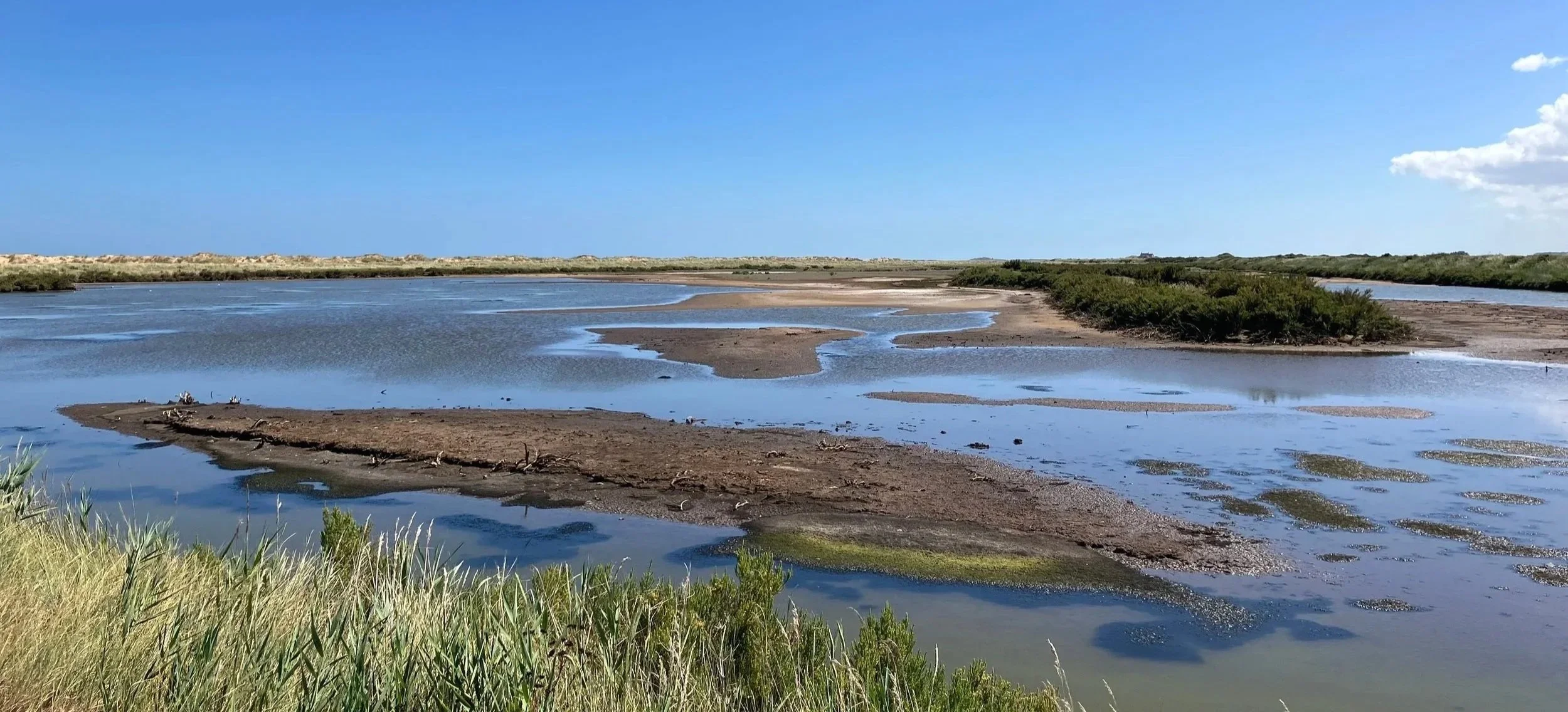
The Freshmarsh at Titchwell, with shallow water and exposed islands.
RSPB Titchwell Marsh compresses several distinct habitats into one northward route. Woodland edge gives way to reedbed, the Freshmarsh, tidal saltmarsh and then a wide sandy beach. Each section supports a different group of birds, but covering the whole sequence is not automatically the best use of a visit. The quality of the birding depends more on where you stop, what the conditions are doing and whether you return for another look.
Decide how far to follow the main path
The West Bank Path is straightforward and largely flat, but a birding visit takes much longer than the distance suggests. The surfaced route passes the reedbed and Freshmarsh before continuing towards the saltmarsh and sea; the final approach beyond the sea defence is rougher.
With only a couple of hours, treat the Freshmarsh as the destination rather than the beach. Listen and watch along the reedbed, then use the path, Island Hide or the Parrinder hides according to where the birds are feeding. Reaching every viewpoint matters less than obtaining a useful angle on the water and islands.
For a half day, allow time for a proper Freshmarsh scan and decide there whether the coast will add anything. Tide, wind, visibility and recent reports may justify continuing. If they do not, the reedbed and freshwater pools can use the time more productively.
A full day allows the complete walk to the beach, time for the sea and a second look at the Freshmarsh on the return. That repeat scan is not wasted effort. Birds move between feeding and resting areas, water edges become easier to read from a different angle, and a flock disturbed by a raptor may settle somewhere more exposed.
Do not reserve all your attention for the hides. The West Bank Path itself overlooks reed edge, open water, muddy margins and sky. Bearded Tits may cross rather than perch, Marsh Harriers can appear behind you, and a brief call from the reedbed may be the only indication that a bird is present. A telescope is strongly recommended for the lagoon and the sea.
Give the Freshmarsh more than a quick scan
The Freshmarsh usually provides the greatest return for time spent at Titchwell. Its value is not a list of past rarities but the range of feeding depths and resting places visible from the path and hides. Shallow margins, muddy islands, deeper water and reed edge can hold different birds within the same view.
Begin with the structure of the lagoon. Check exposed edges for feeding waders, then the tops and sheltered sides of islands for resting birds. Work through the commoner species before looking for a bird that differs in size, pace or feeding behaviour. Scan the open water for wildfowl and the reed margins for birds that disappear as soon as they reach cover.
A quick sweep can miss birds standing behind an island or feeding among a larger flock. It can also give a false impression of an empty scrape when most birds have moved temporarily after disturbance. Stay long enough to see where the flocks settle, and repeat the scan from another viewpoint when possible. The Freshmarsh changes during a visit even when no new bird arrives.
When the beach and sea add something
Continue beyond the Freshmarsh when the tide, wind or current bird activity gives you a reason. The saltmarsh and tidal pools change the selection of waders on the way, while the beach can add Ringed Plover, Sanderling, gulls and terns. Their distance and distribution depend heavily on the tide.
At low tide, feeding birds may be spread across a wide shore. A rising tide can move them closer, but it can also remove the best feeding edges. There is no single tide that makes every visit better; check the state of the shore when you arrive and allow for the walk back.
The sea deserves time when visibility is good, birds are moving or an onshore wind is bringing passage closer. In autumn and winter, a telescope scan may add divers, grebes or seaduck; stronger northerly winds can produce more active seabird passage. In flat conditions, especially during a short visit, another careful circuit of the Freshmarsh may be more productive than a long stationary seawatch.
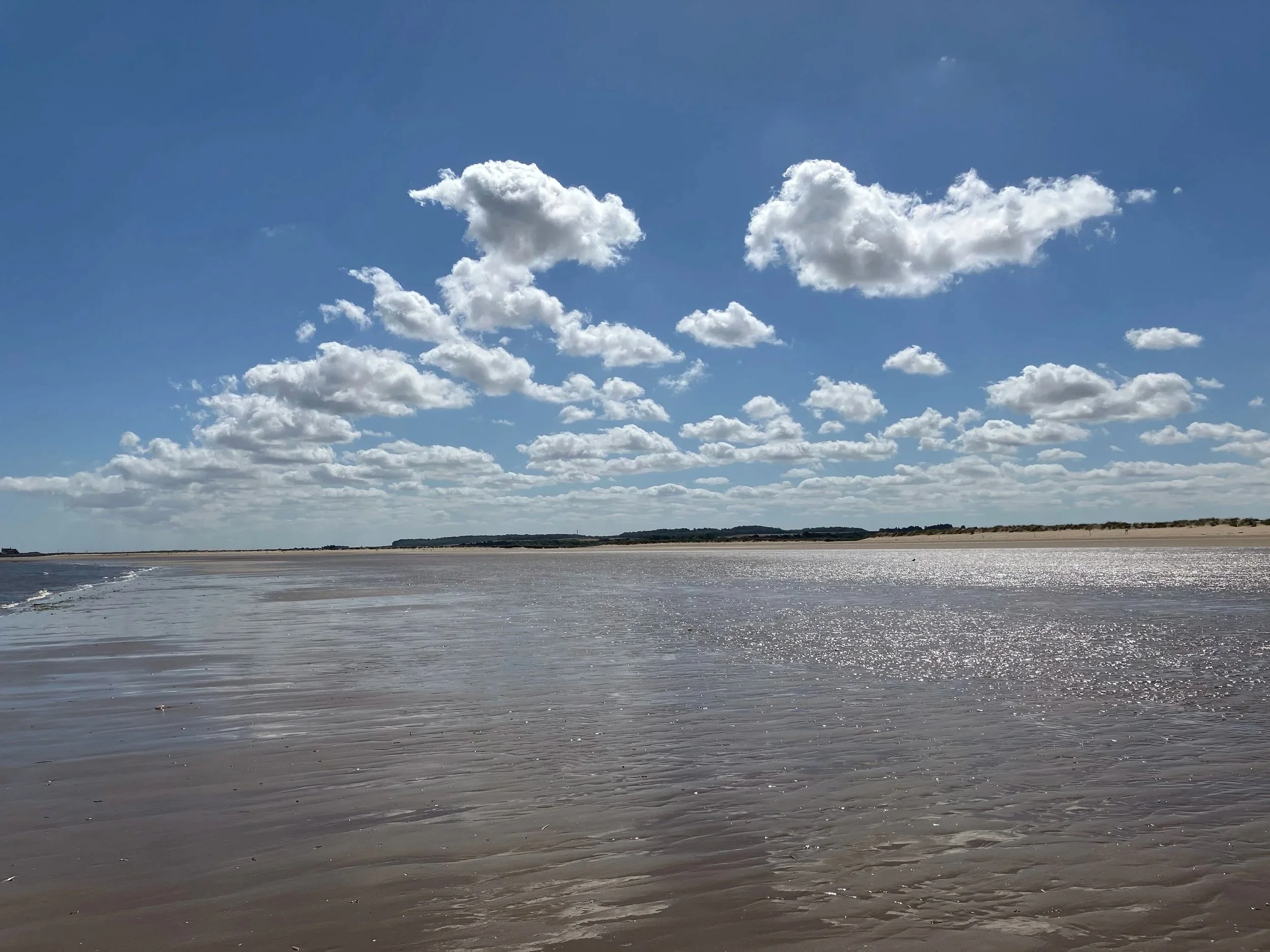
Titchwell beach at low tide.
Let habitat and conditions define the season
Spring: Reedbed activity and breeding birds bring movement close to the path, while passage birds depend on weather and the condition of the Freshmarsh. Check islands and margins carefully without assuming migration will make the whole reserve busy.
Summer and early autumn: Water level and the amount of exposed mud become important as southbound waders begin to pass. The beach may add feeding waders and terns, but the freshwater pools can still hold attention for most of a visit.
Later autumn: Passage waders, arriving wildfowl and changing weather broaden the choices. An onshore or northerly wind may favour the sea; calmer conditions often return the emphasis to the Freshmarsh and reedbed.
Winter: Wildfowl and waders give the freshwater and tidal areas their character. Raptors work the reedbed and saltmarsh, while the sea becomes more useful when cold weather, wind or recent reports indicate birds offshore.
For a longer trip, Titchwell works as the western anchor in the North Norfolk autumn birding itinerary. If the weather or current birds favour the eastern coast, compare the route choices in the Cley and Salthouse Marshes guide.
Check current information before travelling
Access arrangements, charges, facilities, hide availability and opening information can change. Before travelling, check the official RSPB Titchwell Marsh reserve page, the RSPB’s current facilities and accessibility information and its current entrance charges.
Information checked: 30 August 2026.