Visit:
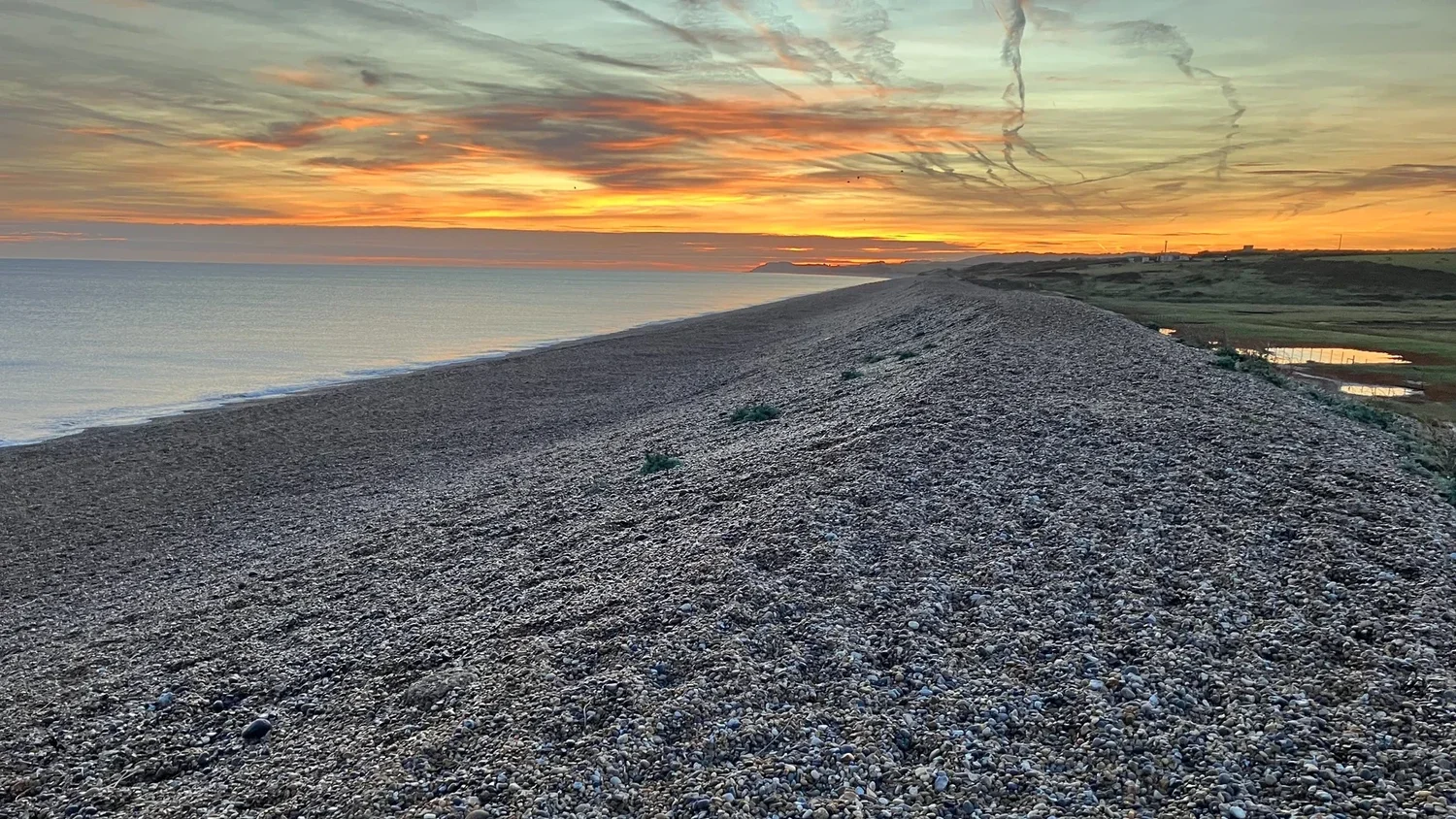
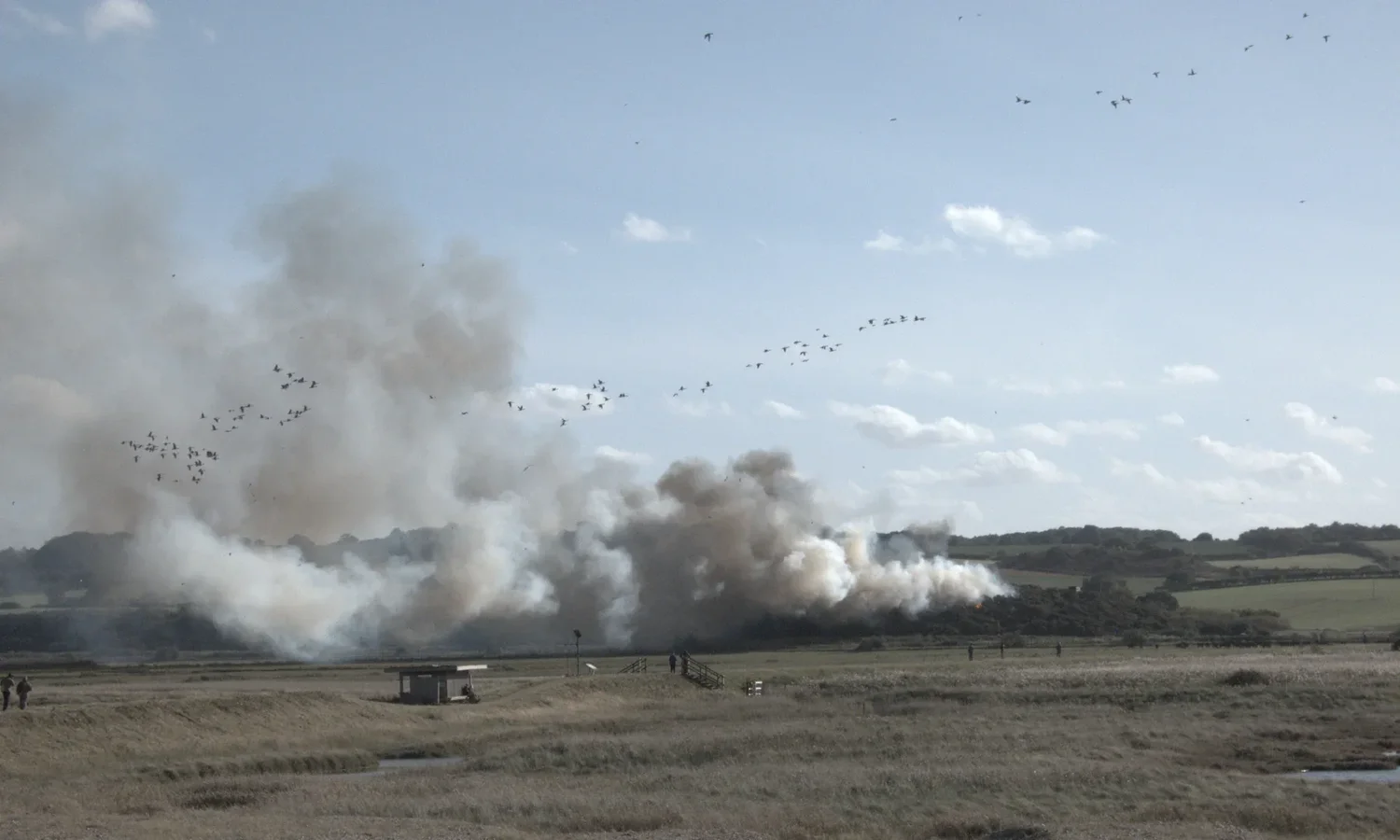
On 14 October I was walking along Cley beach towards Richardson’s Lookout when birds took off from the marsh in such numbers that I stopped to look for a raptor. You don’t normally get that much of a reaction unless something very unusual is going on. Then I saw the smoke rising inland.
It was a sunny afternoon on the North Norfolk coast. Beyond the marshes there was a fire at Walsey Hills. In one of my photos the birds are all over the sky above a thick bank of smoke. I don’t know what first disturbed them, but they caught my attention before I saw the fire.
I headed towards the car park, then turned back to avoid the smoke. Returning to the beach past Richardson’s Lookout, I continued east towards Salthouse. I could smell smoke on and off for the rest of the afternoon.
The Norfolk Ornithologists’ Association later reported that the fire had mainly burnt mature gorse at the top of Walsey Hills. Its reserve and infrastructure had been protected by the firefighters.
Along the coast to Salthouse
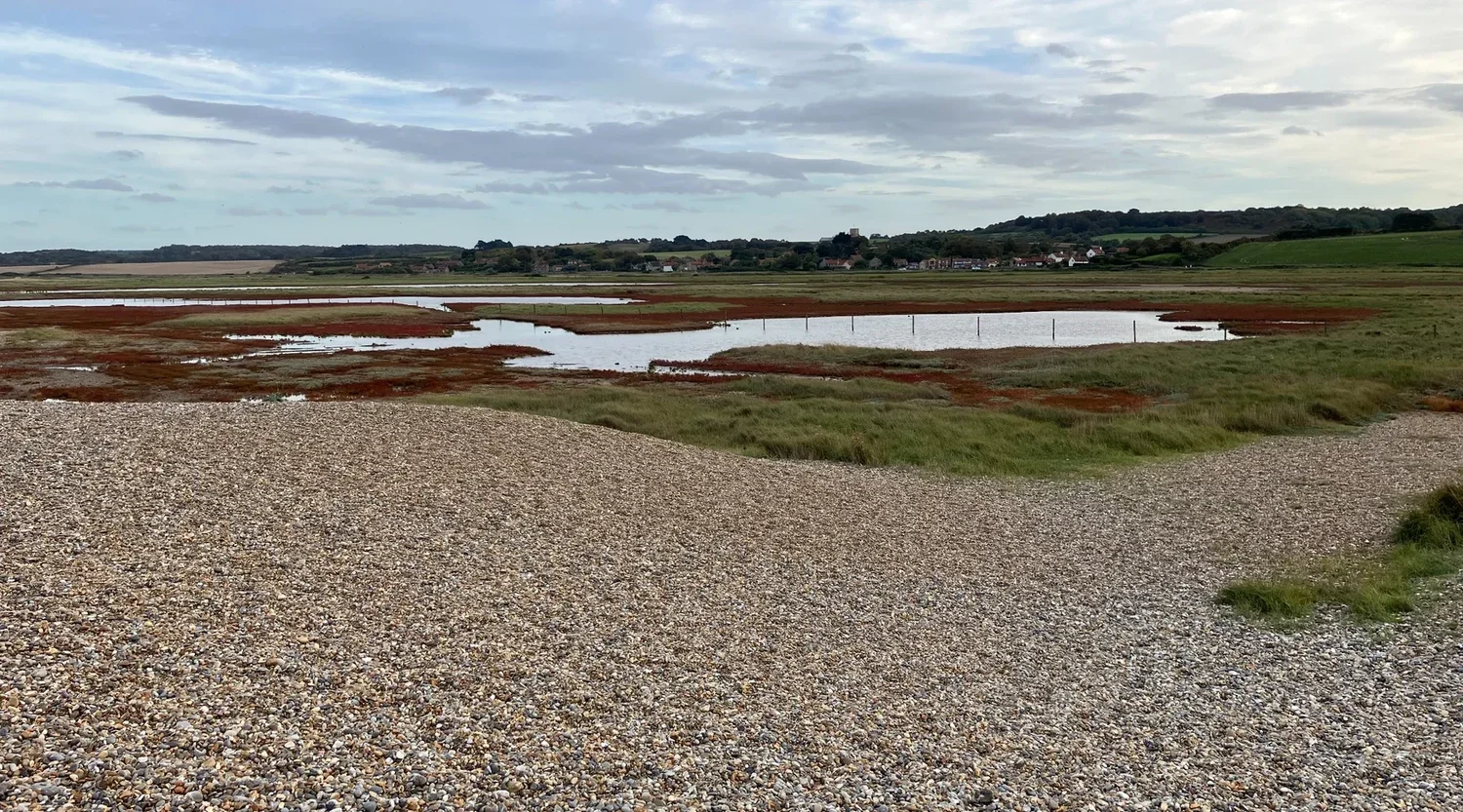
Walking east provides a very different view of this stretch of wetland from the hides and the banks at Cley and Salthouse Marshes. You can look inland from the shingle across the pools and grazing marshes to Salthouse village and then turn to watch the sea. There’s a lot of ground to look at on both sides of the walk.
There was a light offshore wind while I was watching, but the seawatching was very productive. Gannet, Little Gull and Yellow-legged Gull were among the birds I picked out, along with Razorbills and Red-throated Divers.
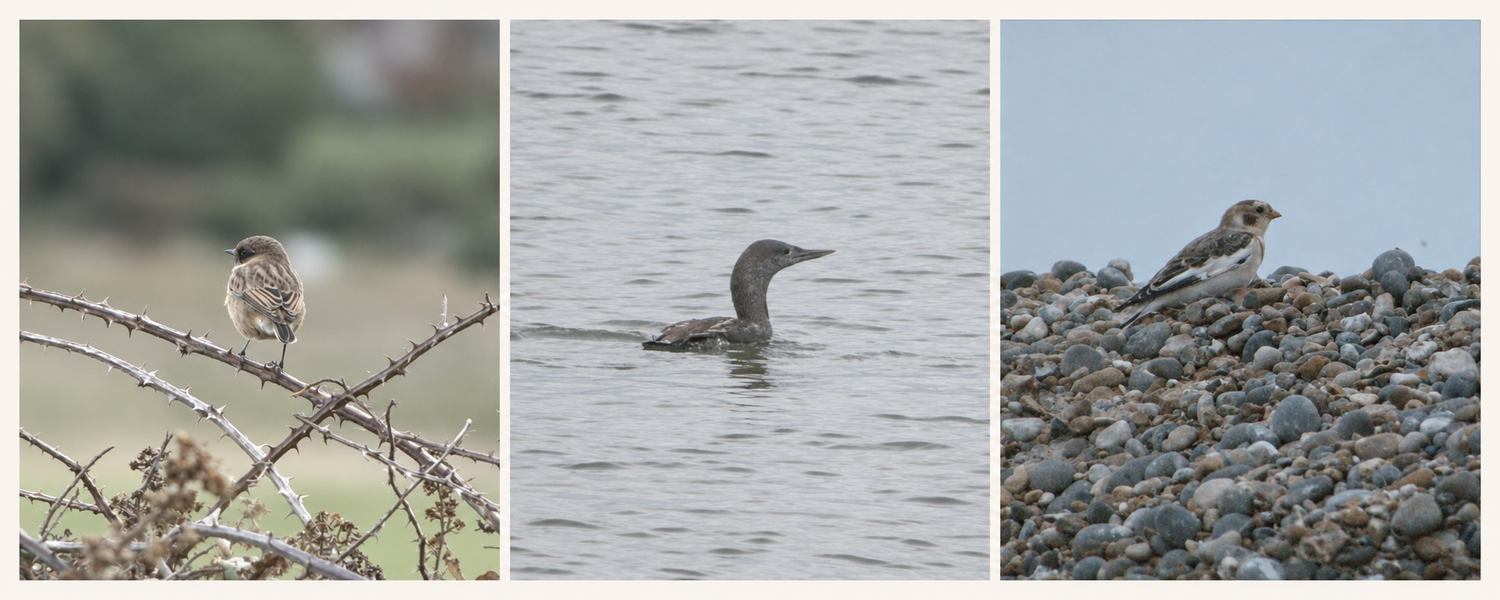
I photographed a Razorbill offshore, its dark upperparts and white throat and breast standing out against the water. Later, a Red-throated Diver gave me another chance to take a photograph. The long neck and slender bill showed clearly, even though the light was fading.
At Salthouse I left the beach and walked inland along Beach Road, then retraced my steps to the coast. That little detour took me alongside the marshes which I had been looking across from the shingle. Beach Road runs between the pools and the grazing land so you get a very different view of the edges of the pools and the channels between them.
Looking back inland, the wet ground was broken by red autumn vegetation, with the village and church beyond. The photos show how close together the shingle, the shallow water and the grassland are in this area. A short distance on, the view and the habitat in front of you are completely different.
Gramborough Hill and the Quags
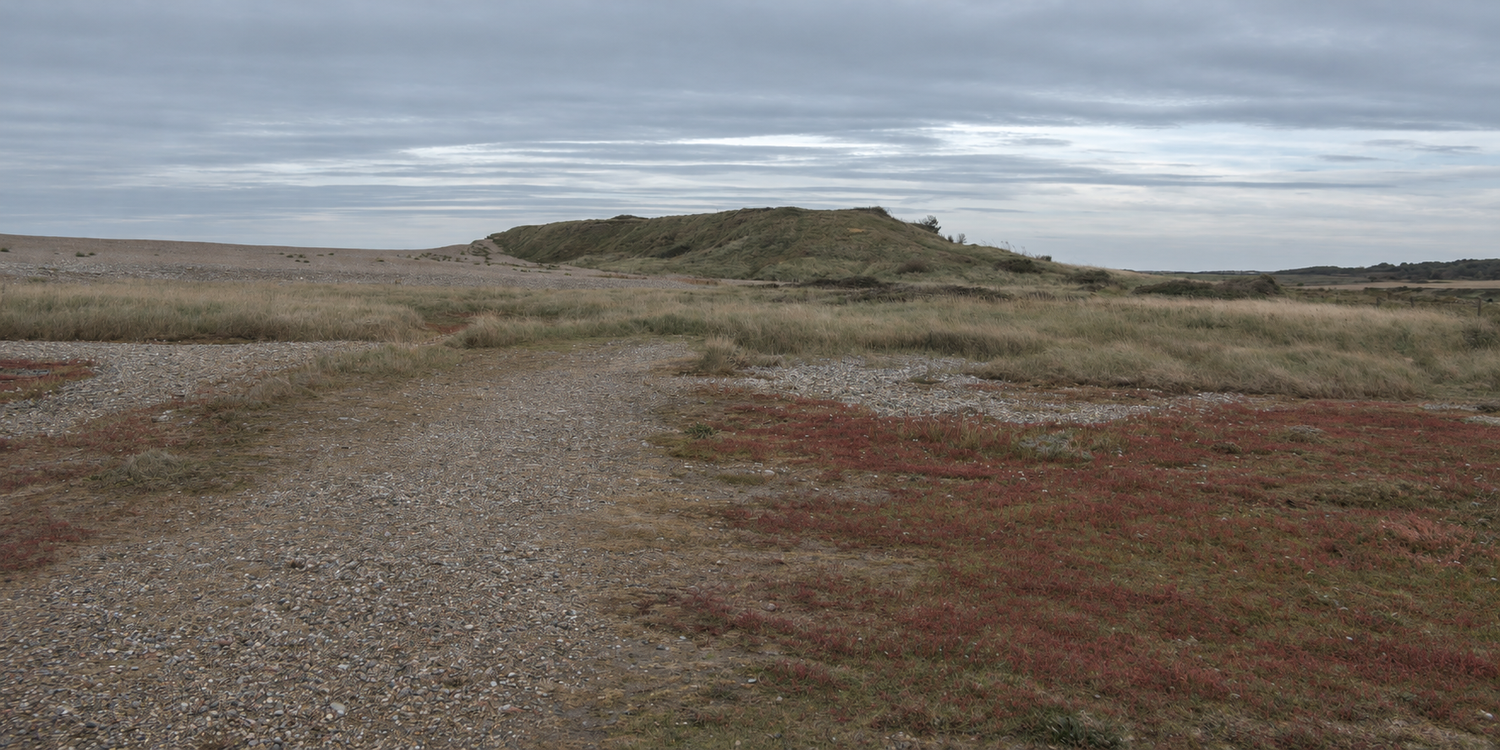
Back at the beach, I continued east towards Gramborough Hill and Kelling Quags. Gramborough is a low grassy rise beside the shingle, with small patches of trees and bushes. It gives birds some cover on an otherwise very open coast. Cley Bird Club identifies it as a place to check for migrants in spring and autumn.
A Stonechat on bramble provided one of the afternoon’s closer photographs. It had its back towards me, with its head turned to one side.
At Gramborough Hill I also saw Snow Buntings. One stayed on the shingle long enough for a photograph. Its pale underparts and white wing panel were visible against the darker stones, although the bird occupied only a small part of the view.
Farther east, Kelling Quags adds another wetland immediately behind the shingle. Together with the Water Meadow pool farther inland, it gives this end of the walk its own birding interest. I reached the Quags that afternoon. As the daylight faded, I heard Water Pipits there.